The emerging US-Iran framework has reopened a painful question inside Israel, not only about Iran’s intentions, but about the quality of leadership that guided the country through years of escalating confrontation. After two prolonged rounds of conflict, repeated national emergencies, and sustained societal strain, many Israelis are now confronting a more uncomfortable reality: the political narrative that framed these struggles has not translated into strategic clarity or enduring security gains.
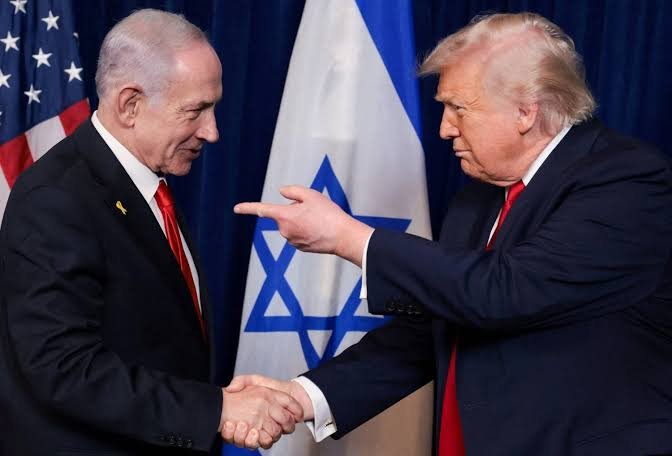
At the center of this reassessment is Prime Minister Benjamin Netanyahu, whose long-standing approach to Iran has combined deterrence, escalation management, and reliance on the United States as the ultimate guarantor of strategic outcomes. Yet the current trajectory of negotiations between Washington and Tehran suggests that this framework is being rewritten without Israel in a decisive role, and without clear answers about what, if anything, the sacrifices of recent years have achieved in concrete terms.
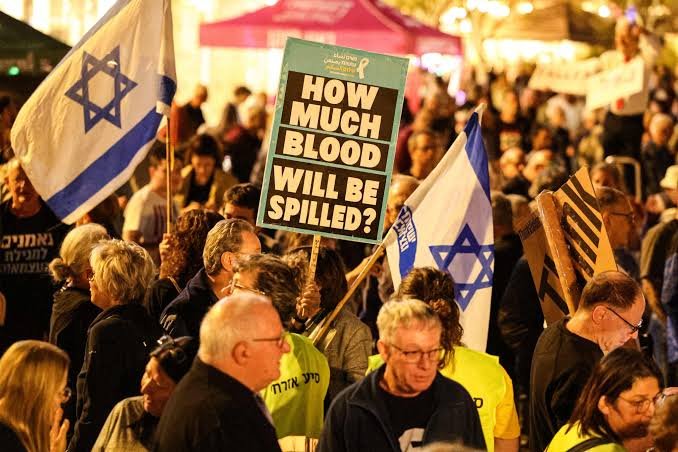
For Israelis, this is not an abstract diplomatic development. It comes after years marked by missile attacks, emergency mobilizations, economic disruption, and the psychological toll of sustained conflict. The expectation that these hardships would translate into a fundamentally improved strategic reality has been central to the political justification for prolonged confrontation. What is now emerging instead is a sense that the end-state is neither decisive victory nor transformation, but managed containment shaped largely outside Israel’s influence.
The disparity in expectations and results is where the political costs can be most readily identified. Decision-makers who view the conflict as essential to maintaining security must face the reality of whether that security actually exists in a sustainable manner. In today’s environment, Israeli citizens find themselves having to evaluate an agreement whose details they do not fully understand, and which was negotiated in arenas where Israel appears to have limited visibility, and justified in language that emphasizes stabilization rather than resolution.
That dynamic raises a fundamental question about strategic agency. Throughout the years, Israel has been putting herself at the forefront of dealing with the Iranian threat, whether through covert actions or military threats. But the emerging diplomacy framework indicates that the critical rules for such an engagement, including what can be done, cannot be done, and what has to wait until later, are being set elsewhere. For a state that has been actively involved in combating the Iranian threat and its regional proxies, this marginalization is painful.
This tension is especially acute because it follows years in which expectations were repeatedly elevated. The Israeli public was not only told that Iran’s nuclear ambitions could be delayed, but that sustained pressure, combined with close US coordination, could fundamentally alter the regional equation. Yet the current framework, as understood from reporting, appears to prioritize containment, phased understandings, and regional stabilization over structural dismantlement of Iran’s strategic posture.
Such an outcome forces a retrospective question: if the end result is a negotiated framework that leaves much of Iran’s regional architecture intact while offering limited transparency to Israel, what exactly was achieved through the preceding cycle of escalation?This is where leadership accountability becomes central. In moments of prolonged conflict, democratic states rely on a clear connection between national sacrifice and strategic gain. When that connection becomes blurred, public trust begins to erode, not necessarily in the necessity of security action itself, but in the assurances that accompany it. Israelis who endured repeated crises are now being asked to accept a diplomatic outcome they did not shape, based on assurances that remain incomplete.
None of this negates Israel’s military achievements or the genuine setbacks inflicted on its adversaries. But it does raise a sharper question about strategic direction: whether the country is moving toward a coherent long-term doctrine, or cycling through repeated confrontations that end in partial containment and renewed uncertainty.
For Israel, the matter is one of substance, not theory. It is a question of whether all those years of turbulence have resulted in a safer landscape or merely an orderly continuation of the threat environment. If the answer is the latter, political leadership that framed these confrontations as transformative will inevitably face scrutiny.In effect, the new US-Iran paradigm serves not only as a test for diplomacy but also as a test for narrative integrity. A nation that has carried the brunt of prolonged confrontation is well within its rights to question whether its leadership has turned sacrifice into strategy or merely raised expectations above reality.In that sense, the debate is no longer only about Iran. It is about whether Israelis are being given the clarity they deserve after years of war, or whether they are being asked to accept ambiguity in place of answers that remain unspoken.