There are two starkly contrasting ways to understand the Iran deal currently being negotiated. On one hand, it can be seen as a disappointment that failed to live up to wartime aspirations. On the other hand, it can also be understood as a realistic compromise that took into account the practicality of military action on its own. It seems that the latter is true, as recognized by Israeli defense officials.
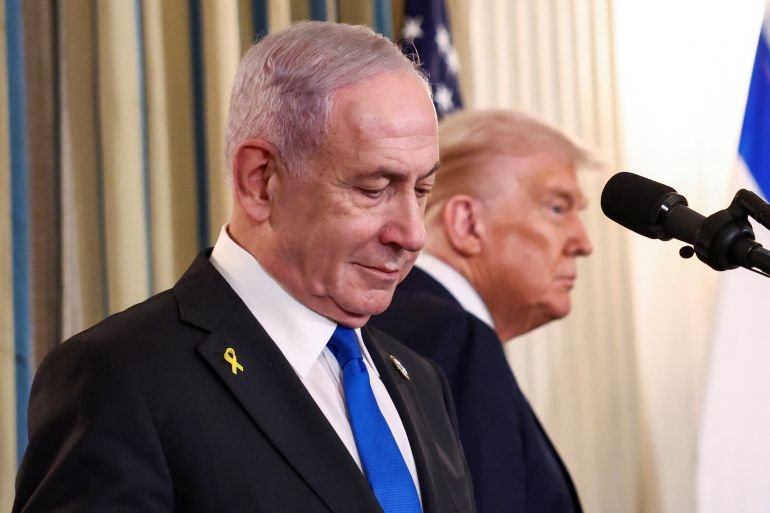
Prime Minister Benjamin Netanyahu and former US President Donald Trump, in the early phase of the recent confrontation with Iran, at times allowed expectations to expand beyond the boundaries of what senior military planners considered achievable. Regime change, once loosely floated in political rhetoric and public discourse, was never regarded by top IDF and intelligence officials as a realistic operational objective. The war was designed around narrower, more tangible goals: delaying Iran’s nuclear threshold capability and reducing the scale and effectiveness of its ballistic missile infrastructure.
On those narrower metrics, Israeli officials argue the outcomes are more substantial than public debate often reflects. The timeline for Iran’s nuclear capability has been pushed back, and the pace of its strategic weapons development has been disrupted. In this sense, the logic of the campaign was not a transformative victory, but a strategic delay, buying time in an increasingly complex regional environment.
Yet this framing sits uneasily with sections of Israeli public opinion, where expectations were shaped by more ambitious political messaging. The result is a widening gap between strategic assessment within the defense establishment and the political interpretation of the same developments. That gap is now shaping how the Iran deal itself is received inside Israel.
An important element of the deal is the expected reduction of some of the economic and financial sanctions on Iran in return for Iran curbing its nuclear program. There has been disagreement within the Israeli government regarding this bargain. The naysayers say that the deal gives Iran enough financial space to possibly use this as a means of building back some of its regional influence. The other side says that Iran has been weakened militarily and politically, and thus this would not make much difference.
This discrepancy comes from a larger reappraisal of Iran’s capabilities after two years of ongoing conflict. Militias like Hezbollah and Hamas, which had always been considered aggressive groups whose capabilities would grow each year, have now been assessed by Israeli security experts to be severely limited. The capabilities of Hezbollah, for example, have become less capable due to the diminished stockpile of rockets, shorter operational range, and greater vulnerability to attacks on their logistical support network compared to the previous years. Hamas, similarly, has been pushed into a far more restricted operational posture, even if it remains resilient as an asymmetric actor.
From this perspective, rather than changing the balance of power in the region, the deal actually serves to legitimize what has already been accomplished through military action. Even so, there still exists a level of ambiguity when it comes to strategy. Rather than being simply concerned about the current threat posed by Iran, Israeli strategists have begun looking ahead to future Iranian capabilities.
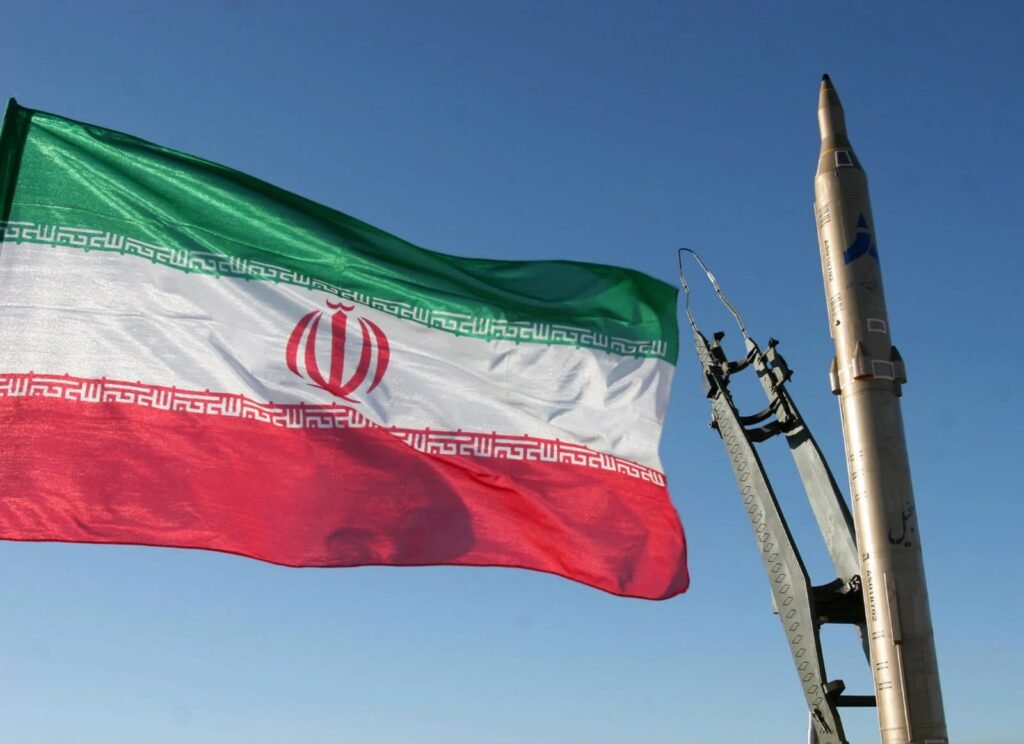
Particularly sensitive is the issue of ballistic missile development. While the nuclear timeline may have been extended, analysts warn that missile capacity remains a structurally more flexible and less easily constrained domain. Even partial recovery in this field could restore elements of deterrence pressure against Israel, even without a nuclear breakout.
At the same time, another layer of concern has emerged beyond the immediate military balance: Israel’s diplomatic positioning. There is growing recognition in parts of the Israeli establishment that prolonged confrontation has carried costs in terms of international support, particularly in Europe and segments of the United States. The Iran deal, while limiting some threats, also reflects a diplomatic environment in which Israel’s ability to shape outcomes unilaterally has diminished.
This paradoxical scenario of military success combined with diplomatic tension is more indicative of the present Israeli position rather than any notion of either success or failure. Regime change was not achieved, and from a structural perspective, there was no way that this objective could be met.
Neither, however, was there a strategic disaster in the sense that some had feared.Rather, Israel finds itself in a familiar yet complicated situation whereby it has effectively neutralized its adversary’s capabilities yet is faced with unsolved political and regional challenges that cannot be solved by violence.
The most consequential implication of the Iran deal, therefore, may not lie in its technical provisions, but in what it reveals about the limits of military power as a standalone instrument of strategy. Israeli decision-makers are increasingly confronted with a basic question: how to translate battlefield achievements into durable political outcomes in a region where adversaries adapt, recover, and reconfigure rather than disappear.
In this way, the Israeli debate itself is changing direction. Instead of asking if the use of force “works,” the question now is what “working” actually means in the absence of a broader political framework. The Iran deal does not solve this dilemma, but rather highlights its existence.