
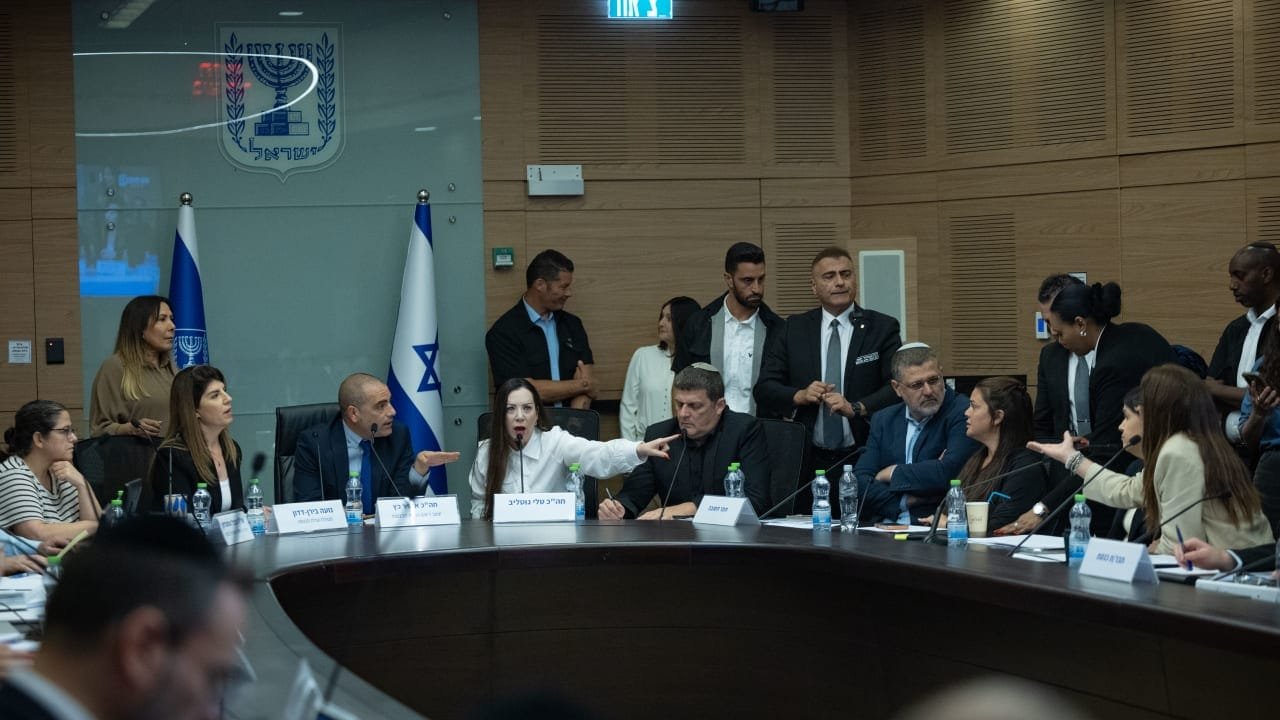
The controversy surrounding the proposed Basic Law: Torah Study is not merely another dispute over military conscription or coalition politics. It represents one of the most consequential debates in Israel’s ongoing struggle to define the relationship between religion, citizenship, and state authority.
At stake is not only the future of Haredi draft exemptions but also the meaning of Torah itself within a modern Jewish state.The proponents of the bill view it as a recognition of Torah study that has been needed for a long time as a basic pillar of Jewish national existence.
This position is based on the assumption that Jews have remained as such thanks to the existence of Torah scholars during periods of exile, oppression, and forced migration. Under this assumption, people whose job is studying the Torah do not differ from people fighting in the army.
The political environment in which this law is being introduced is such that these statements become hard to disassociate from the immediate political reality. It should be noted that the new bill is being introduced during a period in which Israel is embroiled in an ongoing conflict with Iran and its proxies, reservists continue to undertake repeated deployments, and the army has made public announcements regarding the shortage of soldiers. Against this background, many Israelis see this legislation as a tool aimed at protecting certain groups from their duties.
This is what makes the debate so emotionally charged. No one disputes the worthiness of learning Torah; there is general agreement among Israelis that Torah holds a vital role within Judaism and Israeli national identity. Rather, the question is about whether learning Torah should be elevated to the status of a constitutional value in order to change the nature of the debate about IDF service and citizenship.
The wording of the proposed law is particularly significant because it moves beyond symbolic recognition. By defining Torah study as a fundamental value and recognizing those engaged in long-term study as making a significant contribution to the state, the legislation establishes a constitutional framework that future governments and courts may be required to consider when addressing military service obligations.
For Haredi parties, this is precisely the objective. After years of legal challenges to draft exemptions and repeated intervention by Israel’s judiciary, they seek to anchor Torah study within the country’s constitutional structure. In doing so, they hope to create a stronger legal basis for preserving the unique status of yeshiva students.For many years, Israel sustained a delicate balance between the secular basis of the state and its religious heritage. The ambiguity of this situation was necessary for maintaining this balance. Studying the Torah was encouraged, but so was serving in the army, with political arrangements allowing some flexibility.
This piece of legislation will have an impact on the existing equilibrium, since it puts the study of the Torah in the spotlight of the constitution. It can be viewed as an example of politicizing the study of Torah, which is seen by the critics of the law as making a religious act a political tool.This objection will even be heard from religious scholars in Israel. What these scholars object to is not Torah per se but the political use of Torah.

The minute that Torah studies are mixed up with politics, they become subject to the partisan divisions that are typical of regular politics.As a result, the Torah law has become a symbol of a larger societal divide. Many Israelis increasingly see two different systems of citizenship emerging within the same state: one in which obligations to national defense are viewed as universal, and another in which religious study constitutes an alternative form of national service.
This perception poses a problem not only for politicians but also for the Haredi Jews themselves. Population statistics suggest that the percentage of Haredi Jews among the Israeli population will increase sharply in the next several decades. The debate over Torah study, therefore, cannot remain confined to a narrow sectoral issue. It increasingly affects questions of military sustainability, economic productivity, and social cohesion.There is also an underlying philosophical dilemma involved. For centuries, the moral force behind Torah study was largely based on its sanctity and not on any political protection that the state provided for it.
To the extent that it is politicized, it becomes increasingly harder to maintain this distinction.This is why this particular controversy is such a major issue. This is not about exemption from military service or the coalition negotiations that take place in such instances. This is about whether the Torah should be considered a source of unity for the nation or yet another faultline in Israeli society.
The primary difficulty to come will likely be that of creating a model wherein the dignity of studying Torah is protected while still maintaining the sense of collective responsibility that is necessary for national unity. If that balance cannot be achieved, the greatest casualty of this debate may not be the coalition, the courts, or even the draft system, it may be the very unifying role that Torah has traditionally played within Jewish society.