
Once again Israel faces the challenge of a well-known yet growingly perilous contradiction, which consists of a society founded on a spirit of shared social responsibility being torn apart by communities that are only partially, and sometimes radically, detached from that sense of responsibility. Recent events in connection with ultra-Orthodox protest violence surrounding compulsory army service should be seen within this context and do not constitute a case of simple lawlessness.
What is changing is not the fact that the Haredim present a problem, but rather the political and institutional context within which this problem resides. No longer is the question of army enlistment confined to discussions in court, coalitional wrangling, or protest cycles. Rather, it has become part of an overall discussion of the very nature of the state of Israel, whether Israel remains a singular civic polity bound by common obligations, or one where a segmentary system of differentiated obligations begins to form.
At the heart of this shift is a growing breakdown in what political theorists would call “reciprocal legitimacy.” In earlier decades, even sharp disagreements over religion, state, and military service operated within a shared assumption that the state is the final framework binding all communities. Today, that assumption is weakening. The most visible symptom is not only protest activity, but the language surrounding it, where state authority is increasingly framed by extremist elements not as a common obligation, but as an external imposition.
Why this is important is that states do not just fall apart due to outside pressure but also because inside actors start regarding compliance as optional. Historically, the Israeli state has been able to cope with this challenge by combining accommodation and flexibility. For example, the Haredim were incorporated politically into the Israeli state structure from an early stage on, enjoying political participation and autonomy in areas of education and social administration as compensation. This worked fine as long as demographic and economic challenges remained bearable. However, the underlying conditions of compromise are no longer equally applicable to all parties involved.
The scale of the ultra-Orthodox population, now over 1.3 million people, with one of the highest fertility rates in the developed world, means that any systemic disengagement from core state obligations has compounding effects. This is not only a question of representation or fairness, it is a question of institutional capacity. The Israeli model depends heavily on a relatively small number of institutions absorbing disproportionate responsibility across security, taxation, and civil infrastructure. When participation becomes uneven across rapidly growing demographic groups, the result is not immediate crisis, but cumulative imbalance.
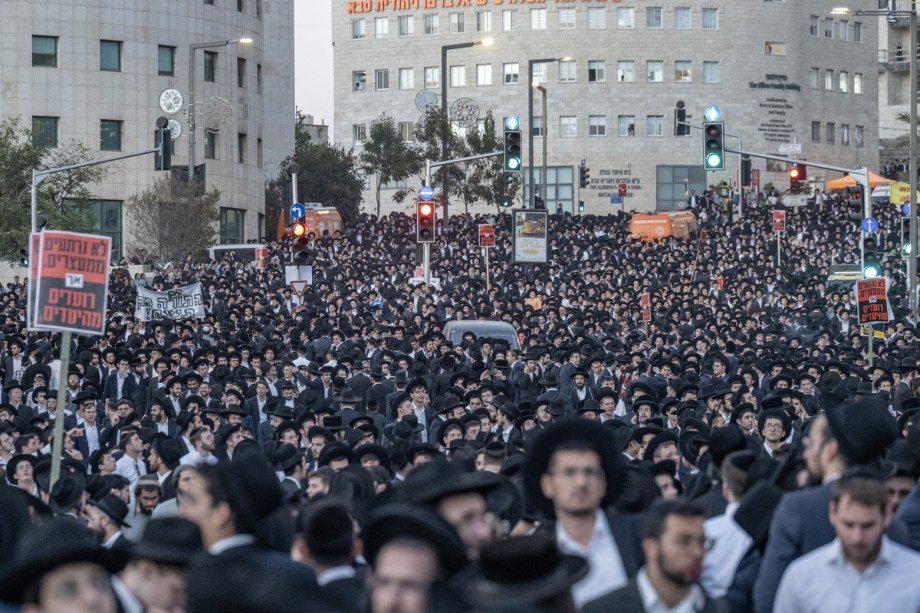
On the other hand, the dynamics within Haredi society cannot be said to remain unchanged. There is an increasing disparity within the Haredi community between those who practice a practical approach of economic integration and those who adhere strictly to a policy of communal insulation through their refusal of state control and interventions. The conflict between the two trends is becoming more pronounced in public places where localized clashes with police become symbols of the larger identity struggle.
These divisions have been exacerbated by the overall political fragmentation of Israeli society. Dependence upon sectoral parties in government coalitions has decreased Israel’s capacity to pursue systematic reform. Consequently, Israeli policies concerning ultra-Orthodox integration have swung from partial implementation to legislative indecision to judicial action. In the lack of a permanent cross-partisan settlement, the problem has remained unresolved, yet it has hardened into an unyielding ideological stance for all involved.
There is, however, another strategic angle which can be neglected. The longevity of Israel depends not just upon military and economic might, but also on the sustainability of its civic bargain, namely the belief that citizenship comes with certain universal responsibilities which are enforced by the institutions of the state. Once large portions of the population believe that such responsibilities can be renegotiated based on a collective basis, the concept of equality as an essential component of citizenship starts to break down.
From an international perspective, Israel is usually analyzed in terms of its national security issues. However, investors and friends alike analyze issues within the country such as labor force engagement and political stability as well. Internal controversies within the state regarding civic responsibilities could potentially shape its perceived resilience in the long term, regardless of any military developments.
Israel has had experience in dealing with internal divisions in the past, but today, things are much harder due to increased demographic strain, increasing political polarization, and greater fragmentation in public debate. The Haredi dilemma stands where all three factors converge. No longer just an ancillary policy matter, it may be turning into the ultimate litmus test for Israel’s ability to maintain national unity in its institutions under stress.
The outcome will not be determined by any single protest, law, or coalition. It will depend on whether Israeli society can reassert, in practical terms rather than rhetorical ones, that citizenship is a shared framework rather than a negotiable arrangement.