

Thousands of Israelis and visitors evacuate through Taba amid conflict with Iran.

The Reverse Exodus of 2026: How Thousands Fled Israel Through Taba
Exodus 10:1–2:
“The Lord said to Moses: ‘Go to Pharaoh, for I have hardened his heart and the heart of his servants in order that I might place these signs of Mine in his midst. And in order that you tell into the ears of your son and your son’s son how I made a mockery of the Egyptians, and [that you tell of] My signs that I placed in them, and you will know that I am the Lord.’”
Just after 8:15 a.m. on Saturday, February 28, 2026, phones across Israel blared with a Home Front Command alert. By then, the country had already awakened to war.
Israel’s airspace had closed at 2:20 a.m. No flights were departing or arriving at Ben-Gurion Airport. Hours later, at 9:30 a.m., US President Donald Trump addressed the world, describing the joint American-Israeli attacks on the Iranian regime.
“The United States military is undertaking a massive and ongoing operation to prevent this very wicked, radical dictatorship from threatening America and our core national security interests,” he said.
“We’re going to destroy their missiles… We’re going to annihilate their navy… They will never have a nuclear weapon. This regime will soon learn that no one should challenge the strength and might of the United States Armed Forces.”
Across Israel, tourists, dual nationals, and foreign residents scrambled for a way out.
On February 27, the US Embassy in Jerusalem had warned: “Persons may want to consider leaving Israel while commercial flights are available.” But by March 2, the message had changed. The embassy informed Americans that Israel’s Ministry of Tourism had begun operating shuttles to the Taba Border Crossing.
And so, in a striking inversion of Jewish history, Taba became the site of the Reverse Exodus of 2026.
A Call to Leave
Exodus 3:18:
“And they will hearken to your voice, and you shall come… to the king of Egypt, and you shall say to him, ‘The Lord God of the Hebrews has happened upon us, and now, let us go for a three days’ journey in the desert and offer up sacrifices to the Lord, our God.’”
For Jenn Lewin, a professor of English literature at the University of Haifa and a single mother of 15-year-old twin daughters, the decision to leave came quickly.
Her family divides its time between Israel and the United States and had already planned to spend Passover in America. But as tensions escalated, it became clear they might soon lose the option to leave at all.
“We saw on February 27 that [US Ambassador to Israel] Mike Huckabee put out the message that all Americans who want to leave should leave ‘TODAY!!’” Lewin recalled. “Capital letters, right? Exclamation points.”
“My parents texted me and said, ‘You should pack your bags and go now.’”
Lewin managed to secure seats for herself and her daughters on a rescue flight departing from Taba International Airport.
Preparing in Haste
Exodus 12:39:
“They baked the dough that they had taken out of Egypt as unleavened cakes, for it had not leavened, for they were driven out of Egypt, and they could not tarry, and also, they had not made provisions for themselves.”
The logistics of departure quickly took on a biblical flavor of urgency.
Lewin had seen reports on Facebook warning that there would be no food available at Taba Airport, whether because of Ramadan or other disruptions.
“So we packed,” she said. “I had all this food in the fridge—yellow cheese, eggs, avocados. It was all going to go bad while we were in America.”
One of her daughters turned the leftovers into a carefully organized supply of travel food.
“She made a series of sandwiches,” Lewin said, “and she labeled them.”
Modern-Day Moseses
Exodus 6:26:
“It was to Aaron and Moses, to whom the Lord said, ‘Take the Children of Israel out of the land of Egypt with their legions.’”
For many desperate travelers, getting out required not just transportation, but someone who knew the terrain, the timing, and the border systems.
For one American family stranded in Jerusalem, that person was Nab Raz.
A native of Jerusalem and member of the city’s Coptic Christian community, Raz traces his family’s roots in the region back to the early 19th century. “My great-grandfather came from Egypt,” he said.
A licensed tour guide with Swiftways, Raz regularly works with drivers and guides in Israel and neighboring countries. When war broke out, he was finishing a tour with an American family whose midnight February 28 flight had just been canceled.
“I told them, ‘Listen, I’ve evacuated many people through the border to Egypt and Jordan,’” he said, referring to his experience during the 12-Day War in June 2025.
A relative of the family quickly found seats on a rescue flight from Sharm el-Sheikh International Airport, and with their bags already packed, they left Jerusalem by road.
But the escape was anything but smooth.
“We were driving down the Eilat road and had to pull over because rockets had started,” Raz said.
During the drive, one of the family’s relatives called in tears, terrified for their safety.
“But the family told them, ‘Don’t worry. We have Nab. He’s taking us to the border. He knows what he’s doing.’”
Crossing Over
Exodus 3:22:
“Each woman shall borrow from her neighbor and from the dweller in her house, silver and gold objects and garments, and you shall put [them] on your sons and on your daughters, and you shall empty out Egypt.”
For Sonia Prais, a mother and grandmother originally from England, the journey through Taba was not just stressful—it was surreal.
Prais and her husband, who divide their time between Israel and North America, had been visiting her mother in Israel when the war began.
“We were flying United [Airlines], and the flights kept canceling,” she said. “I was happy to stay, but we had business in New York, and my kids were coming for Pesach.”
Eventually, they booked a rescue flight through Taba.
The Israeli side of the crossing, she said, was organized. The Egyptian side was another story.
After placing her carry-on bag on the airport conveyor belt, a security official noticed something shiny inside.
“He pulls my bag, opens it, opens my jewelry case,” Prais said. “And he’s opening all my jewelry, saying in English, ‘Nice, nice.’ He was trying to look at it, wanted to take it, and then he called somebody over.”
The interaction quickly became tense.
“So I said, ‘It’s my jewelry, and it’s fake.’ My husband came over and said, ‘We’re American. It’s fake. Back off, dude.’”
Eventually, the officials let them through.
“But I was like, ‘Wow, it’s really lawless,’” she said. “And then we got through to the other side.”
Trapped in the Land
Exodus 14:3:
“And Pharaoh will say about the Children of Israel, they are trapped in the land. The desert has closed in upon them.”
For Benjamin Anthony, CEO and co-founder of the Miryam Institute, the Taba route was never a reassuring option.
An oleh from the United Kingdom and an IDF combat veteran, Anthony accompanied a colleague through the crossing in the early days of the war. What he saw left him deeply uneasy.
“It’s not a journey I consider safe,” he said, citing both the risk of crime and the condition of the roads.
“About 10 minutes into the journey, you turn off the main road onto another road,” Anthony recalled. “It’s zigzagging, in disrepair, and severely potholed. There are trenches on either side and enormous cliffs.”
At times, cell service vanished entirely.
“And the drivers drive at speed on the wrong side of the road, through severe blind spots, without knowing what’s coming,” he said.
The crossing may have offered a route out—but not peace of mind.
An Uneasy Night in Egypt
Exodus 14:23:
“The Egyptians pursued and came after them all: Pharaoh’s horses, his chariots, and his horsemen, into the midst of the sea.”
Michael Ballard, a New York attorney who lives in Israel and frequently travels for work, found himself among those routed through Taba.
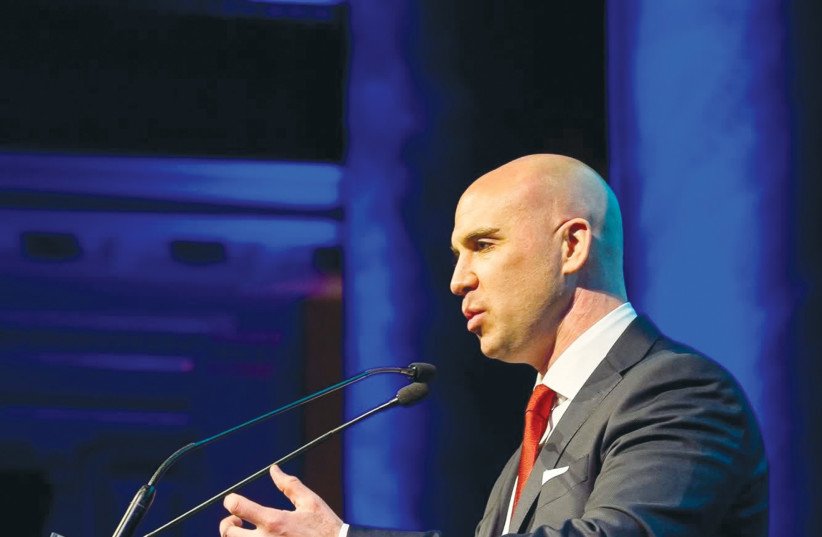
He described his overnight stay in Egypt before heading to the airport as generally comfortable—but shadowed by anxiety.
“We have a peace treaty, but we’re at war, and you never know,” he said.
Like Anthony, Ballard said the drive to the airport felt dangerous in its own right.
“As we drove down the road, you see vans stopped at a military checkpoint, queued up,” he said. “Then all the cars take off at once. And these vans are racing up this winding mountain road, passing each other across double lines.”
He tried to laugh it off with the driver.
“I kept joking, ‘I’m going to get killed going to the airport,’ and he laughed and said, ‘No problem, no problem.’”
A New Exit Strategy
For generations of young Israelis, Taba has been associated with Sinai getaways, cheap vacations, and the rite of passage of crossing south into Egypt.
But with war against Iran reshaping the region, it has taken on a very different role: an overland escape route.
What was once a leisure crossing has become a corridor of urgency, uncertainty, and improvisation—a modern exodus in reverse.
According to the Israel Airports Authority, more than 9,000 people left Israel via Taba between February 28 and March 3 alone. With Ben-Gurion Airport continuing to operate under restrictions, and outbound travel still limited as of March 23, those numbers were expected to grow.
For many, the journey was not only geographic. It was emotional, historical, and deeply symbolic.
In the Book of Exodus, the Israelites fled Egypt in haste, driven toward uncertainty and freedom.
In 2026, thousands found themselves fleeing through Egypt, driven by war, hoping simply to get home.
And so, amid sirens, border lines, potholed roads, rescue flights, and hastily packed sandwiches, the old story acquired a strange new echo:
This time, the road out of danger ran back through Taba.