The Israel–Palestine conflict is one of the longest-running and most complex geopolitical disputes in modern history. Rooted in historical, religious, political, and territorial disagreements, the conflict has shaped Middle Eastern politics for decades and continues to influence global diplomacy. Understanding its origins requires examining events from the late nineteenth century through the present day.
Origins of the Conflict
The roots of the Israel–Palestine conflict trace back to the late 1800s when nationalist movements began emerging across Europe and the Middle East. During this period, Zionism—a movement advocating for the establishment of a Jewish homeland—gained momentum among Jewish communities facing persecution in Europe.
At the same time, Arab nationalism was growing in the Middle East as people living in the region sought independence from Ottoman rule. Palestine, a region with deep historical and religious significance for Jews, Muslims, and Christians, became central to these competing national aspirations.
When the Ottoman Empire collapsed after World War I, Britain gained control of Palestine through the League of Nations mandate system. In 1917, the British government issued the Balfour Declaration, expressing support for the creation of a Jewish national home in Palestine while also stating that the rights of existing non-Jewish communities should not be harmed.
However, this declaration created tensions between Jewish immigrants and Arab residents in the region.
The Creation of Israel
After World War II and the Holocaust, international support for a Jewish state increased significantly. In 1947, the United Nations proposed a partition plan that would divide Palestine into separate Jewish and Arab states, with Jerusalem under international administration.
Jewish leaders accepted the plan, but Arab leaders rejected it, arguing that it unfairly allocated land and ignored the rights of Palestinian Arabs living in the region.
In May 1948, Israel declared independence. Immediately afterward, neighboring Arab states launched military action against the newly formed state. The war resulted in Israel expanding beyond the borders proposed by the UN plan.
For Palestinians, this event is remembered as the Nakba, meaning “catastrophe,” because hundreds of thousands of Palestinians were displaced from their homes.
The Gaza Strip and West Bank
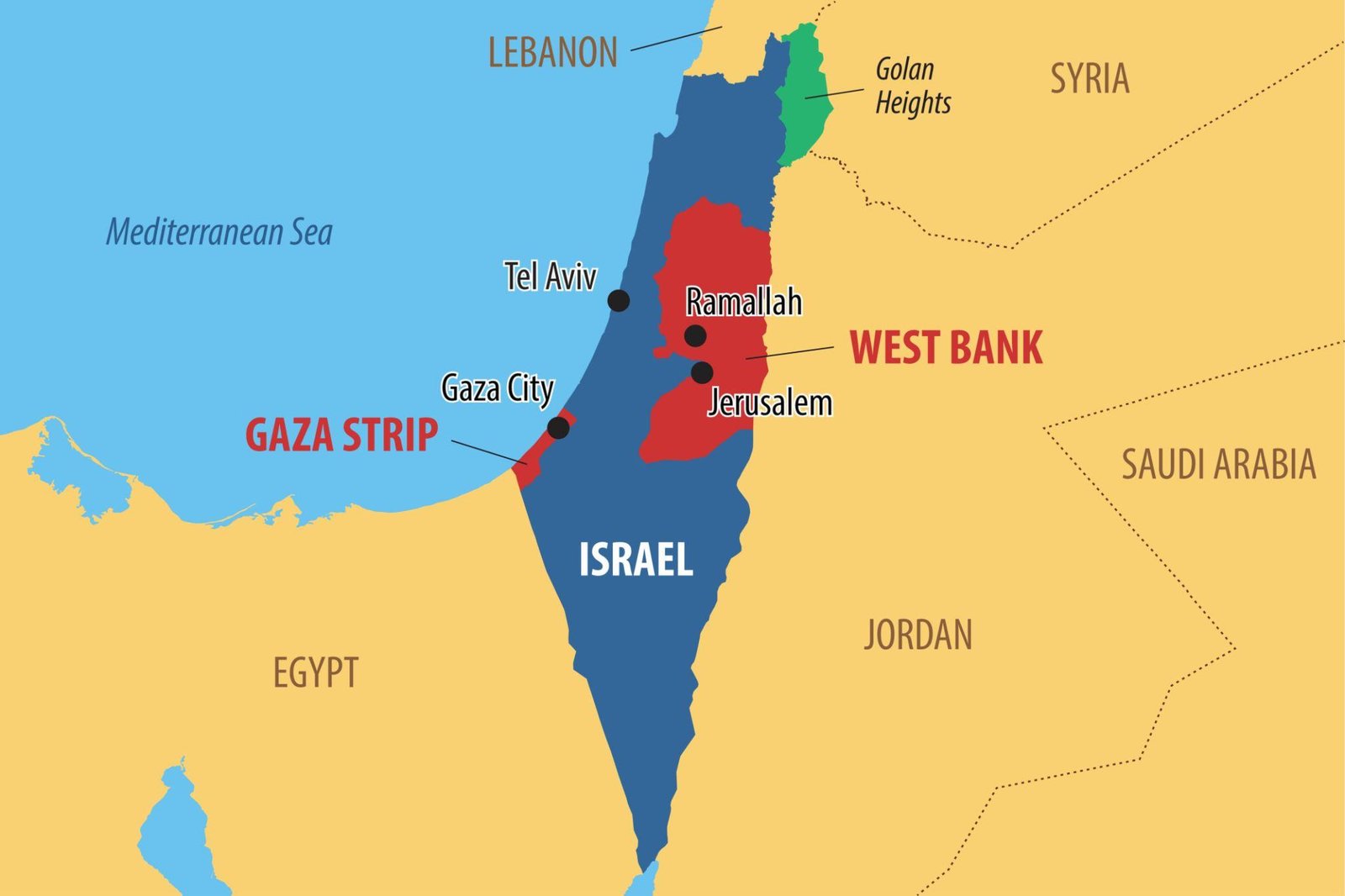
Following the 1948 war, the Gaza Strip came under Egyptian administration while the West Bank was controlled by Jordan. These territories later became central to the ongoing conflict.
In 1967, during the Six-Day War, Israel captured Gaza, the West Bank, East Jerusalem, and other territories. This significantly changed the political landscape of the region.
Since then, the status of these territories has been one of the most contentious issues in peace negotiations.
Palestinian National Movements
During the 1960s and 1970s, Palestinian political movements became more organized. The Palestine Liberation Organization (PLO) was formed to represent Palestinian national aspirations and advocate for the creation of a Palestinian state.
Over time, different factions within Palestinian politics emerged with varying strategies, ranging from diplomatic negotiations to armed resistance.
In the late twentieth century, peace efforts between Israeli and Palestinian leaders intensified.
Peace Efforts and Agreements
One of the most significant diplomatic efforts was the Oslo Accords in the 1990s. These agreements created the Palestinian Authority and aimed to establish a framework for future negotiations toward a two-state solution.
The accords allowed limited Palestinian self-governance in parts of the West Bank and Gaza. However, the agreements did not resolve core issues such as borders, refugees, Jerusalem’s status, and Israeli settlements.
Despite multiple rounds of negotiations over the years, a final peace agreement has not yet been reached.
Humanitarian Impact
The conflict has had a profound humanitarian impact on civilians living in the region. Communities in both Israel and Palestinian territories have experienced violence, displacement, economic hardship, and psychological trauma.
Infrastructure damage, limited access to resources, and restricted movement have created ongoing challenges for everyday life in conflict zones.
International aid organizations and humanitarian groups continue to work in the region to provide support to affected populations.
Global Diplomatic Responses
The Israel–Palestine conflict is closely watched by governments and international organizations worldwide. The United Nations, the United States, the European Union, and many regional powers have all been involved in diplomatic efforts aimed at achieving peace.
However, differing political interests and perspectives have often complicated international mediation efforts.
The Role of Media and Public Opinion
In the digital era, media coverage plays a significant role in shaping global perceptions of the conflict. Social media platforms allow information—and sometimes misinformation—to spread rapidly across the world.
This has made accurate reporting and responsible journalism increasingly important.
Conclusion
The Israel–Palestine conflict remains one of the most challenging geopolitical issues in modern history. Its roots lie in historical claims, national identities, and political struggles that span more than a century.
While numerous peace efforts have been attempted, lasting resolution continues to require dialogue, compromise, and international cooperation.
Understanding the historical background of the conflict is essential for anyone seeking to grasp the complexity of the situation and the importance of future diplomatic solutions.