
By Noam Shalev
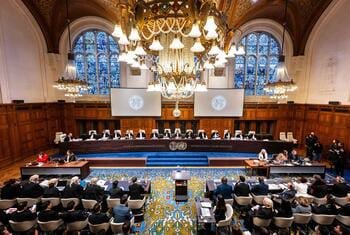
The International Court of Justice made history on Thursday, November 19, 2026. For the very first time, the court ruled that a country, Myanmar, committed genocide under the 1948 Genocide Convention. Nine judges voted for, six against, in a case brought by The Gambia. The verdict found Myanmar responsible for acts of genocide against the Rohingya Muslim minority in northern Rakhine State during the brutal military campaign of 2017. For Rohingya survivors and refugee families living in Bangladesh, the ruling finally delivered long awaited legal recognition. But the impact did not stop there, as it sent shockwaves through Jerusalem too. Today, The Jerusalem Post argued in an editorial that this decision finally sets the record straight in a world where the term “genocide” has been tossed around too casually. At the same time, the paper warned Israelis not to treat this ruling as a free pass in South Africa’s pending genocide case against Israel over Gaza.
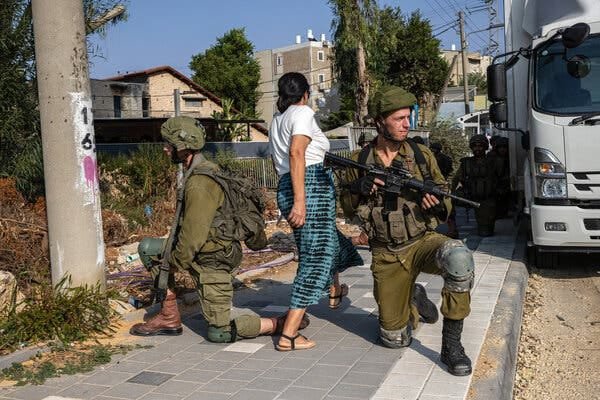
For more than three years after the horrors of October 7, 2023, critics of Israel threw genocide accusations around like political grenades. Every airstrike, evacuation, or humanitarian crisis in Gaza was quickly labeled as genocide, barely pausing to consider whether the allegations met the strict legal standard. But international law draws a clear line: genocide is not just about war crimes, mass displacement, or civil suffering. It is about proving that someone intended to wipe out, in whole or in part, a national, ethnic, racial, or religious group, on purpose. Comparing Israel’s intense urban combat against Hamas (who dug in among civilians after massacring about 1,200 Israelis and kidnapping 251 hostages) to a planned campaign of ethnic extermination cheapens the legal structure we built after the Holocaust. The verdict reminds everyone that the world’s highest court will not slap the “genocide” label on a situation just because protesters shout it loud or diplomats repeat it in press statements. Genocide is proven by evidence, context, and intent, not volume.
What really sets the Myanmar case apart is the avalanche of proof showing systematic persecution long before and during the 2017 crackdown. For years, Myanmar stripped Rohingya of citizenship, trapped them in their own villages, took away basic rights, and subjected them to deep discrimination. Then, in 2017, security forces and their allies unleashed mass killings, sexual violence, destroyed entire communities, and forced more than a million Rohingya to flee to Bangladesh. Even after the worst violence, the court found Myanmar kept violating its duties, destroying evidence by burning remnants of Rohingya villages in May 2020 and building a government base on what used to be a Rohingya village in 2021. The judges saw these actions as signals of a deeper intent: the only logical explanation for the ongoing pattern was a deliberate plan to destroy a big chunk of the Rohingya population in Rakhine. Their conclusion rested on careful, concrete findings, not slogans.
Still, Israel’s legal scholars and policymakers should not feel smug or breathe easy. The court did not just look at a few isolated incidents, as it considered big picture patterns: official hostility, structural oppression, everything surrounding the crackdown. The verdict also made it clear that claiming national security or counterinsurgency is not a magic shield. If wider evidence points to intent to destroy a protected group, a state is still under the microscope. South Africa’s genocide case against Israel, filed in December 2023, is still winding through its paperwork and procedures. South Africa submitted its memorial in October 2024, Israel counter filed in March 2026, and now the court expects South Africa’s reply in November 2027 and Israel’s rejoinder in May 2029. So a verdict is years off, but the way the Myanmar case scrutinized evidence gives Israel’s lawyers a lot to think about.
Inside Israel, this intersection of domestic politics and international law cannot be brushed aside. Too often, our leaders ignore how inflammatory statements from fringe ministers or radical voices hand ammunition to adversaries, making it easy for outsiders to paint every military action as evidence of malicious intent. Even if international judges distinguish between gross negligence and genocidal intent, reckless political talk complicates Israel’s defense. Words shouted for applause at home reverberate all the way to The Hague. To defend Israel’s legitimate security moves, the government needs discipline, not just in military conduct, but in its political speech. Official policy has to stick to international humanitarian law, plain and simple.
There is also a moral aspect, and it is just as important. Israelis need to talk about the Rohingya’s suffering with genuine empathy and a real sense of responsibility. Their ordeal is not just a debating point in arguments about Gaza. The court ordered Myanmar to let Rohingya return home safely, pay compensation, and actually prosecute those who committed atrocities. Treating their tragedy as a pawn in other diplomatic battles erodes the very gravity of international law. Insisting on tough evidentiary standards for all cases, whether Myanmar, Israel, or any other Genocide Convention signatory, means demanding fairness across the board.
Thursday’s ruling sends a clear double message. It pushes back against people who slap “genocide” on every ugly conflict without proof, but it also warns against complacency. Genocide needs to be proven in court, through facts and evidence, not declared by activists or ignored by politicians wishing it away. For Israel, the path ahead is not simple. It takes careful legal planning, measured statecraft, and a sober appreciation that protecting our security and defending our reputation go hand in hand.
About the Author
Noam Shalev is a Political Affairs Commentator covering Israeli government policy, US Israel relations, coalition politics, and diplomatic engagement across the Middle East.