
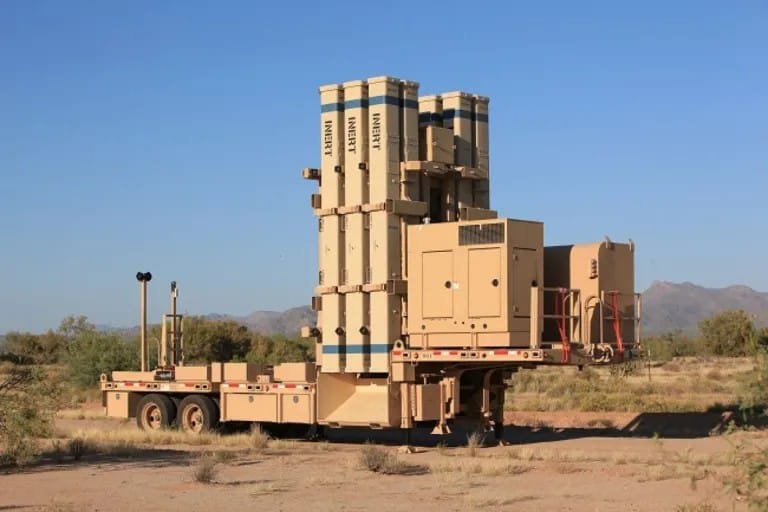
By Israel Dispatch
Bloomberg reported, through sources like The Jerusalem Post and The Times of Israel on Friday, November 20, 2026, that Israel has finished a serious upgrade to its David’s Sling air defense system. This is not just a routine tweak, as it is a major jump in both range and capability. Built together by Israel’s Rafael Advanced Defense Systems and American defense giant RTX, the newly enhanced David’s Sling can now intercept a bigger lineup of ballistic missiles and is tough enough to stay in the fight for weeks, even under constant attack. Military officials hail this as a leap forward in resilience. But if you look closer, the big reveal here is not just about technology; it is about how messy, relentless modern war has become. Israel is not just parading a shiny new achievement, as it is scrambling to close the dangerous gaps the last war opened up wide for everyone to see.
For decades, Israel designed its layered missile defenses for sudden explosions of violence, such as rocket barrages that last a few days. The assumption? Short, sharp shocks, not endless bombardments from a rival state’s massive missile stockpile. Uzi Rubin, who helped build Israel’s first nationwide shield and now works at the Jerusalem Institute for Strategy and Security, put it pretty bluntly: the original systems were meant to handle a handful of incoming threats, not hundreds all at once. That idea got blown apart in 2025 and 2026. Iran hammered Israel with wave after wave of missiles during the June 2025 clashes and then an exhausting forty day war in early 2026. The result? Israel’s interceptor missiles, which are pricey and limited, almost ran out. Worse, two failed interceptions, during attacks on Arad and Dimona in March, proved the existing defense layers had real holes.
Here is the heart of the matter for the Israeli Air Force and Defense Ministry: it is not just about outsmarting enemy rockets. It is about math, ugly and expensive math. Using the top of the line Arrow 3 interceptor against every missile is not just reckless, it is financially impossible. Each Arrow 3 round costs about $2.5 to $3 million. The American Patriot PAC 3 is even more eye watering, clearing $4 million per shot. David’s Sling, on the other hand, fires Stunner interceptors at roughly $1 million each. So by making David’s Sling more flexible and able to hit higher altitude threats, the military wants to shift much more of the missile busting burden to a shield that is still costly, but far less so. The pricier upper tier batteries, like Arrow 3, are reserved for threats you absolutely cannot afford to miss.

Still, when your enemy has the industrial capacity to launch barrages and flood the sky with missiles, $1 million per shot stays a steep bill. Israeli intelligence says Iran still has about 1,700 ballistic missiles in stock, plus factories pushing out 50 more each month. At the same time, the world’s interceptor missile supply lines are tight. The U.S. and Europe have been burning through their own supplies supporting not just the Middle East, but Ukraine too. European countries like Finland and Greece have signed on for David’s Sling, and Germany now fields Arrow 3, so demand is up but supply is not endless. Everyone is chasing the same high precision missile tech, and there is only so much to go around.
A senior Israeli air defense official, who spoke anonymously to Bloomberg, said the upgraded David’s Sling means Israel can hang tough for weeks if under sustained attack. Engineers pored over in the field data from this spring’s fighting and tweaked the Stunner’s tracking and propulsion, directly addressing the vulnerabilities revealed in those scary moments near Arad and Dimona. This rapid fire loop, where battlefield setbacks feed instantly into improvements back at the lab, is one of Israel’s signature strengths in defense innovation.
But here is the thing: no matter how much you polish these interceptors, raw technology is not enough. As Uzi Rubin reminded Bloomberg, the way forward is cheaper, next generation options, including kinetic kill vehicles and big leaps like laser defense systems. Protecting Israel from bankruptcy is just as important as shielding it from incoming missiles. And, really, defenses like David’s Sling are only part of the answer. Missile shields buy diplomats and generals time, but they do not end wars. If Israel keeps relying just on these systems, it lets Iran keep deciding when and how things escalate.
Now, as Jerusalem wrangles over a new government in the 26th Knesset and rethinks its strategy with Washington, the David’s Sling upgrade should be seen as more than a military tweak. Sure, extending the reach of our missiles makes us tougher on the battlefield. But staying secure for years to come takes something bigger, a strategy that stops missile barrages from starting in the first place. If Israel wants real, lasting safety, it has to look far beyond improving the shield. The real goal is to make sure enemies think twice before reaching for those launch buttons at all.
About the Author
Israel Dispatch provides authoritative, non partisan analysis on Israeli security, political dynamics, regional geopolitical shifts, and sovereign foreign policy.