By Eitan Levi
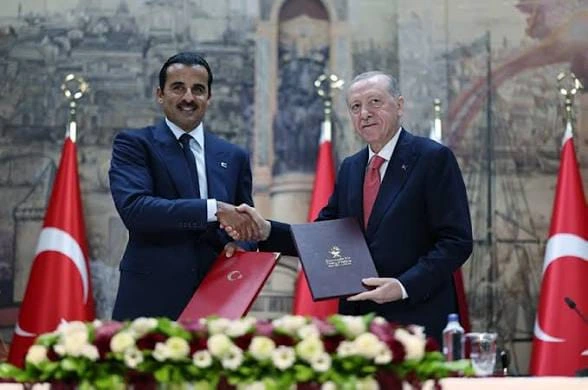
When Turkish President Recep Tayyip Erdoğan and Qatari Emir Sheikh Tamim bin Hamad Al Thani signed that mutual defense agreement at Istanbul’s Dolmabahçe Palace on November 13, 2026, it was not just another ceremony, as this deal marked a real shift in how Middle Eastern security alliances are taking shape. Ankara and Doha had already spent years tightening their relationship. Political ties, economic connections, military cooperation, these two have been in sync for over a decade, especially since they created their Supreme Strategic Committee back in December 2014 and stationed Turkish troops in Qatar. But this latest agreement pushes things up a notch. Their partnership is now a formal, structured system for collective defense. The ripple effects go way beyond just Türkiye and Qatar. Jerusalem, for instance, faces a new reality. The region’s power players are building a security network that connects Gulf money, Turkish weapons manufacturing, and Pakistan’s military muscle, a country that has nuclear weapons, no less, all outside the familiar American security umbrella.
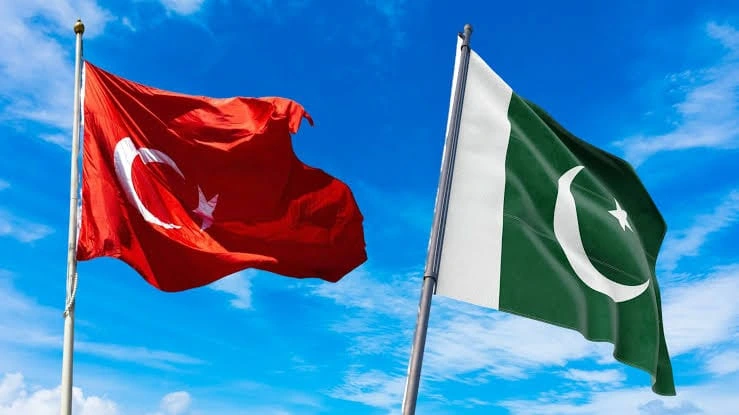
It is not like the Istanbul treaty popped up out of nowhere. It actually forms the third pillar of a big, layered security web that has been coming together across the Muslim world throughout 2026. On August 7, Saudi Crown Prince Mohammed bin Salman, Erdoğan, and Pakistani Prime Minister Shehbaz Sharif wrapped up the Mecca Joint Defense Agreement. This pact, 16 articles, and rooted in an earlier Saudi Pakistani bilateral deal, passed parliamentary checks in Saudi Arabia, Pakistan, and Türkiye, and officially kicked in on November 14. Just before that, on October 21, defense leaders from Türkiye, Qatar, Pakistan, and Indonesia met in Doha to sign the Badr Memorandum of Understanding. They picked the name “Badr” deliberately, calling on collective unity. The agreement lays out a two tier structure, Executive and Strategic Boards, focused on joint military production, aerospace engineering, tech training, and moving technology around.
Pakistan stands at the heart of both the Mecca alliance and Badr industrial pact, turning what might usually look like typical Gulf diplomacy into something much deeper. Pakistan is the only Islamic country with nuclear weapons and it has one of the region’s biggest, most battle tested armies. Islamabad brings real manpower and operational strength. The country has already sent around 8,000 troops to Saudi Arabia to help defend the kingdom, and later this month, Pakistan is hosting the first summit of the alliance’s main players in Islamabad, showing it is serious about scaling up from bilateral ties to multilateral influence. For Pakistan, struggling with economic pressures and border tensions, getting closer to Gulf states and tapping into Türkiye’s booming aerospace sector offers much needed financial lifelines, new export markets, and a clear boost in diplomatic visibility.
What really pushed Doha, Riyadh, Ankara, and Islamabad toward formalized security guarantees was the dizzying upheaval the region has been hit with over the past two years. Gulf leaders watched as the neighborhood got messier, and their nerves grew when Iranian missiles targeted the U.S. Al Udeid Air Base in Qatar earlier this year, while Israel’s dramatic September 2025 strike hit senior Hamas figures inside Doha. With growing doubts about America’s willingness to keep playing regional policeman, and fears of wider Gulf conflicts, the Gulf states started rethinking their dependency on American protection. They saw that just sticking under the U.S. security umbrella does not always keep them safe from escalation. So now, by teaming up with Türkiye’s defense industry and Pakistan’s military, Doha and Riyadh are sending a strong message to Tehran and Jerusalem: their sovereignty is backed up by real, multi layered support.
But, you know, ceremony and actual combat readiness are not always the same thing. Türkiye’s Defense Ministry made it pretty clear today, the new pact with Qatar does not mean either country has to send troops automatically if there is an attack on the other. Same goes for the Mecca pact: after it was signed in August, Houthi strikes landed on Saudi soil, and there was not any coordinated military answer from Ankara or Islamabad. So, turning these treaties and memoranda into a real defense bloc is no simple task. What they really need are integrated command structures, logistics that work together, solid rules of engagement, and, perhaps most importantly, a shared idea about who the main threat actually is.
That question, who is the real threat?, opens up some of the biggest divides within this emerging network, and it is the reason Israel cannot just leave this story alone. Saudi Arabia is very concerned about Iranian missiles and Houthi rebels, but Türkiye and Qatar keep active diplomatic channels open with Tehran. Just late October, they even sat down with Iranian leaders alongside Pakistani officials. On top of that, Ankara and Doha are not shy about their criticism of Israel, they spent much of their Istanbul summit condemning Israel’s military actions in Gaza and gave strong support to Palestinian factions. The idea of Turkish drone technology, Qatari money, and Pakistani military know how all bundled into institutionalized defense partnerships, yes, that creates a complicated chessboard for Jerusalem, especially at a moment when Israel’s relationships with Washington and Europe are under so much strain.
Yet Israeli policymakers cannot afford to confuse active diplomacy with some big, unified military machine. Each partner still has priorities pulling them in different directions. Türkiye is tied to NATO and its economy is linked with Western markets; Saudi Arabia needs regional stability and American support to transform its economy; Pakistan is juggling Gulf alliances with its own domestic security tensions, as well as its delicate dialogue with Iran. Getting these overlapping agreements to actually function as a single fighting force is going to be a real challenge.
Still, the trend across the Middle East is impossible to miss. These countries are not sitting back anymore, waiting for Washington to decide how they will keep themselves safe. They are putting together home grown defense industries, signing their own treaties, and building multilateral setups so they can chart their own security course. As Israel tries to shape a new government in Jerusalem and rebuild its strained international alliances, it is pretty clear we need to factor this evolving Türkiye Qatar Pakistan Saudi network into our planning. Dealing with this kind of institutionalized bloc, partners who are not always friendly, and neighbors who are more skeptical than ever, means Israel needs to hang on tight to its qualitative military edge, and get serious about nimble, proactive diplomacy. That is the only way to keep regional isolation from turning into long term strategic encirclement.
About the Author
Eitan Levi is a Security and Geopolitical Analyst with expertise in Israeli defence strategy, Iran’s regional operations, Middle Eastern power rivalries, and Israel’s security partnerships.