
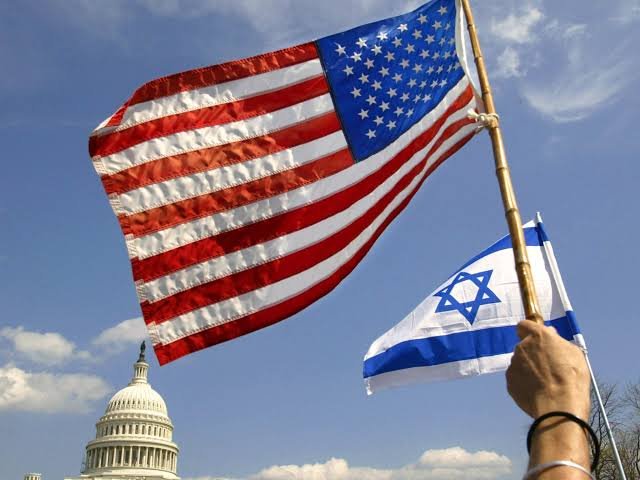
For eight decades, Israel’s military and diplomatic establishment operated under an unspoken axiom. American support was viewed not as a volatile political arrangement, but as a permanent condition of nature. Presidential administrations would change, diplomats would offer sharp critiques, and disputes over settlement policy would flare up in Washington. Yet the foundational bedrock remained unyielding. Bipartisan majorities in Congress, strong public sympathy, annual military aid on autopilot, and unconditional vetoes at the United Nations Security Council were treated as structural certainties.
That long-standing assumption is unraveling. The threat Israel now faces on the American domestic front is not a sudden battlefield reversal or a temporary diplomatic dispute. It is a profound, demographic transformation that is already visible in long-term polling data.
For the first time in modern history, the generational and political consensus underwriting US support for Israel is collapsing. Gallup has tracked American sympathies in the Israeli-Palestinian conflict since 2001. For two decades, public support favored Israel by margins often exceeding forty percentage points. In 2026, that advantage vanished. Gallup reported that 41 percent of Americans now sympathize more with Palestinians, compared to 36 percent with Israelis.
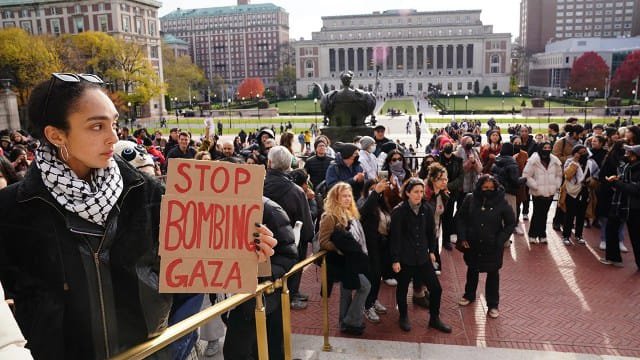
Data from the Pew Research Center paints an even starker picture of this shift. Unfavorable views of Israel among American adults climbed to 60 percent, nearly doubling from 42 percent in 2022. Among self-identified Democrats, unfavorable views reached an astonishing 80 percent, while 59 percent of Americans overall express little to no confidence in Prime Minister Benjamin Netanyahu’s handling of world affairs.
This erosion is not distributed evenly across the political spectrum; it is overwhelmingly concentrated among younger Americans across all political parties. Gallup’s 18-to-34 age cohort now sympathizes with Palestinians by a clear majority of 53 percent. Polling conducted by Youth Surveys revealed a remarkable generational divide: while Baby Boomers score a net positive 34 points on pro-Israel indices, Generation Z scores a net negative 22 points.
A fifty-six-point swing across a single generation is not statistical noise, nor is it a temporary aberration driven by a single news cycle. It represents a fundamental shift in formative historical memory. Older generations of Americans viewed Israel through the lens of the Holocaust, the miracles of the 1967 Six-Day War, or as a vital democratic ally standing against Soviet-backed regional aggression. For Generation Z and younger Millennials, their formative memories are defined by the catastrophic aftermath of October 7, high-tech urban destruction in Gaza, and endless, live-streamed conflict on social media feeds.
Israeli political strategists have long assumed that any sudden drop in public support would eventually follow a predictable rally effect. Historical shocks like Pearl Harbor or the 1973 Yom Kippur War initially produced intense public sympathy that consolidated support. However, the post-October 7 sympathy wave proved fleeting in the United States, decaying within months into deep ideological division.
The failure of public opinion to rebound highlights a structural truth: American alignment with Israel was never a free-floating emotional attachment. It was underwritten by specific post-World War II geopolitical conditions. Israel was once perceived as an embattled David fighting against regional Goliath state coalitions. Today, to the average young American, Israel is viewed as the dominant regional power possesses one of the world’s most advanced military forces.
Cohort replacement in an electorate is a relentless process. Every year, older pro-Israel voters pass away and are replaced by younger voters whose political views are shaped by modern digital media ecosystems and progressive activism. This reality cannot be reversed by traditional public diplomacy. Traditional public relations campaigns, influencer trips, or congressional delegations to the Golan Heights cannot overcome a structural generational realignment.
Running this demographic arithmetic forward reveals severe implications for Israeli national security. The current ten-year Memorandum of Understanding providing $3.8 billion in annual U.S. military aid expires in 2028. The congressional negotiations for the next agreement will be conducted in a Capitol Hill environment filled with lawmakers who came of age politically after October 7. Automatic UN Security Council cover and unconditional weapons transfers are no longer guaranteed political constants. They are political outputs sustained by an electorate that is rapidly changing.
Within a decade, the central debate in Washington will no longer be how to support Israel, but whether to support Israel at all without strict political, legal, and territorial conditions. Israeli governments accustomed to treating American backing as a blanket blank check will find themselves forced to negotiate terms from an unaccustomed position of vulnerability.
This trajectory is not entirely irreversible. Public opinion reacts to real-world events, and a meaningful diplomatic framework, shifts in Israeli domestic policy, or strategic adjustments could alter the current trendline. But assuming that time remains on Israel’s side, or that the special relationship is an indestructible asset rather than a fragile political arrangement, is the single most dangerous error Israeli strategy can make.
Jerusalem must wake up to the reality that the political ground beneath its most critical alliance has shifted. For decades, Israeli leaders treated physical borders as the primary front line of national survival. Today, the battle for the country’s long-term strategic depth is being fought inside American universities, suburban school districts, and congressional primaries. Winning on the battlefield while forfeiting the core strategic partner that arms, funds, and protects the state on the global stage is a path toward catastrophic isolation. Israeli policy must adapt to this reality before the generational clock runs out entirely.