An Executive Briefing on Strategic Accountability, IDF Institutional Duty, and the Political Mechanics of Conflict
I. Peacetime Audit vs. Emergency Mobilization
When an electorate is asked to judge a leader during peacetime, it weighs structural accountability, economic performance, and strategic vision. When that same electorate is asked to vote under the immediate shadow of ongoing military operations, the psychological framework shifts entirely. This political reality forms the core dilemma of Prime Minister Benjamin Netanyahu’s upcoming campaign. If the approaching Israeli elections are fought as a domestic audit of leadership, focusing on the intelligence failures of October 7, the unresolved fate of hostages, growing international isolation, and the heavy economic burden of long term mobilization, the ruling Likud party faces an exceptionally steep uphill climb. However, if the campaign takes place amid an active security emergency, the national dialogue transforms instantly from past accountability to immediate survival.
II. The Erosion and Reconstruction of ‘Mr. Security’
For decades, Netanyahu’s primary political branding relied on the moniker ‘Mr. Security’. His central thesis to the Israeli public was straightforward: the Middle East is an uncompromising environment, regional threats are existential, and only his experience and toughness stand between the nation and catastrophe. Under normal circumstances, the massive structural breakdown of October 7 should have shattered that political shield permanently. The failure was not a lack of tactical military power, but a flawed strategic doctrine that believed the conflict with the Palestinians could be indefinitely managed, contained, and bypassed rather than politically resolved.
Yet in political life, active conflict acts as a powerful strategic eraser. When sirens sound and multi front tensions escalate, past miscalculations are pushed aside by acute fear of future threats. A nation under attack naturally gravitates toward familiar, hardline leadership, prioritizing security management over political accountability. This environment creates a powerful structural incentive for a struggling political leader to prolong or widen security operations rather than pivot toward complex, compromise heavy diplomatic solutions.
III. Multi-Front Vulnerability as Political Utility
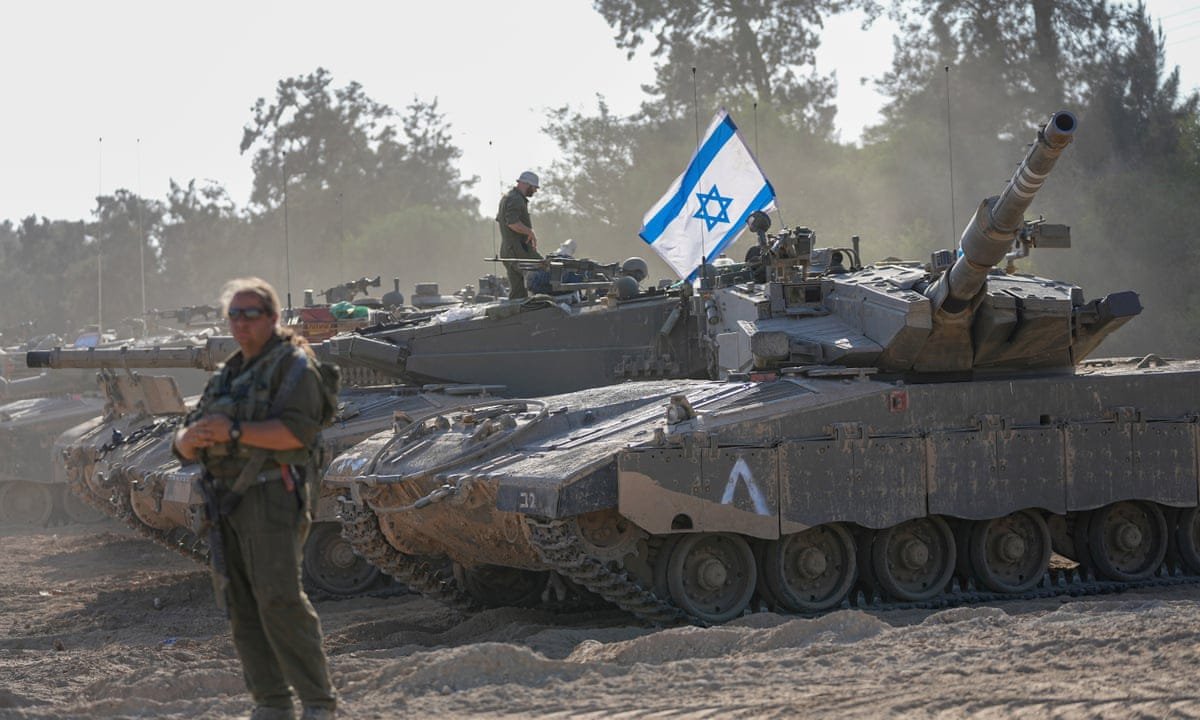
The geographical theater of such a security crisis is almost secondary to its political utility. It could unfold in Gaza, where tactical victories over Hamas have deliberately not been paired with a viable political alternative or legitimate Palestinian governance. It could erupt in the West Bank, driven by expanding settlements and mounting despair. It could manifest along the northern border in Lebanon, across Syria, directly against Iran, or even through escalating friction with regional actors like Turkey. For a campaign seeking to reset the national conversation, any active front serves the purpose of keeping fear at the center of the political stage.
Diplomacy requires immediate, difficult choices that break political coalitions. A strategic peace framework demands definitive answers regarding the post war governance of Gaza, the role of a reformed Palestinian Authority, the long term status of West Bank settlements, and regional normalization agreements tied to Palestinian statehood. For Netanyahu’s current governing coalition, addressing any of these diplomatic requirements would trigger instant political collapse from his far right coalition partners. Military action, by contrast, postpones these systemic political decisions indefinitely. Tactical operations, whether targeted strikes, localized ground maneuvers, or regional posturing across borders, allow the leadership to project strength without making binding political commitments.
IV. Institutional Duty of the Israel Defense Forces
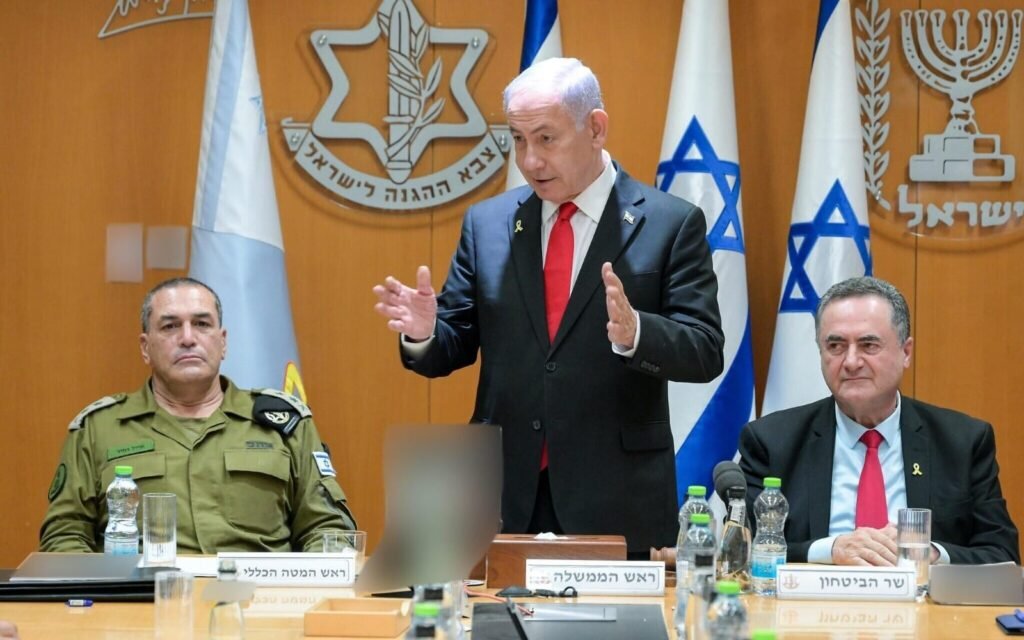
This operational dynamic places an immense institutional burden on the Israel Defense Forces and the Chief of Staff. While the military remains strictly subordinate to the elected civilian government, its professional leadership holds a solemn duty to distinguish between genuine operational necessity and politically driven escalation. The IDF chief must provide unvarnished security assessments to the cabinet, evaluating whether proposed combat operations serve clear national defense goals or merely prolong a state of emergency to shield political leadership. Every proposed engagement must answer four essential questions: What is the military objective? What is the political objective? What happens the day after? How does this make Israel safer in five or ten years?
If military force is deployed primarily as an instrument of political self preservation, institutional accountability requires senior commanders to draw firm lines to ensure that soldiers are not used as campaign assets. Should a military chief conclude that a war is being driven by electoral calculations rather than genuine defense imperatives, professional integrity demands clear resistance. In an extreme scenario where professional warnings are ignored, resigning rather than executing an unnecessary campaign remains the ultimate act of accountability to the troops and the public.
V. Strategic Security vs. Perpetual Conflict
The ultimate vulnerability of a permanent war posture is that tactical military success does not automatically translate into strategic security. Repeated assassinations, destroyed infrastructure, and endless counter insurgency operations without a clear political endpoint produce a cycle of perpetual conflict. Real security is achieved when military strength is leveraged to establish enforceable regional arrangements, secure borders, and build stable political structures that make future wars less likely. True victory is not defined by another destroyed building, but by a regional architecture that integrates Israel through strategic partnerships, such as Saudi normalization, while resolving the core Palestinian issue.
Furthermore, the prospect of utilizing security emergencies to alter democratic timelines presents a direct challenge to governance. While an Israeli prime minister cannot unilaterally cancel elections, intense security crises naturally generate momentum to postpone public accountability. Establishing the principle that national emergencies must never become instruments to delay democratic judgment is vital for protecting democratic norms.
VI. The Reckoning of Regional Stabilization
The political scenario that Netanyahu’s campaign strategy fears most is not an enemy army, but the total absence of war. An election held in an environment of regional stabilization would force the governing coalition to defend its actual record. It would mandate direct answers for the failures of October 7, the concept of managing Hamas, and the political choices that led to long term isolation.
As election day approaches, the central question facing Israeli voters is not whether the nation possesses the military capability to continue fighting on multiple fronts. The real question is whether an ongoing state of emergency serves the long term defense of the State of Israel, or merely provides a political lifeline for a prime minister seeking to avoid a final reckoning with his record.