
Strategic Assessment of Islamabad’s Expanding Footprint, the Mecca Pact, and Shifts in Regional Security Architecture
I. Shift from Periphery to Center
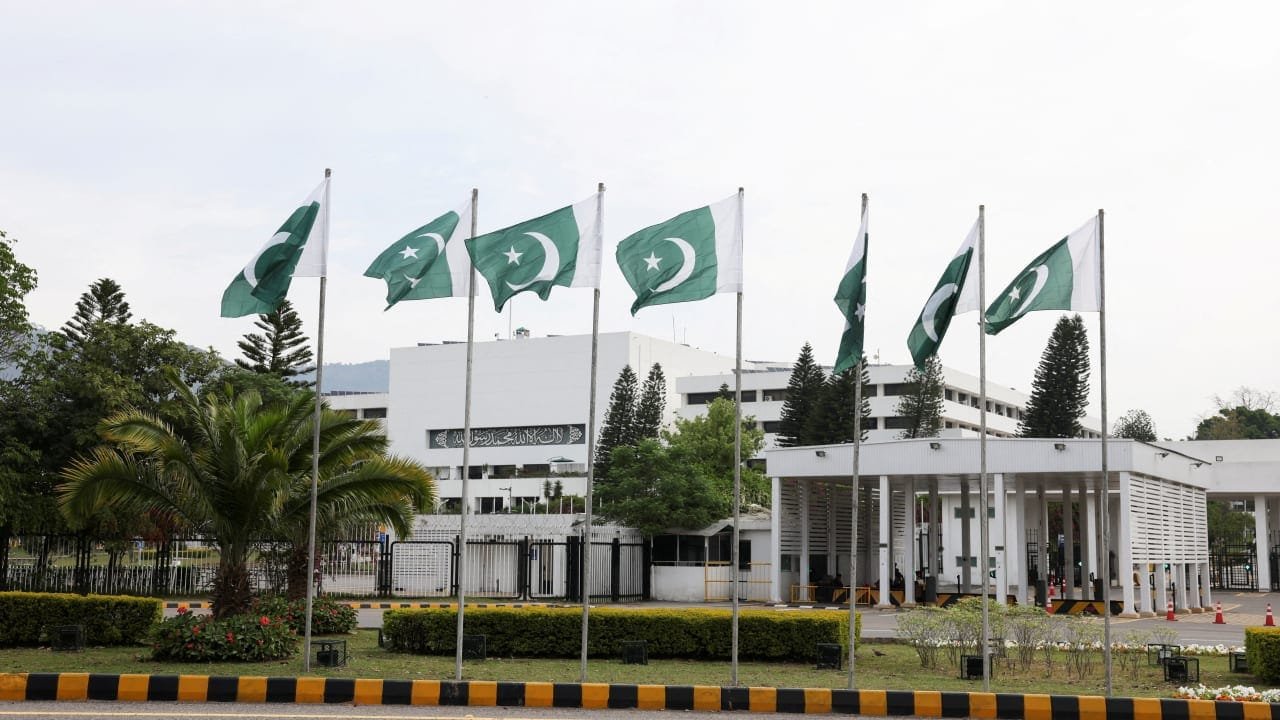
For planners in Jerusalem, the quiet expansion of Pakistan’s footprint across the Middle East represents far more than routine South Asian diplomacy. It signals a structural recalculation of regional power. For years, Israeli defense analysts viewed Islamabad through a focused lens: a nuclear state with a large military, but one fundamentally consumed by its eastern border with India and internal domestic crises. That limited view is no longer sufficient. Over the past year, Pakistan has moved steadily from the periphery of Middle Eastern affairs to the center of its geopolitical machinery.
The diplomatic momentum built rapidly. In April 2026, Pakistani officials facilitated discreet discussions in Islamabad between American and Iranian envoys following the escalation between Washington, Israel, and Tehran. By August, Field Marshal Asim Munir prepared for high level consultations in Tehran, maintaining direct lines with Iranian Foreign Minister Abbas Araghchi while simultaneously preserving working credibility with the Trump administration. Soon after, Syrian Foreign Minister Asaad Hassan al Shaibani arrived in Islamabad for a landmark visit, marking the first time a Syrian foreign minister set foot in Pakistan in nineteen years. During these talks, Damascus expressed explicit interest in joining the newly formed Mecca Agreement for Mutual Defense, placing Pakistan alongside Saudi Arabia and Turkey as a primary strategic pillar of post Assad Syria.
II. The Mecca Pact and the New Sunni Security Architecture
From Jerusalem, this emerging dynamic demands immediate operational attention. The strategic framework of the Middle East is shifting away from simple bilateral arrangements toward complex, multi layered security umbrellas. Central to this transformation is the Mecca Pact, a trilateral Sunni security bloc anchored by Saudi Arabia, Turkey, and Pakistan. The pact combines Saudi financial capital, Turkish defense technology and military footprint, and Pakistan’s massive conventional armed forces alongside its nuclear deterrence.
What concerns Israeli strategic planners is not merely the core triad of Riyadh, Ankara, and Islamabad, but the rapid expansion of this orbit. Syria’s declared ambition to join the Mecca Pact represents a profound shift on Israel’s northern border. For decades, Syria served as the forward operating base for Iran’s Resistance Axis. If a post Assad Damascus shifts into a Sunni security architecture backed by Pakistani military expertise and Turkish geopolitical weight, Israel faces an entirely new reality along the Golan Heights.
III. Geographical Expansion and Turkish Leverage
At the same time, this strategic network is extending toward the Persian Gulf and South Asia. Pakistan and Kuwait recently formalized a comprehensive defense cooperation framework aimed at intelligence sharing and military training. Meanwhile, Bangladesh has signaled growing interest in aligning with the Mecca Pact framework, expanding the footprint of this security concept deep into the Indian Ocean maritime corridor. The consolidation of such an alliance creates a vast Sunni defense consensus stretching from North Africa through the Levant into South Asia.
For Israel, the primary worry is the inclusion of Turkey within this framework. As relations between Jerusalem and Ankara deteriorate over northern Syria and broader regional influence, Turkey’s participation in a binding defense pact with Pakistan gives Ankara significantly greater leverage. A strong Turkish-Pakistani military axis operating with Saudi backing complicates Israeli operational freedom across the Eastern Mediterranean and the Red Sea.
IV. The Dual Function: Diplomatic Bridge and Counterweight
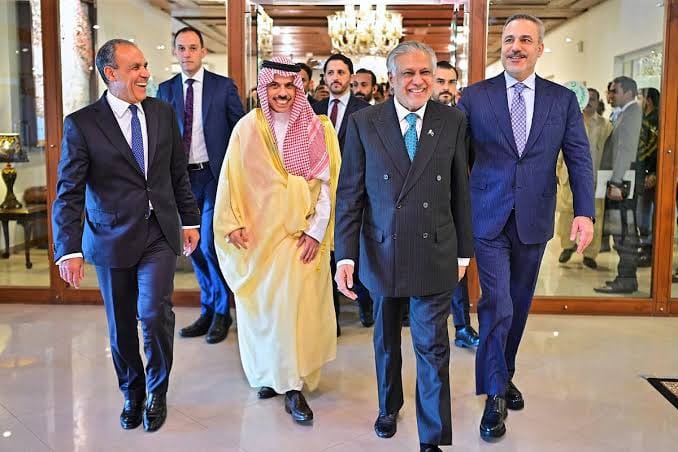
Yet, Pakistan’s unique value in this evolving matrix lies in its dual capacity to project military credibility while serving as a rare diplomatic bridge. Islamabad is one of the few capitals capable of maintaining functional lines of communication with Washington, Tehran, Riyadh, Ankara, and Damascus simultaneously. When Mohsen Rezai, head of Iran’s Supreme National Security Council, threatened to shut down energy exports through the Strait of Hormuz in response to renewed US economic pressure, it was Pakistani diplomacy that stepped in to maintain open channels between Washington and Tehran.
This diplomatic dexterity presents Israel with a complex calculation. On one hand, an active mediator capable of preventing total systemic collapse between the US and Iran provides short term operational predictability. It prevents uncontrolled escalation in the Persian Gulf that could disrupt global energy markets and force uncoordinated military shifts. Furthermore, Pakistan’s active engagement in Syria could act as a counterweight to Iranian proxy re-emergence, preventing Tehran from rebuilt Hezbollah supply lines through Syrian territory.
V. Long-Term Strategic Risks and Nuclear Implications
On the other hand, the long term consolidation of a Pakistan anchored defense bloc introduces deep strategic risks for Israel. The Abraham Accords were built on the premise of regional integration between Israel and moderate Arab states facing a common Iranian threat. If key Gulf partners and regional players increasingly look to a Muslim defense alliance centered on Pakistan and Turkey for their security guarantees, Israel’s relative strategic leverage changes.
The integration of Pakistan into Middle Eastern security dynamics also brings a nuclear state into the regional balance of power. While Pakistan’s nuclear doctrine remains focused on South Asia, its deepening institutional ties with Middle Eastern armed forces inevitably alter security perceptions in Jerusalem. Joint training exercises, defense technology transfers, and shared intelligence protocols between Pakistan, Turkey, and Gulf partners create an institutional depth that goes far beyond simple diplomatic posturing.
VI. Strategic Outlook for Israeli Defense Planning
Washington appears to view Pakistan’s diplomatic resurgence as a useful tool for crisis management. The Trump administration has repeatedly utilized Islamabad’s good offices to convey stern warnings and negotiate functional boundaries with Tehran. However, American reliance on Pakistani mediation carries trade offs. It grants Islamabad significant diplomatic currency, which Pakistan can leverage to shape regional outcomes in ways that may not always align with Israeli security preferences.
As the Middle East recalibrates after months of military confrontation, Israel cannot afford to view Pakistan as a distant South Asian observer. Islamabad has firmly established itself as an active participant in Middle Eastern security. Whether through the expansion of the Mecca Pact, defense agreements in the Gulf, or delicate mediation between Washington and Tehran, Pakistan’s strategic footprint is expanding. Jerusalem must closely monitor this evolving Sunni defense architecture, ensuring that Israel’s qualitative military edge and operational freedom are preserved in a rapidly transforming regional landscape.