
An analysis of Islamabad’s strategic doctrine, the Mecca defense pact, and the emerging nuclear-backed alliance threatening the Middle Eastern security landscape.
The recent statements out of Islamabad should be setting off alarm bells across every floor of Israel’s defense establishment. Pakistani Defense Minister Khawaja Asif stepped in front of the cameras to lay out a vision that goes well beyond routine diplomatic posturing. Fresh off signing the sweeping Mecca defense pact alongside Saudi Arabia and Turkey, Asif didn’t mince words. He called Israel an illegitimate state born out of the Balfour Declaration and pushed for an expansive military alliance of Islamic nations to confront it collectively. This isn’t just rhetorical noise from some fringe politician. It’s a calculated articulation of a nuclear backed pan Islamic coalition, built from the ground up to check Israeli sovereignty and rewrite the regional balance of power.
When a senior official representing a nation of over two hundred million people, one with an active nuclear arsenal, declares that his hostility toward Jerusalem will persist no matter who’s sitting in Israel’s Prime Minister’s Office, Israel needs to listen with total seriousness. Asif explicitly dismissed the relevance of Israeli political shifts, noting that whether Netanyahu or anyone else leads the country, Islamabad’s fundamental hostility stays absolute either way. His rhetoric exposes a civilizational animosity that treats the very existence of a Jewish homeland as an intolerable regional anomaly. By tying that ideological drive directly to a mutual defense framework, one that treats an attack on any signatory as an attack on all, Pakistan is actively injecting its strategic depth into the immediate Middle Eastern theater.
The architecture of this newly formed axis represents a genuine worst case scenario for Israeli planners. For years, the prevailing assumption in Jerusalem was that pragmatic economic interests and shared concern over Iran would gradually crack the monolithic regional hostility toward Israel. The Abraham Accords proved Arab states could forge open partnerships based on mutual benefit, sidestepping the traditional Palestinian veto on normalization. But the Mecca agreement pulls Riyadh into a tripartite security structure alongside Ankara and Islamabad, marrying Saudi money and financial clout with Turkish drone technology and NATO military experience, all backed by Pakistan’s nuclear umbrella. When a nuclear armed state like Pakistan extends its security guarantees westward, the whole regional deterrence equation shifts in a genuinely dangerous direction.
The ideological core driving Islamabad’s military leadership compounds this threat further. Under the heavy influence of figures like Army Chief General Asim Munir, Pakistan’s military establishment has increasingly leaned into an orthodox, pan Islamic worldview. This is a regime that sees global politics through a zero sum religious lens, one where Israel gets cast not just as a political adversary, but as a permanent theological affront. Bringing that mindset into a formal defense pact with Turkey, whose leadership under Erdogan has turned the country into one of the most vocal champions of Hamas and an unyielding critic of Zionism, creates a genuinely formidable ideological bloc. These are countries that aren’t looking for compromise with Israel’s existence. They’re looking for its eventual containment and reversal.
| “The convergence of Saudi capital, Turkish military industrial power, and Pakistani nuclear capability under a banner of militant Islamic solidarity creates an axis with genuine gravity.” |
For Israeli security analysts, this development calls for an immediate, unsparing reassessment of national defense priorities. For decades, intelligence agencies focused mainly on the immediate ring of Iranian proxies and Tehran’s own nuclear program. While the Iranian threat remains real, the formalization of a broader Sunni Islamist military axis that includes a nuclear power introduces a genuinely terrifying new variable into the picture. If a conflict breaks out, Jerusalem can no longer assume regional flashpoints will stay localized. Folding Pakistani military doctrine and strategic assets into a Middle Eastern security pact means distant capitals with explicit anti Israel agendas now hold formal treaty obligations to intervene in regional escalations.
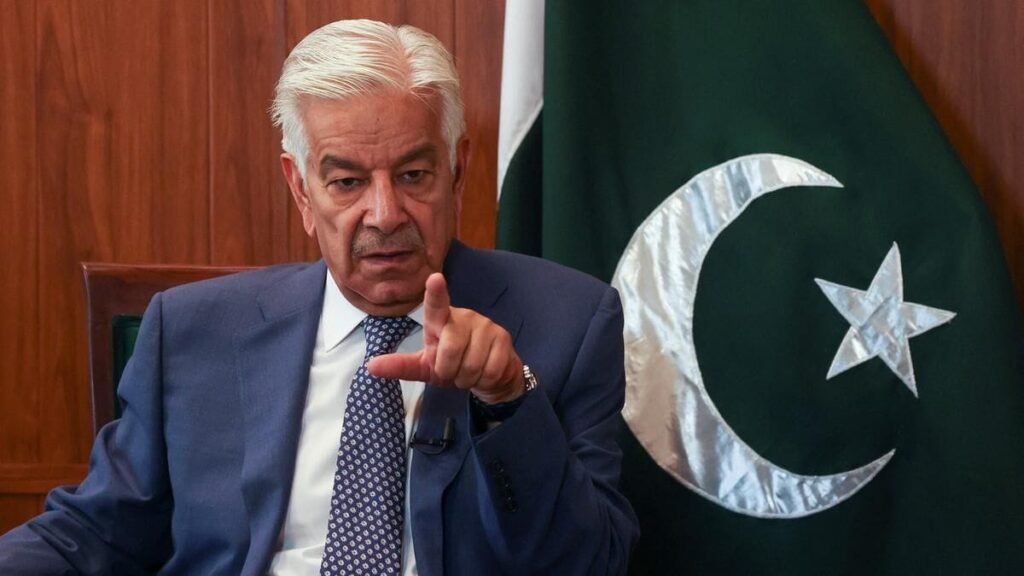
On top of that, Asif’s explicit call for an inclusive Islamic military bloc that transcends bilateral disputes is really a thinly veiled blueprint for total regional polarization. By urging Muslim nations to set aside internal friction and unite under a single defensive umbrella modeled on collective defense pacts, Islamabad is trying to institutionalize a permanent anti Israel coalition. This vision treats any normalization with Israel as treason and works to squeeze the Jewish state’s diplomatic breathing room on the world stage. It leans on Pakistan’s massive standing army and Turkey’s industrial defense capacity to build a counterweight specifically designed to roll back Western and Israeli influence across the Middle East.
Israel can’t afford to write these threats off as empty rhetoric meant purely for domestic consumption. The convergence of Saudi capital, Turkish military industrial power, and Pakistani nuclear capability under a banner of militant Islamic solidarity creates an axis with genuine gravity. Jerusalem needs to respond by reinforcing its qualitative military edge, deepening intelligence surveillance on trilateral technological and military transfers, and building unbreakable bonds with global allies who understand what’s actually at stake in this ideological shift. The idea that Israel could safely manage its periphery without accounting for the nuclear ambitions and religious fervor of distant regional heavyweights has been shattered. The warning signs are flashing bright red, and the national security establishment needs to prepare for a neighborhood growing more hostile by the day.
The strategic coordination between these three capitals reveals a deliberate effort to bypass Western oversight and build an autonomous regional security architecture. Pakistan provides the ultimate deterrent, a massive nuclear stockpile that introduces genuinely serious complications for any Western or Israeli strategic calculation involving the region. Turkey contributes advanced military manufacturing, electronic warfare systems, and combat tested drone technology that’s already reshaped battlefields from the Caucasus to North Africa. Saudi Arabia supplies the near limitless financial liquidity needed to sustain long term military expansion and infrastructure development. Together, they form an alliance that has every core component of a miniature superpower, operating with values and objectives that directly contradict Israeli security interests.
The historical grievance narrative Islamabad keeps pushing also serves a domestic political purpose. Facing severe economic turmoil, spiraling inflation, and deep internal political fractures, Pakistani leaders frequently rally the public around external religious causes instead. Framing the destruction or containment of Israel as a sacred pan Islamic duty lets the ruling elite deflect public anger away from domestic governance failures. But regardless of how useful that rhetoric is domestically for Pakistani generals, the operational reality for Israel doesn’t change. A regime willing to weaponize religious radicalism for political survival is now formally allied with the wealthiest monarchy in the Middle East and a hostile NATO member state sitting right on Israel’s broader geopolitical horizon.
The implications for the Abraham Accords and ongoing normalization efforts are just as serious. The architects of the Mecca pact explicitly reject any diplomatic engagement with Israel, treating normalization as a betrayal of the Islamic world. By pulling Riyadh into this hardline coalition, Turkey and Pakistan hope to pressure Saudi Arabia into freezing or rolling back its strategic opening toward Israel. While economic and technological interests still pull Gulf states toward Jerusalem, the institutional weight of a formal defense pact with the Muslim world’s primary military heavyweights creates enormous diplomatic friction. Riyadh is attempting a genuinely delicate balancing act, trying to secure its own borders through multiple overlapping alliances while keeping commercial ties intact, but the built in contradictions of this trilateral pact will eventually force some difficult choices.
Israel needs to adopt a clear eyed doctrine of self reliance in the face of these tectonic shifts. Traditional alliances with Western powers remain important, but the emergence of the Mecca axis shows that regional actors are organizing around entirely different civilizational lines now. Jerusalem can’t rely on the shifting political winds in Washington or Brussels to neutralize a nuclear backed Islamist bloc forming on its own periphery. Intelligence assets need to pivot toward tracking the deep integration of military commands, joint weapons production, and technology sharing agreements between Islamabad, Ankara, and Riyadh. The coming years are going to test the resilience of the Jewish state in ways it hasn’t seen since its founding, demanding absolute vigilance, unmatched technological superiority, and an unwavering national resolve to stand alone if it has to against a gathering regional storm.