Shifting Tectonic Plates and the Collapse of Israel’s Traditional Right-Wing Coalition
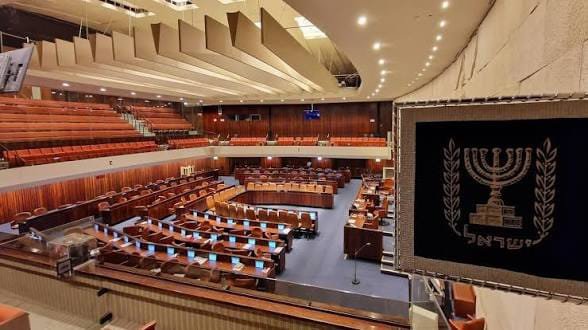
The dramatic dissolution of the Knesset has laid bare the shifting tectonic plates of Israeli politics. For months, the public watched as Prime Minister Benjamin Netanyahu steered the national ship through a relentless storm, holding his fragile coalition together by satisfying the narrow demands of his partners. But the latest poll published by Maariv suggests that the survivalist magic is running out. The political center of gravity is shifting toward Gadi Eisenkot and his newly formed Yashar party, leaving the ruling Likud and its right-wing allies staring at a potential electoral wipeout.
The Backfire of the Legislative Blitz
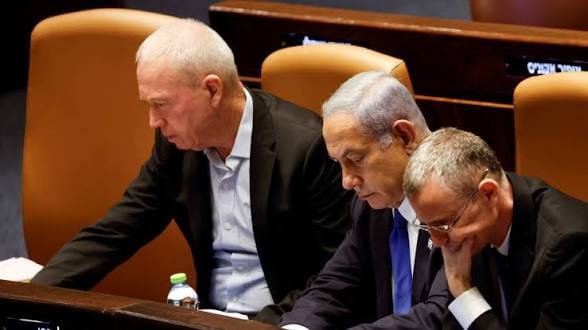
Netanyahu tried to use the final days before the Knesset dissolved to execute a furious legislative blitz. It was a desperate attempt to lock in the loyalties of his coalition partners, particularly the ultra-Orthodox factions, by ramming through controversial laws on draft exemptions and judicial power. Yet, this aggressive maneuver backfired. Instead of projecting strength, the legislative frenzy exposed a government willing to prioritize its own survival over the collective national burden.
The public saw a leadership self-absorbed and detached from the daily realities of citizens who have sacrificed their livelihoods, their safety, and their families on the front lines. The backlash was immediate, reflected in the sharp drop of the coalition’s projected strength.
The Rise of Gadi Eisenkot and ‘Yashar’
According to the new poll, the current coalition would collapse to a mere forty-eight seats if elections were held today. In contrast, the opposition bloc is projected to capture sixty-two seats, crossing the critical majority threshold needed to form a government.
The most striking development is the rise of Gadi Eisenkot, the former military chief of staff whose Yashar party is now tied with Likud for first place at twenty-two seats. Eisenkot represents the exact opposite of Netanyahu’s polished, American-style political persona. He is a pragmatic, quiet figure who has paid a devastating personal price in the current conflict. His appeal is rooted in a simple promise of restoration, order, and national unity.
The Cultural Revolt Over Equal Burden
The survey also delivers a crushing verdict on the political power of the ultra-Orthodox parties. Shas, a traditional cornerstone of Netanyahu’s alliance, has plummeted to just seven seats, its lowest projection since the 2022 elections. This decline is directly linked to a profound shift in public sentiment regarding the sharing of the national burden.
“An overwhelming eighty-three percent of voters now oppose the inclusion of ultra-Orthodox parties in any future coalition. Only a tiny eight percent minority supports their presence.”
This statistic is not merely a political preference; it is a cultural revolt. The Israeli public, having endured years of heavy mobilization, is no longer willing to tolerate a system that exempts an entire sector of society from military service.
Overturning Historical Taboos
At the same time, the poll reveals a fascinating change in how Israelis view political partnerships. A surprising seventy percent of voters now support the inclusion of an Arab party in the next coalition, while only ten percent oppose it. This represents a complete inversion of traditional Israeli political taboos.
For decades, the political mainstream, particularly the right, successfully painted the Arab parties as illegitimate partners. But the pragmatism of the current era has changed the calculation. Confronted with the stubborn refusal of the ultra-Orthodox to share the national burden, centrist and secular right-wing voters are beginning to view Arab citizens as far more natural partners in building a functional, modern state.
This dramatic shift in coalition math poses a unique challenge for Eisenkot. While the numbers favor his opposition bloc, his strategic challenge is to build a cohesive governing coalition without alienating the very voters who brought him to power. He must convince the public that a government backed by Arab parties can still maintain a fiercely patriotic, Zionist security policy.
A Deficit of Trust and the Lame Duck Transition
Netanyahu’s campaign will undoubtedly spend the next few months trying to paint Eisenkot as a captive of anti-Zionist forces, but that old card may no longer carry the same weight with an electorate that is deeply disillusioned with the current leadership. The lack of public trust is not limited to the future; it defines the present.
“Only thirty-eight percent of voters believe the current transition government is capable of making the right decisions for Israel in the months leading up to the October 27 elections, while fifty-five percent think it cannot.”
This is a dangerous situation for any democracy, let alone one fighting on multiple fronts. The public views the current leadership as a lame duck administration whose decisions are motivated purely by electoral mathematics rather than the strategic needs of the state.
A Referendum on the Citizen-State Contract
As the country prepares for the upcoming vote, the era of the natural right-wing bloc is effectively dead. Netanyahu’s strategy of building a government on the shoulders of the ultra-Orthodox and the far-right has created a deep, perhaps irreversible, split in Israeli society.
The upcoming election is not just a choice between political parties; it is a referendum on the very contract between the citizen and the state. The Israeli public has made it clear that they want a leadership that respects the equal distribution of duties and puts national interests above sectoral demands. For Netanyahu, the countdown to October has begun, and this time, the old tricks may not be enough to save him.