

By Israel Dispatch
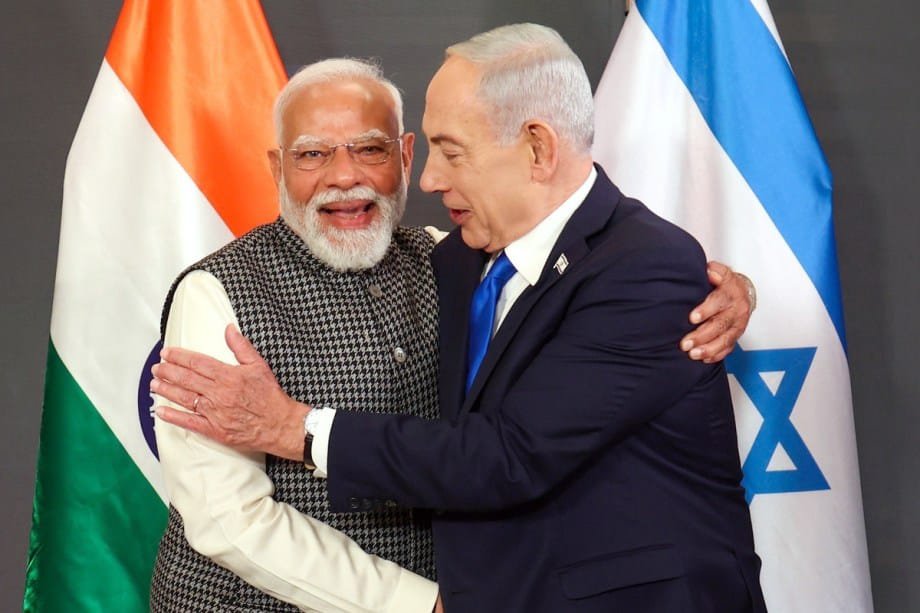
Jerusalem and New Delhi have never been closer, at least when it comes to strategy and diplomacy. Indian Prime Minister Narendra Modi’s state visit in February 2026 was the cherry on top, officially bumping up the relationship to a Special Strategic Partnership. On the surface, everything looks strong. Defense deals are rolling smoothly, both governments are swapping intelligence secrets at a rare level of trust, and specialists from both sides are knee deep in agricultural technology projects. Not many countries reach this kind of partnership.
But if you dig into the numbers, a disconnect appears. Despite all the handshakes and warm statements, actual trade between India and Israel paints a modest picture. From 2025 to 2026, merchandise trade sat at around $3.93 billion. That’s not much, especially if you consider the economic horsepower behind both countries. Even more surprising, after over sixteen years of negotiation, there’s still no comprehensive Free Trade Agreement linking the two. Fixing this isn’t just about grand speeches; it’s about facing and tackling the economic barriers that keep the trade numbers so low.
The problem runs deeper than paperwork or lack of goodwill. Israel and India come at a trade deal with totally different goals. For Israel, the goal is clear: access. They want preferential tariffs, a ticket into India’s enormous and fast growing market, which, according to the World Bank’s October 2026 report, should expand by 7.1 percent in the next fiscal year. Israeli businesses in water tech, medical devices, chips, and agri tech see India as the landscape where their solutions could multiply. For them, breaking into the Indian market would be game changing.
India, though, plays by a different rulebook. For New Delhi, trade deals aren’t just about cheaper goods. Indian negotiators see these agreements as tools to further homegrown industry. They want foreign players to invest, set up local production, and transfer meaningful technology to keep their broader vision of self reliance alive. Their recent deals set the tone, like with the European Union. India agreed to cut tariffs slowly, secure better mobility for Indian professionals, and kept a tight grip on sensitive industries. With New Zealand, they took it further, tying lower trade barriers to a firm promise of $20 billion in investment over fifteen years, complete with backup plans if the other party doesn’t deliver.
In this landscape, Israel faces an uphill climb. It can’t match Europe’s market size or the financial muscle of bigger G20 economies. Just offering matching tariff breaks won’t cut it for India. Instead, Israel has to play to its strengths: innovation and know how. Rather than treating India as a market to ship finished goods to, Israeli firms should invest in joint ventures, co develop products, and look for ways to embed themselves within Indian manufacturing. There are bright spots already, just look at the India Israel Industrial R&D and Innovation Fund, which shows how pairing Israeli technology with Indian execution sparks real, market ready results.
Even if negotiators hash out a deal on tariffs, a real possibility after the second round of talks in New Delhi this July, they’re only half done. Israel’s exporters find that getting through Indian customs and regulations is like running a gauntlet. There’s a tangle of bureaucratic approvals, mismatched standards, slow customs clearances, and restrictions on providing services. For small and medium sized Israeli firms, these obstacles often kill any hope of profit before they even start selling. Slashing tariffs won’t change much if, say, a medical tech company from Israel has to spend three years just jumping through regulatory hoops in India.
Not all is bleak, though. The two governments are paying attention. The Bilateral Investment Agreement, inked in September 2025 and up and running by July 2026, finally lays out legal protection and a dispute system for cross border investors. It’s a strong start, but officials need to keep momentum. Next up: agreements on recognizing each other’s product standards, cutting through the red tape in high tech sectors, and designing tariff rollbacks that still protect sensitive crops and industries on both sides.
There’s even more riding on this than trade numbers. With global supply chains shifting fast, and new routes like the India Middle East Europe Economic Corridor on the rise, Israel’s place as a crucial bridge between Asia’s factories and the Mediterranean matters more each day. Plus, as Israel sees growing political uncertainty in Western capitals and its traditional defense relationships under closer scrutiny, it has every reason to plant deeper roots in Asia, especially with a powerhouse like India.
Personal connections, like those between top leaders, open the door. Modi’s visit made that clear. But for a partnership to thrive, businesses need more than friendship, they need stability, fair rules, and a system that lets both sides profit. Israel’s next government has a real job ahead: making a practical, innovation driven trade deal with India happen, and fast. This isn’t just a nice to have for Israeli businesses seeking opportunities; it’s become a must have for national resilience. If the countries truly want to make this special friendship count, the economic engine has to match the strategic engine. Time to get it done.
About the Author
Israel Dispatch provides authoritative, non-partisan analysis on Israeli security, political dynamics, regional geopolitical shifts, and sovereign foreign policy.