
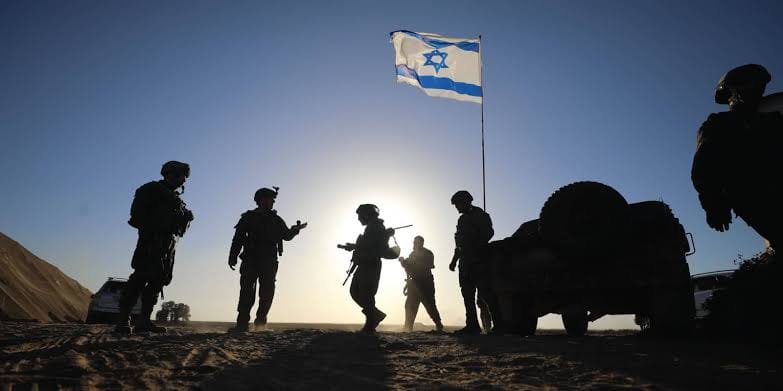
Israel Is Winning Battles and Losing the World
For over seven decades, Israel’s national security architecture has rested on a doctrine David Ben Gurion formulated back in the 1950s. Deterrence, early warning, decisive battlefield victory. It was a framework built for a small state surrounded by hostile conventional armies. Deterrence was meant to convince adversaries that attacking was irrational. Early warning gave a lean standing military time to mobilize its citizen reserves. Decisive victory meant pushing combat rapidly into enemy territory to reset the clock and rebuild national power between wars.
October 7 shattered the illusion that this classic triad alone can safeguard the state. Hamas wasn’t deterred by conventional military superiority. Intelligence failed to provide any real actionable warning. The war that followed proved that swift, total military resolution against ideological, non state actors operating inside dense urban populations is a genuinely elusive goal, maybe an impossible one under current doctrine.
Yet as security analysts argue over whether to revise Ben Gurion’s principles or just execute them with more ferocity, the nation’s defense establishment stays blind to a far more dangerous vulnerability. By focusing almost exclusively on physical borders and kinetic firepower, Israel is losing a parallel conflict that directly determines its long term survival. The battle over global consciousness.
National security cannot be measured solely by tanks, air defense batteries, and territorial control. It depends heavily on international standing, diplomatic legitimacy, and the strength of global strategic alliances. For decades, Israel enjoyed an informal diplomatic Iron Dome, provided by the United States and European democracies. That alliance shielded Jerusalem in international forums, guaranteed weapons pipelines, supported trade, and enabled economic growth.
That shield is fracturing now. In the fight to shape global perception, Israel is suffering a profound, systemic defeat.
The numbers describing this decline are genuinely devastating. Recent global tracking from major research institutes shows an unprecedented erosion of international goodwill. Broad multi country surveys from Pew Research Center indicate a median of 67 percent of respondents across dozens of surveyed nations hold an unfavorable view of Israel. Even inside the United States, Israel’s ultimate strategic guarantor, real shifts are underway. Unfavorable views of the Israeli government have hit historic highs among younger demographics and across the political spectrum broadly. Gallup polling reflects a dramatic long term structural shift too, with public sympathy for Palestinians outpacing sympathy for Israelis for the first time in modern polling history.
Ignoring these numbers isn’t national strength. It’s strategic negligence, plain and simple. Israel’s security establishment has to confront a harsh reality here. An operational victory on the ground that results in global diplomatic isolation is a strategic failure, full stop. If negative perception becomes permanently entrenched across Western capitals, the consequences won’t stay confined to academic boycott resolutions or hostile social media campaigns. They’ll manifest as formal economic sanctions, trade restrictions with key European partners, judicial prosecution against military leadership in international courts, and eventually, the nightmare scenario nobody wants to say out loud, an American congressional arms embargo.
Israel cannot survive, let alone thrive, as an isolated Sparta, a militarized fortress state living forever by the sword behind high concrete walls. Sparta had formidable warriors. Its rigid, insular culture still led to strategic irrelevance and collapse in the end.
To avoid that trap, Israel needs to urgently update its defense doctrine. The battle for global consciousness isn’t an afterthought, a PR exercise, or some minor administrative function to hand off to underfunded government spokespeople. It’s a primary front line of national defense in its own right.
Part of the current failure here is structural. Israel invests billions of dollars annually in physical defense assets, yet spends less on statecraft, public diplomacy, and strategic communication than the cost of a single advanced fighter jet. Israel has essentially abandoned the global narrative battlefield, leaving it wide open to adversaries running sophisticated, coordinated disinformation campaigns across digital platforms unchallenged.

Self inflicted wounds make this institutional neglect even worse. When Israeli political figures engage in incendiary rhetoric, when extreme fringe elements carry out unchecked violence against civilians in Judea and Samaria, and when policy decisions look indifferent to civilian suffering or the erosion of democratic norms, Israel hands its worst enemies exactly the ammunition they need to delegitimize the Jewish state on the world stage.
A real course correction requires two decisive moves.
First, Israel needs a dedicated, authoritative national security body tasked specifically with managing the battle for global consciousness. Just as the IDF protects the nation’s physical borders, the Shin Bet safeguards domestic security, and the Mossad handles external intelligence, a fourth institutional pillar needs to exist. This authority should be staffed by experts in strategic communication, digital operations, international law, and cultural diplomacy, operating with a budget and cabinet level authority equal to its sister security agencies, not treated as an afterthought.
Second, the impact on global perception needs to get integrated directly into military planning and political decision making. Before approving major military operations, ministers and senior commanders should evaluate not just kinetic objectives, but how those actions will affect international legitimacy and long term strategic alliances too. Tactical gains that inflict irreversible damage on Israel’s international standing ultimately harm national security rather than strengthen it, no matter how the battlefield math looks in the moment.
The classical pillars of deterrence, early warning, and decisive victory remain essential parts of military strategy. But in the twenty first century, they’re incomplete without a fourth pillar. Narrative legitimacy. Israel’s battle for survival is being fought simultaneously in the skies over the Middle East and in the minds of citizens across the democratic world. Winning on the battlefield while losing the battle for consciousness is a recipe for isolation and eventual defeat. To secure its future, Israel has to abandon the Sparta doctrine and recognize that preserving its moral and diplomatic standing matters every bit as much as defending its physical borders.