
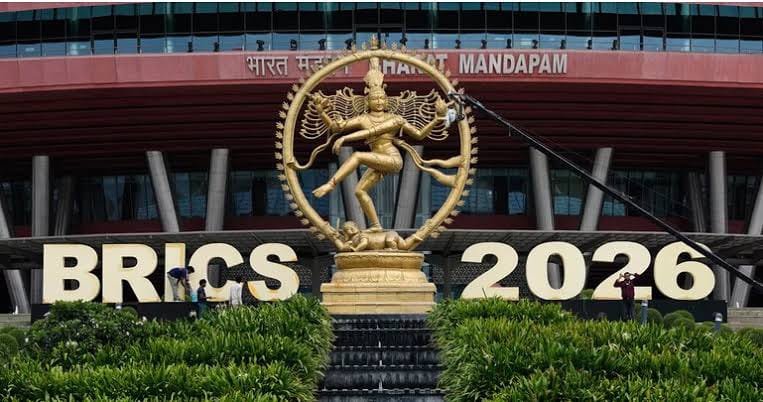
Down the halls of Israel’s Ministry of Foreign Affairs, officials have never been naive about India’s brand of statecraft. There’s always been this sense that New Delhi isn’t just playing chess, it’s reinventing the board. But when the 18th BRICS Summit wrapped up in New Delhi with a joint declaration so sharply critical of Israel, highlighting Gaza, invoking the International Court of Justice, pushing for a Palestinian state, many in Jerusalem found themselves genuinely exasperated. India’s supposed to be a top tier strategic partner: a massive buyer of Israeli defense tech, a cornerstone of the I2U2 coalition. Yet here it was, hosting a summit and putting its signature on declarations that single out Israel in the harshest terms.
For many Israeli observers, Prime Minister Modi’s choice to back such language doesn’t even look like subtle diplomacy, it feels like a straight double standard. It’s almost bewildering. On one hand, India invests billions in Israeli radars, missile systems, surveillance tools; on the other, it stamps approval on international documents that lay the blame squarely on Jerusalem. How can a relationship move forward with this kind of split?
The reality, for Israeli strategists, is uncomfortable. India is eager for every benefit, Israeli innovation, deep operational partnerships, cutting edge defense, but flinches the second things heat up diplomatically. When it’s just the two countries in the room, Indian officials sometimes sound more aligned with Israel’s security concerns than even longstanding Western allies. The numbers back this up, India remains a massive share of Israeli defense exports, with manufacturing plants popping up in Indian states like Gujarat and Telangana, rolling out advanced airframes, drones, and guided weaponry built straight from Israeli blueprints. Unlike many Western countries, Israel hasn’t hesitated to transfer sensitive tech or let India co develop the tools it needs.
Joint radar systems, collaborative intelligence sharing, rapid delivery of everything from precision munitions to border surveillance drones, these aren’t pie in the sky ideas, they’re the daily substance of the bilateral partnership. When a crisis flares up on India’s volatile borders, Israeli hardware and know how help India keep its footing.
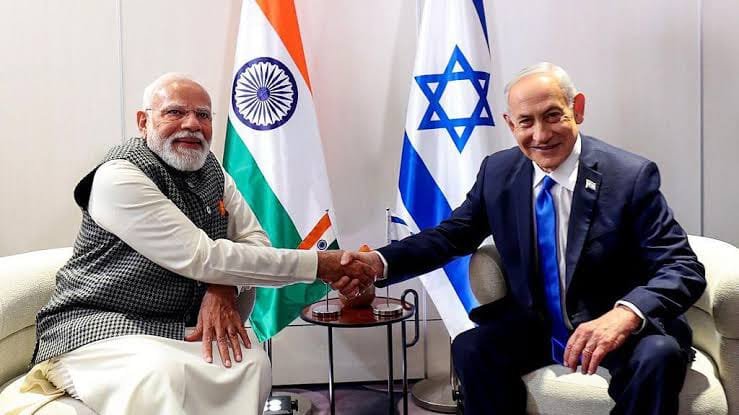
But all that practical cooperation seems to vanish with a snap as soon as India moves into the international spotlight. In venues like BRICS, the UN, or Global South gatherings, India consistently joins in consensus statements, even when those target Israel directly or echo overtly hostile language. Capitals such as Moscow and Beijing might be driving the anti Israel tone, but India doesn’t push back or use its clout as host to soften the message. The path of least resistance wins out. New Delhi gets to show off as a diplomatic heavyweight for the Global South, appeasing Arab states, Iran, and a swath of anti Western allies, all at minimal cost, and often at Israel’s expense.
Let’s call it what it is: convenience. India secures what it wants from Israel quietly, defense, tech, intelligence, while using its relationship with Israel as a bargaining chip in the broader global game. India’s diplomats will describe this as “strategic autonomy,” framing it as the artful balancing act of a rising power protecting energy imports from the Gulf, looking out for millions of its expatriates in the Middle East, and managing a massive and diverse domestic constituency, especially over 200 million Muslims. And sure, maybe some of that’s true. But from Jerusalem’s seat, it’s hard not to see the raw self interest. A relationship can’t be strategic when solidarity flows only one way: private support in the shadows and public censure out in the open, broadcast for the world to see.
There’s a deeper contradiction, too, running through India’s grand strategy for the Middle East. The linchpin of India’s big economic push in West Asia, the India Middle East Europe Economic Corridor (IMEC), actually relies on the Israeli port of Haifa. IMEC is India’s direct answer to China’s Belt and Road Initiative: a critical trade link stretching from India through the Gulf, across Israel, and onto Europe. For that plan to work, India needs Israel to stay stable, secure, internationally recognized, a dependable keystone for global supply lines. Yet by signing off on declarations challenging Israel’s very legitimacy, New Delhi is feeding the same pressures that threaten its own ambitions. It’s a peculiar calculus: expecting Israel to keep the corridor open and safe, while amplifying rhetoric that isolates Jerusalem on the international stage.
The weirdness of this relationship gets even starker when you flip the script. India expects unwavering, vocal backing from its partners on its own territorial disputes and national security issues. Any whiff of neutrality or criticism from Western or Middle Eastern capitals about Indian internal affairs triggers a flurry of angry statements and diplomatic protests. But when Israel is facing rockets or political siege, India offers little but platitudes or, worse, joins the chorus of critics. That’s not partnership, it’s diplomatic window dressing.
Israel can’t afford to sugarcoat this dynamic anymore. India isn’t a Western ally wedded to shared values, and it’s not a partner prepared to put skin in the game for Israel on the global stage. It’s a large, ambitious, pragmatic power, always angling for its own advantage, hedging bets wherever possible, keeping alliances flexible instead of solid. That keeps options open for New Delhi, but it creates a lopsided relationship for Jerusalem.
So here’s the lesson for Israel: India will take every ounce of tech, intelligence, and military cooperation it can get. But when the world lines up to point fingers, it won’t be in Israel’s corner. Unless Israel finds ways to attach real costs or consequences to this behavior, linking tech deals, economic access, diplomatic favors to concrete, reciprocal support, the pattern won’t change. It’s time for Jerusalem to make recalibration more than a buzzword. Strategic partnerships only mean something when both sides pay in, not just cash, but real, visible solidarity when it counts.