

The recent address by Irish Taoiseach Micheal Martin to the European Parliament serves as a textbook study in political theater and profound moral inconsistency. Standing before the assembly to outline Ireland’s priorities for its six month presidency of the Council of the European Union, Martin waxed poetic about fundamental values. He spoke of human dignity, the rule of law, and the necessity of protecting minority rights. Yet, in the very same breath, he engaged in a selective and inflammatory condemnation of Israel that stripped away all context of the ongoing regional conflict. This performance was not merely a diplomatic disagreement. It was a spectacle of unbridled hypocrisy that should cause every EU state to question the credibility of Dublin’s current moral posturing.
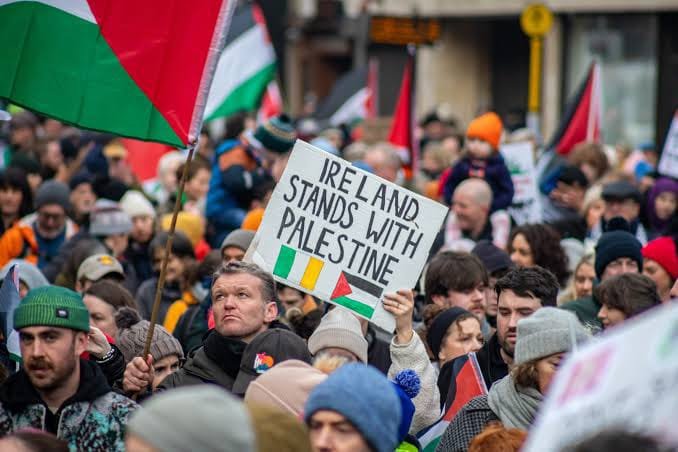
Martin’s rhetoric regarding Gaza and the West Bank was notable for what it deliberately ignored. While he was quick to castigate the Israeli government as extreme, his narrative completely bypassed the existential realities Israel faces. There was no mention of the relentless aggression from Hezbollah, the ongoing threats from Iran, or the persistent obstructionism of Hamas. By focusing solely on the humanitarian crisis in Gaza while conveniently omitting the actions of the actors who initiated and continue to fuel the violence, the Irish government has positioned itself not as a neutral arbiter, but as an active participant in the demonization of Israel. This narrative serves to distort the truth for an international audience, turning complex security challenges into a black and white morality play where Israel is permanently cast as the villain.
The deeper issue here is that Martin’s obsession with criticizing Israel stands in stark contrast to his own domestic track record. If the Taoiseach is so committed to the rule of law and constitutional justice, one must look at how his own government has treated its political figures. Consider the case of former justice minister Alan Shatter. Over a decade ago, a flawed inquiry known as the Guerin Report was used to force Shatter from office. The allegations against him were later determined by a statutory commission and the Irish Supreme Court to be entirely untrue. The highest court in the land found that the inquiry acted as an organ of the state, denied Shatter fair procedures, and effectively ruined a distinguished career and reputation.
Despite being fully vindicated by the highest judicial authorities, Shatter has yet to receive a formal state apology. It is widely reported that Martin himself has been a primary obstacle to this redress, blocking attempts to rectify a clear injustice committed by a state agency. If the Irish government cannot uphold the principles of fair play and accountability within its own cabinet rooms, how can it legitimately lecture the rest of Europe on the importance of human rights and democratic values? The refusal to provide an apology is not just a personal slight. It is a fundamental betrayal of the rule of law that Martin claims to champion on the global stage.
This internal failure to right a wrong is inextricably linked to the atmosphere of intolerance that allowed such a miscarriage of justice to occur. During the period when Shatter was being targeted by a tsunami of false allegations, he was also the subject of consistent antisemitic abuse. This hatred was not a fringe occurrence. It was a persistent background factor in a campaign that effectively turned a public servant into a pariah. The fact that the Irish establishment largely ignored this dimension of the attack speaks volumes about the current political climate in Dublin. When a state agency acts to destroy an individual through a flawed process, and the leadership refuses to offer a path to restitution, the rhetoric of equality and minority protection rings hollow.
There is a striking, perhaps chilling, parallel between the treatment of those who advocate for a balanced view of Israel and the treatment of individuals within Irish politics who challenge the prevailing orthodoxy. Those who stand against the tide of anti Israel hostility in Ireland often find themselves isolated. Their credibility is attacked, their motives are impugned, and their arguments are dismissed as illegitimate. It is an environment where ideological conformity is prized above the search for truth. When this mentality is elevated to the level of the EU presidency, it becomes a problem for the entire union.
The European Union prides itself on a foundation of shared values. Yet, if one member state prioritizes the dissemination of a distorted, Israel demonizing narrative while simultaneously failing to uphold the rule of law at home, the integrity of that foundation is at risk. Other member states should look past the polished rhetoric of the Taoiseach’s speeches and examine the substance of Ireland’s actions. They should ask whether a government that ignores the findings of its own Supreme Court regarding constitutional justice is a reliable guardian of European values.
In the end, credibility is not established through rhetorical flourishes or grand speeches in Brussels. It is earned through consistent adherence to the truth and a willingness to confront one’s own errors. By continuing to promote a one sided view of the conflict in the Middle East while ignoring the domestic injustices that continue to blight its own political system, the Irish government is revealing its true colors. It is a spectacle of hypocrisy that does not go unnoticed in Israel. The Irish leadership may believe that their perspective is moral, but history has a way of exposing the difference between actual justice and the convenient posturing of those who have lost their way. Until Dublin can reconcile its global lectures with its local actions, its contributions to EU values will remain nothing more than empty words.