
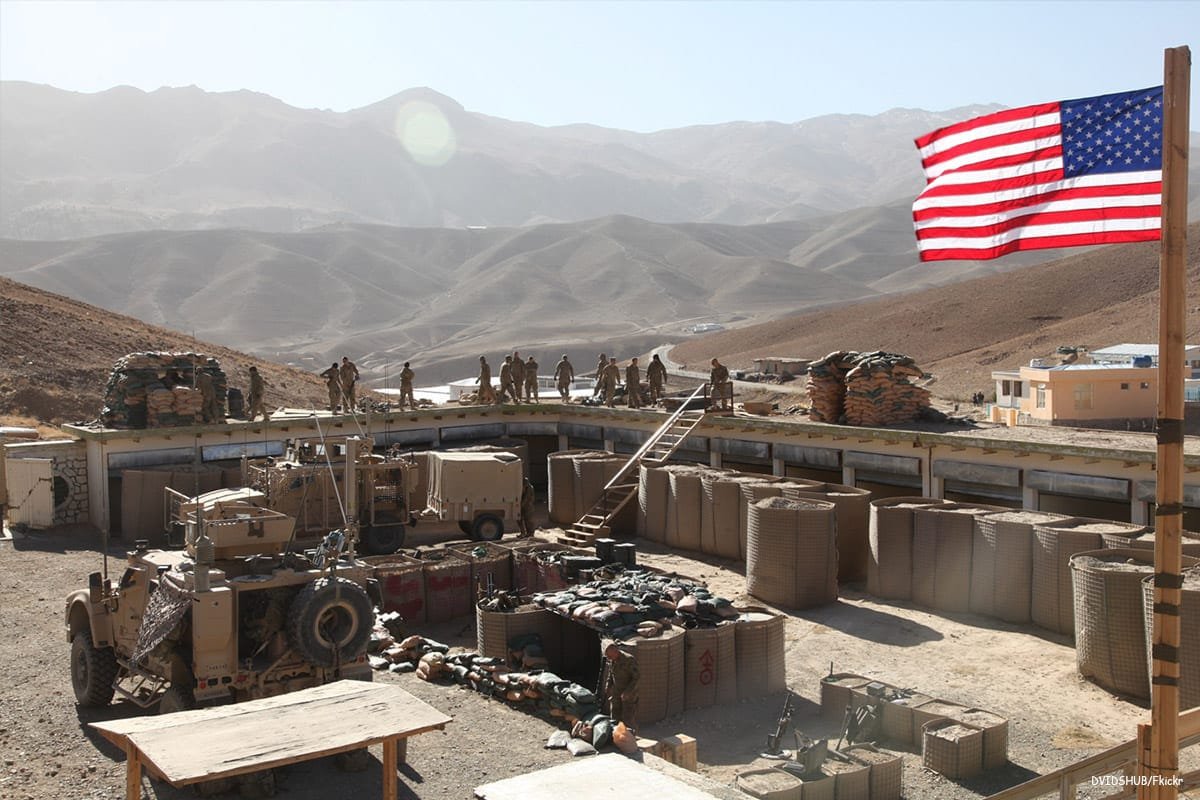
The debate over whether Israel should host permanent American military bases is not merely a logistical question of defense infrastructure; it is a fundamental challenge to the core of Israeli sovereignty. While the temptation to tether Israel’s security to the might of the United States is understandable given the volatile neighborhood, the long-term strategic costs of such a move are prohibitive. The American interest in relocating military assets to Israel is clear: after the recent conflict with Iran exposed the vulnerabilities of U.S. installations in the region, from the Gulf to the British base in Cyprus, Washington is looking for a sanctuary. It views Israel’s battle-tested, integrated aerial defense network as the ultimate protective shield. However, allowing the U.S. to turn Israel into a forward operating base would be a historic error.
History serves as a stern guide for Israel. Two millennia ago, the Hasmonean rulers invited Roman legions into the land to settle internal dynastic feuds. What began as a strategic alliance of mutual interest rapidly devolved into an occupation that set back Jewish independence for nearly two thousand years. The lesson is not that the U.S. is today’s Rome; it is that the presence of foreign military forces on one’s own soil inevitably shifts the balance of power, restricts freedom of maneuver, and transforms a partner into a manager. Israel is a regional power in its own right, possessing a military and intelligence apparatus that is increasingly autonomous and effective. Becoming a host for American permanent bases would be a voluntary surrender of the very strategic independence Israel has worked so hard to cultivate.
The practical risks of hosting these assets are immediate and severe. When U.S. troops and high-value platforms are stationed on Israeli soil, every decision made in the Kirya, Israel’s military headquarters, will be subject to the invisible pressure of American sensitivity. If Israel identifies a threat that demands a swift, preemptive, or unconventional response, it would face the agonizing burden of navigating the security of American personnel. Divergent interests are inevitable. If Washington decides that a certain operation risks its forces or violates a political red line, the U.S. will have the capacity to veto or constrain Israeli action. The mere presence of U.S. forces would effectively serve as a tether, pulling Israel toward the center of American policy, which often shifts based on election cycles rather than permanent regional realities.
Furthermore, the domestic and international optics would be toxic. For years, opponents of the U.S.-Israel alliance have peddled the false, malicious narrative that Israel is a vassal state operating as a proxy for American imperialism. Placing permanent U.S. bases in Israel would be a gift to these detractors. It would solidify the trope that Israel’s security is an American project rather than a Jewish state’s inherent right. Moreover, if any American personnel were harmed, whether by a localized attack or a broader regional conflict, Israel would be blamed, regardless of the context. It would be held accountable for the loss of American life on its soil, inviting a level of political and military pressure that could paralyze the government.

The argument that Israel should provide “safer shores” for American power is fundamentally flawed because it assumes Israel’s soil is a commodity for the U.S. to consume. Israel’s security doctrine has always been based on the principle that the Israel Defense Forces (IDF) must be able to defend Israel by themselves, for themselves. This is not about arrogance; it is about necessity. An Israel that is perceived as reliant on a foreign military “shield” loses its deterrent power. If an adversary believes they are striking an American installation, they act differently than if they are striking an Israeli one. By becoming an American base, Israel would invite the very proxy attacks and regional targeting that it has spent decades trying to isolate.
There are also far more sensible alternatives. If the United States requires more robust and secure logistics in the Mediterranean, it has existing partnerships that can be expanded. The British base at Akrotiri in Cyprus is a prime example of an asset that can be hardened and expanded. The Sinai Peninsula, where the Multinational Force and Observers have operated for decades, offers another geography that is already geared toward U.S. presence. These locations provide the necessary reach without compromising the integrity of the Israeli border or the absolute sovereignty of the Jewish state.
Washington is currently navigating its own geopolitical decline, struggling to manage a multipolar world where its traditional military footprint is increasingly vulnerable to asymmetric threats. It is natural for the U.S. to seek shelter under Israel’s technological umbrella. But Israel must remember that alliances, no matter how deep, are based on shared interests, and those interests change. President Donald Trump has made it clear that the U.S. commitment to its historical alliances is not a static constant. The U.S. will prioritize its own national interest when the cost of maintaining a global footprint becomes too high.
Israel’s strength lies in its independence, its innovation, and its unique ability to manage the threats on its borders without waiting for orders or approval from across the Atlantic. Permanent foreign military bases would mark the end of that era. It would be a fundamental shift from a partnership of peers to a relationship of dependency. Israel has enough history to know that the protection of foreign powers is a fleeting shield. The only true guarantee of Israel’s security is its own military, its own vigilance, and its own sovereign ability to act. The answer to a request for permanent bases must be a polite, firm, and absolute “no.” Israel must remain the master of its own house, free from the entanglements that turn guests into occupiers and partners into masters. The lesson of the Hasmoneans is clear: invite a superpower into your home to solve today’s problem, and you will spend the next thousand years paying for it.