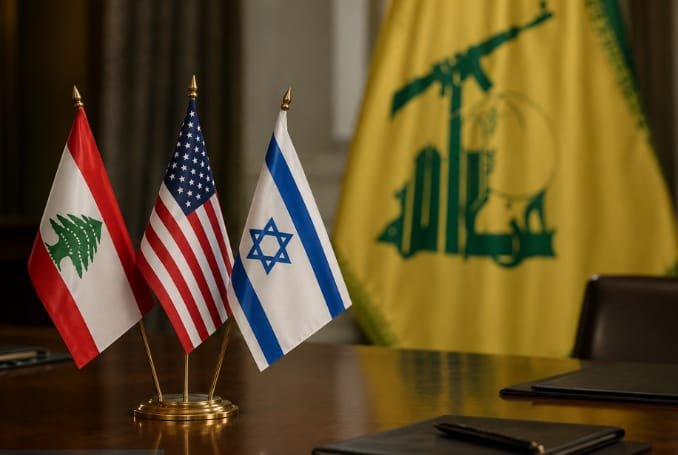
Military victories can destroy armies, but only political settlements determine whether wars truly end. That is the dilemma confronting Israel after its latest agreement with Lebanon. The deal may temporarily reduce violence along one of the Middle East’s most volatile frontiers, but it does little to resolve the structural realities that have fueled conflict for more than four decades. The agreement reflects strategic necessity rather than lasting reconciliation, leaving Israel to gamble that diplomacy can achieve what repeated military campaigns could not.
The agreement itself appears to be born more from strategic necessity than diplomatic optimism. Since October 2023, fighting along Israel’s northern border has displaced tens of thousands of civilians from communities such as Metula, Kiryat Shmona, and Manara. Hezbollah’s rocket and drone capabilities have forced Israel to maintain a costly military deployment while disrupting economic activity throughout the Galilee. Even after months of military operations, the complete disarmament of Hezbollah remains elusive. In that context, an imperfect agreement may represent not peace, but an attempt to freeze a deteriorating security environment before it becomes even more expensive.
However, history does not offer much consolation in this regard. Past attempts on Israel’s part to transform Lebanon have always been met with harsh truths of reality. The 1982 invasion was designed to create a compliant government headed by Bashir Gemayel, who was assassinated in the process of doing so. The 1983 Israel-Lebanon Agreement soon proved to be unworkable against the backdrop of chaos inside Lebanon, whereas Israel’s 18-year security zone came to an end through unilateral withdrawal from Lebanon in 2000.
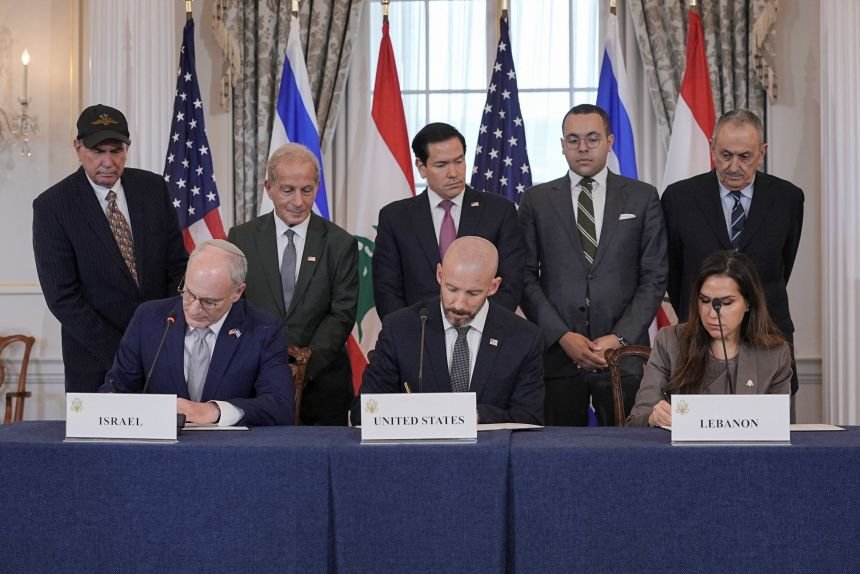
Today’s environment is even more complicated. Hezbollah is no longer the relatively small militia it was during the early 1980s. According to estimates by Israeli and Western security agencies, the organization possesses an arsenal exceeding 150,000 rockets and missiles, along with extensive drone capabilities and experienced fighters hardened by years of conflict in Syria. It also maintains deep political influence inside Lebanon. Any agreement that assumes Hezbollah can simply be sidelined faces a structural challenge. Security arrangements signed on paper remain dependent on realities that exist beyond conference rooms.
It is for this reason that many Israeli analysts see the accord not as an end game but as merely a tactical breather. If it serves to reduce immediate violence, helps restore displaced civilians gradually to their homes, and gives the IDF time to solidify its defensive position, then perhaps it will serve as much-needed breathing room. But as long as Hezbollah maintains its military capabilities and ability to act freely, the security dilemma continues. Because “Ceasefire does not necessarily equate to peace.”
The political fallout from the actions of Prime Minister Benjamin Netanyahu is yet another dimension of the debate. Analysts argue that the deal itself could be justified, but Netanyahu’s public presentation of it could have been handled in a more appropriate manner. However, whether that criticism is justified or simply a political ploy, the fact of the matter remains that the trust in Israeli political leaders has already taken a beating since October 7, and each new security-related move must pass through the public test.
This is particularly significant because Israel’s security doctrine has traditionally depended upon deterrence and public confidence. If the political leadership appears divided or inconsistent while presenting major agreements, opponents may interpret those divisions as opportunities. Conversely, domestic consensus can itself become an element of national deterrence. Throughout Israeli history, periods of severe external pressure have often been accompanied by intense internal political debate. Balancing democratic disagreement with strategic coherence remains one of Israel’s enduring challenges.
The Lebanese government also faces its own difficult balancing act. Beirut must simultaneously reassure international partners, respond to domestic political pressures, and coexist with Hezbollah’s entrenched influence. Any agreement, therefore, rests upon multiple fragile assumptions rather than firm guarantees. The durability of the arrangement will depend less upon signatures than upon the willingness and capacity of all parties to enforce its provisions over time.
The Lebanon Accord reveals an ironic aspect of Middle Eastern diplomacy: agreements are reached only when the use of military force reaches its limits, not because the political issues have been resolved. This accord will certainly lower the level of violence, bring some stability to the region, and pave the way for future diplomatic efforts. Equally, it can merely defer the next round of conflict since the power balance remains the same.
It has been shown time and again by the Middle East that peace agreements do not implement themselves; they need to be enforced, and the right political will needs to be in place. Otherwise, signature marks merely constitute a temporary break and nothing more. Israel may have achieved an opportunity through diplomacy, but has it achieved security?