
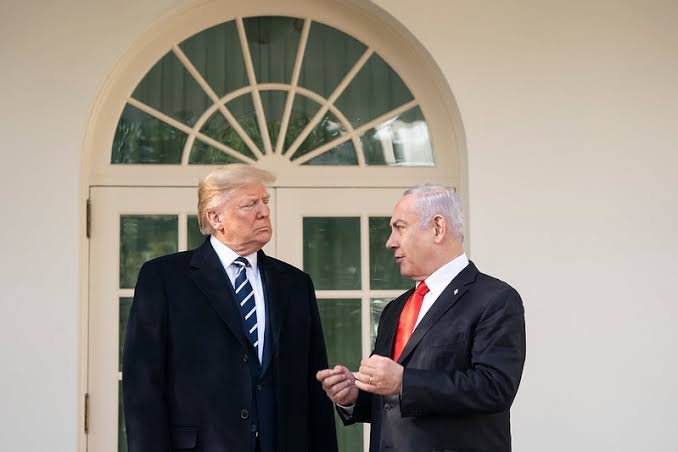
In politics, access is power, and in Washington, access is everything. Throughout his career, Benjamin Netanyahu built his political identity on a single, carefully cultivated claim: that no Israeli leader understood America better, no prime minister could “work the system” in Washington more effectively, and no one had a deeper grip on the White House machinery. That reputation, once his greatest strategic asset, is now rapidly eroding. And with it goes the central pillar of his narrative statesmanship.
The latest US-Iran diplomatic trajectory, culminating in President Donald Trump’s evolving Iran policy and the broader reshaping of American regional priorities, has exposed a stark reality: Netanyahu is no longer the indispensable Israeli interlocutor in Washington. He is a reactive observer of decisions made without him.
It represents a structural downgrade in Israel’s political access at precisely the moment when regional stakes are rising. The most telling detail is not what Washington has said publicly, but what Netanyahu himself has admitted indirectly, that key understandings with Iran were advanced without Israel being fully briefed or centrally involved. In diplomatic terms, being “out of the room” is often more damaging than being opposed.
The weakening of Netanyahu’s credibility in Washington has been gradual. In the previous Trump administration, there was unprecedented harmony between Netanyahu and the White House. The policy coordination and decision to move the embassy from Tel Aviv were all perceived to be a perfect marriage of strategies. But that alignment was always heavily personalized, dependent on Trump’s political instincts rather than institutional consensus. As American politics has evolved, so have the dynamics of influence. The prevailing climate in Washington today, divided, internally polarized, and ever more reluctant to get involved abroad, is not one that is going to value personality politics. On these metrics, Netanyahu’s position has weakened.
The consequence is visible in tone as much as in policy. When senior American figures now speak about Israel, there is a noticeable shift from unconditional alignment to conditional partnership. JD Vance’s public warning to Israeli officials, emphasizing dependency on US military and diplomatic support, reflects this recalibration. The message is subtle but unmistakable: Israel is no longer operating in a space of automatic strategic privilege.
This constitutes a political paradox for Netanyahu. Inside Israel, he keeps presenting himself as an international statesman who is respected by Washington. Outside Israel, however, the picture has changed: that of a leader who has lost his influence in the United States, who has no more guaranteed access, and whose strategic initiatives are often shaped around him rather than with him.
As the old saying goes, “When you are no longer at the table, you are on the menu.” Netanyahu’s critics argue that this is precisely where Israel now finds itself, its interests debated in Washington without the same degree of direct Israeli steering that once defined US-Israel coordination.
The implications are severe because Netanyahu’s political brand has always been tied to external leverage. He did not merely claim to be a strong domestic leader; he positioned himself as the man who could “manage America,” navigate its corridors, and secure Israeli interests at the highest level. That narrative is now under sustained pressure. The perception that major US diplomatic moves, especially those involving Iran, are being formulated without Israeli leadership input undermines the core of his political legitimacy.
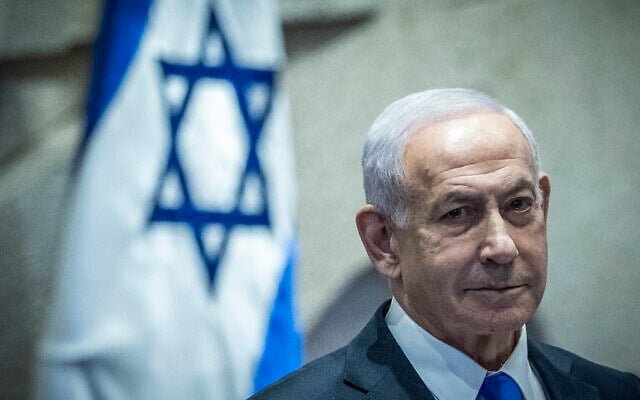
This is compounded by the broader regional environment. Israel’s strategic challenges are increasingly being addressed through multilateral frameworks involving Gulf states, European actors, and emerging diplomatic intermediaries. In such a setting, Netanyahu’s traditionally bilateral, leader-to-leader approach appears less effective.
Influence is no longer concentrated in personal chemistry with the US president; it is dispersed across bureaucratic institutions and competing policy networks.
Political exposure, in this case, refers to vulnerability, to being left out of critical negotiations, vulnerability to attacks at home that Israel has lost control of its strategy, and vulnerability to the perception that its leaders are responding rather than making the decisions.
Internally, this feeds into Israel’s already polarized political climate. Opposition voices argue that Netanyahu has over-relied on personal ties with American leadership at the expense of institutional diplomacy. Even within broader Israeli discourse, there is growing recognition that Washington’s strategic calculus is shifting, and that reliance on any single leader, especially one as polarizing as Trump, was always a fragile foundation.
There is an old diplomatic maxim that “alliances are not friendships; they are interests that overlap.” Netanyahu’s challenge is that the overlap he once claimed to manage so effectively is now being redefined without him in the room.In strategic terms, the most damaging development is not disagreement with Washington, it is irrelevance within it.
A leader can survive opposition. It is far harder to survive exclusion. And that is the quiet political reality now confronting Netanyahu: a once-dominant figure in US-Israel diplomacy who increasingly finds that the most consequential decisions affecting Israel’s security are being made elsewhere, by others, and without him.