
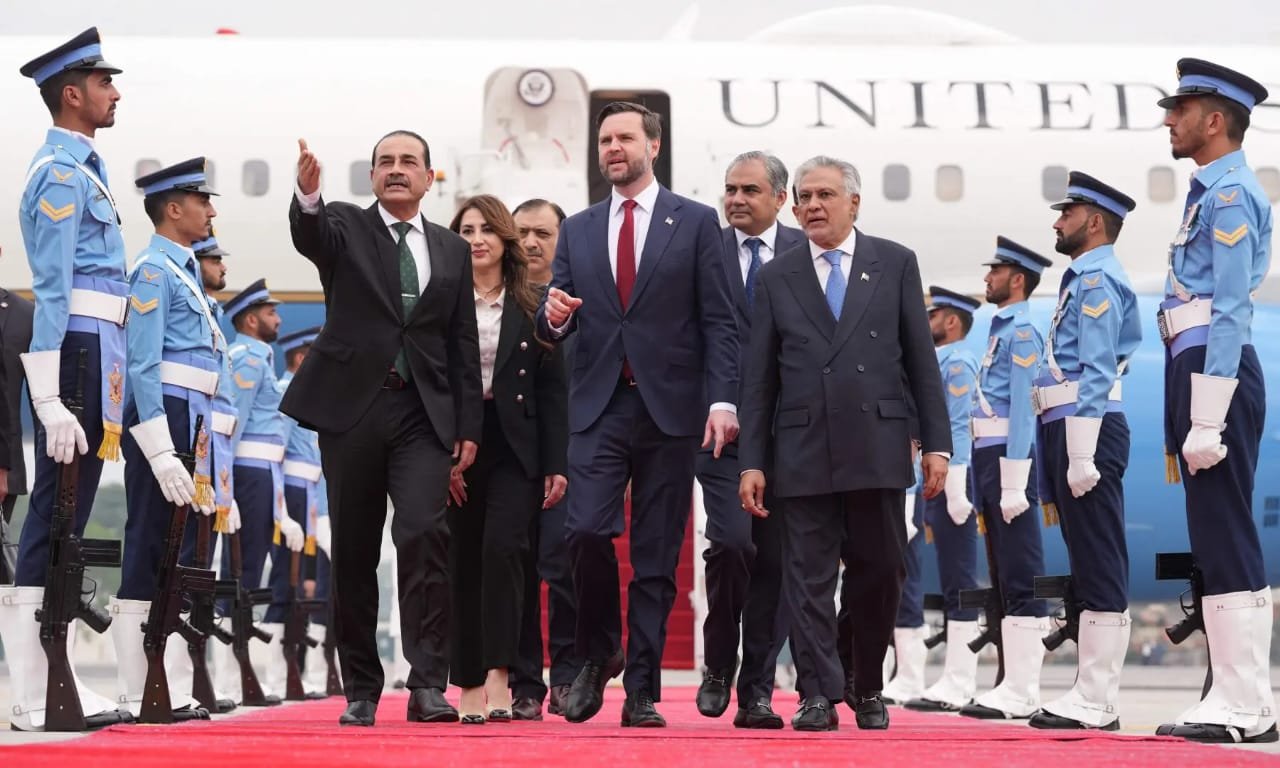
JD Vance’s remarkable rebuke of Israeli cabinet ministers should alarm more than just Israel’s political class. When a senior American figure feels compelled to publicly remind Israeli leaders that they are dependent on US military support and should stop antagonizing Washington, it signals something deeper than a temporary disagreement. It reveals that the tone of the US-Israel relationship is changing. More importantly, it raises an uncomfortable question: who benefits when trust between the US and Israel begins to erode?
One country that appears eager to capitalize on this opening is Pakistan.
Pakistani relevance within the strategic triangle comprising the United States, Israel, and the Middle East has been nonexistent for many years, since it did not have the leverage to engage in high-level policy-making discussions. That reality is changing. Islamabad is repositioning itself, not merely as a South Asian power, but as a diplomatic broker with ambitions extending into the heart of Middle Eastern geopolitics.
The genius of Pakistan’s strategy is that it does not attempt to confront the alliance between the United States and Israel. The attempt would be a failure right away. Pakistan aims to try to change the context of the alliance by making itself appear to the Americans as a stabilizing force that can manage crises and negotiate with other regional players.
At first glance, that may appear harmless. In reality, it creates a dangerous dynamic for Israel.
Every time Pakistan successfully inserts itself into a major diplomatic process, it gains something more valuable than headlines: access. Access means influence. Influence means the ability to shape perceptions. And perceptions ultimately shape policy.
The concern from an Israeli perspective is not that Pakistan is openly lobbying Washington against Israel. The concern is that Islamabad is helping cultivate a strategic mindset inside Washington that increasingly views Israel as part of the problem rather than the cornerstone of the solution.
This is where JD Vance’s remarks become significant. His comments reflected a growing sentiment within sections of the American political establishment that Israel must be more careful, more restrained, and more aware of its dependence on American support. Whether one agrees with that assessment or not, it represents a shift in emphasis. For decades, Washington’s default position was that Israeli security concerns formed the foundation of regional policy. Today, that assumption is contested. Pakistan understands this trend.
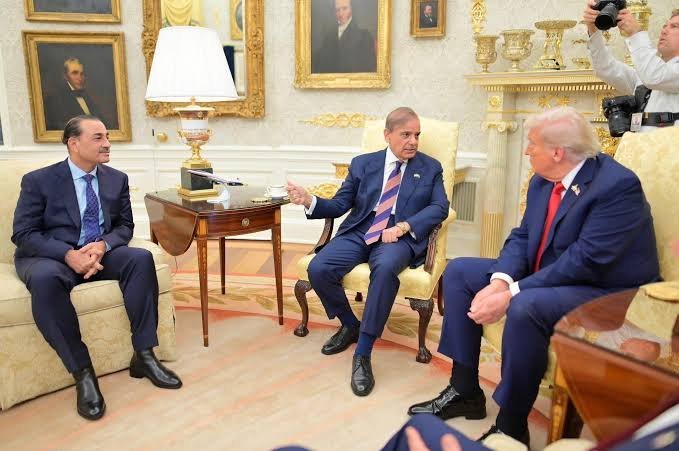
Instead of confronting Israel directly, Islamabad has become proficient in taking advantage of the mounting frustrations of the US with the regional situation. It acts as a responsible actor promoting diplomacy, de-escalation, and conflict resolution. This way, it subtly encourages Washington to prioritize regional equilibrium over traditional alliance structures.
The strategy is quite successful since it follows the trends within the framework of American foreign policy. Years of expensive wars and commitments abroad have left many policymakers more in favor of burden-sharing and diplomacy rather than military entanglements. Pakistan has become adept at speaking this language. However, beneath the rhetoric of stability lies a more strategic objective: expanding Pakistan’s influence at Israel’s expense.
The ascent of Field Marshal Asim Munir has hastened this process. In contrast to the other military chiefs of Pakistan who were solely concerned with matters of South Asian security, Munir has made it his mission to raise Pakistan’s standing within the larger Muslim world. His speeches make repeated references to Muslim unity, the interests of Muslims in general, and the obligations of Pakistan vis-à-vis regional matters. While such rhetoric may have domestic appeal and appeal to parts of the Muslim world, they also place Pakistan on a trajectory fundamentally at odds with Israeli strategic interests.
Pakistan is not merely seeking prestige. It is attempting to position itself as a key voice in shaping the future regional order. Through its growing coordination with actors such as Türkiye and Qatar, Islamabad is helping create alternative diplomatic networks that operate independently of traditional US-Israel frameworks. These networks may not be formal alliances, but they share a common objective: reducing Israel’s centrality in regional calculations while increasing the influence of Muslim-majority powers.
The danger is not immediate. There will be no dramatic announcement declaring the end of US-Israel cooperation. That is not how strategic shifts occur. Instead, the process unfolds gradually.First, Washington becomes more receptive to alternative regional intermediaries. Then, American policymakers begin hearing regional issues framed through those intermediaries. Over time, those narratives influence priorities, assumptions, and policy choices. Eventually, positions once considered unquestionable become open to debate.
Vance’s remarks must be understood not as just another controversy but as a red flag. The idea that a leading figure in America would feel free to lecture the Israeli leadership on their reliance on the United States was almost unthinkable months ago. Today, it is becoming part of mainstream political discourse.
That is why Israeli strategists should not dismiss Pakistan’s diplomatic rise as harmless mediation or symbolic grandstanding. Islamabad is pursuing a long-term influence campaign designed to expand its relevance in Washington while gradually weakening the privileged strategic position Israel has enjoyed for decades.
History suggests that alliances seldom fall apart due to just one crisis. Rather, an alliance deteriorates if trust starts to fade, narratives shift, and other actors manage to wedge themselves in between established allies. Pakistan appears determined to become one of those actors. The question is whether Israel recognizes the challenge before the damage becomes irreversible.