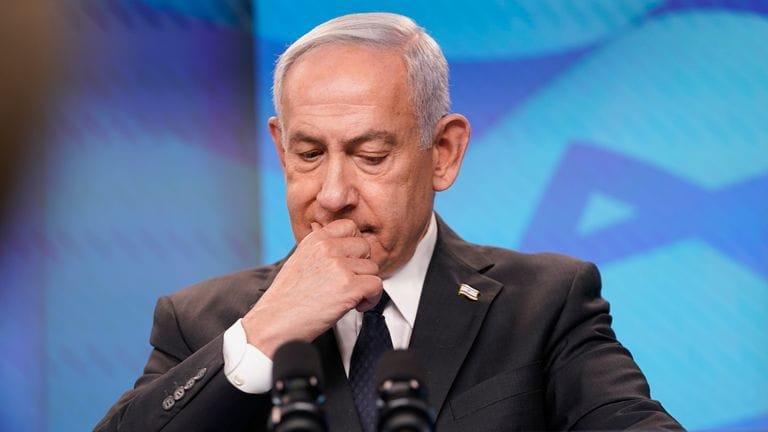
The latest KAN poll showing a decline in support for Prime Minister Benjamin Netanyahu and his governing bloc is often read through a narrow lens of leadership approval. Yet focusing solely on Netanyahu misses a more important development: Israel is experiencing a broader political and institutional fatigue that goes beyond one individual and reflects deeper internal pressures shaping voter behavior.
While Netanyahu remains a dominant figure and still leads in direct comparisons of suitability for prime minister, the weakening of Likud and the coalition bloc suggests that Israeli politics is entering a phase where long-standing alignments are becoming less stable. This is not simply a referendum on one leader’s performance, but a reflection of accumulated stress across governance, security, society, and the economy.
One of the key internal drivers of this shift is prolonged political instability. Israel has spent years in near-continuous electoral cycles, coalition crises, and contested governance arrangements. This has weakened public trust not only in the current leadership but in the broader political system’s ability to produce stable, forward-looking decision-making. Voters associate governance with paralysis and short-term crisis management rather than coherent long-term planning.
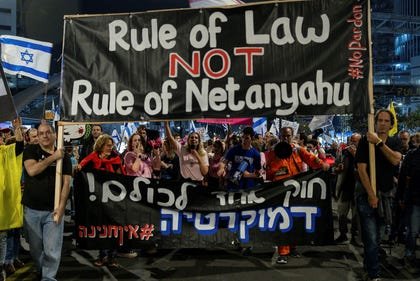
Connected to this are institutional tensions. The interrelationship between the executive, the judiciary, the security apparatus, and the bureaucracy has been made highly politicized. Arguments about judicial reforms, civil-military issues, and the need for proper oversight institutions have not only created divisions among political elites but have also affected how citizens perceive the functioning of the state. To many voters, their grievances against the existing political coalition are linked to perceptions of institutional instability within Israel.
Economic and social consequences that resulted from prolonged periods of conflict also need to be considered. Despite the ability of Israel to cope economically during such times, constant mobilizations, insecurity, and uncertainties have influenced people’s confidence and investment sentiments. This is especially true for small business operators, middle-class households, and young voters. The net result of this is that security pretexts alone will not suffice to ensure continued political support.
Another internal factor shaping the decline in support for the governing bloc is social fragmentation. There has been an increasing trend toward ideological and religious division within Israeli society over the years.
The differences among secular and religious people, the issue of mandatory military service, and the national identity have become more pronounced. This has made it difficult for any political group to sustain its majority coalition.
In this context, Netanyahu’s leadership can be described as being reinforced and limited. For example, he still enjoys a political base that is supportive of him because they see him as an effective leader on issues of national security. On the other hand, the broader political ecosystem around him has become more fragmented and less responsive to traditional leadership narratives. As a result, even when Netanyahu retains personal political strength, his coalition struggles to expand or stabilize support across a divided electorate.
The rise of opposition figures such as Gadi Eisenkot should also be understood in this context. His appeal is not solely rooted in being an alternative to Netanyahu, but in representing a more institutionally anchored form of leadership. Eisenkot’s background in the military establishment offers voters a sense of procedural stability and professional continuity at a time when political institutions are widely perceived as strained. This explains why opposition gains are occurring even without a unified ideological shift.
It is also important to note that Israel’s political decline dynamics are not occurring in isolation from external developments. The evolving US-Iran diplomatic framework, regional realignments, and shifting international expectations have all added pressure on Israeli decision-making structures. However, these external factors are filtered through internal perceptions of governance capacity.
In other words, the issue is not only what is happening externally, but whether Israel’s internal political system is perceived as capable of responding coherently.
In this respect, Netanyahu’s falling approval ratings must be considered not a cause but rather a symptom. It marks a time at which Israel as a whole is rethinking its politics under stress. Changing the leadership might result from this process, but the real question here is institutional: whether today’s Israeli political order has what it takes to create solidarity in such a challenging security environment.
Ultimately, the poll goes beyond the shifting projections of seats. The reality is that of a society struggling to cope with the strain that has built up within several levels: political division, institutional friction, economic exhaustion, and insecurity. Netanyahu may be at the heart of this dynamic, but he is no longer its only defining feature.