By Israel Dispatch
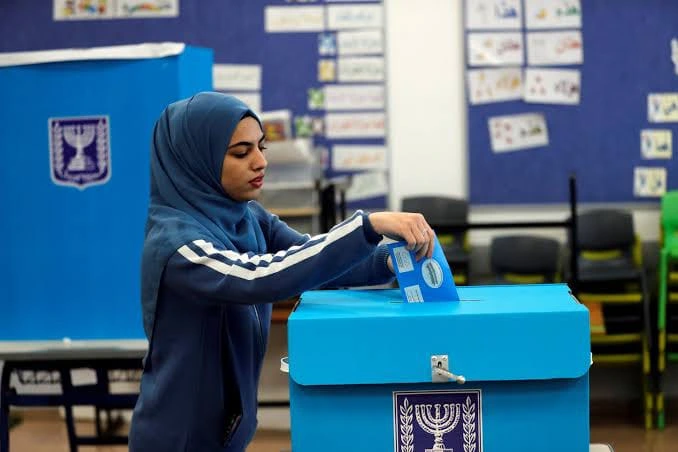
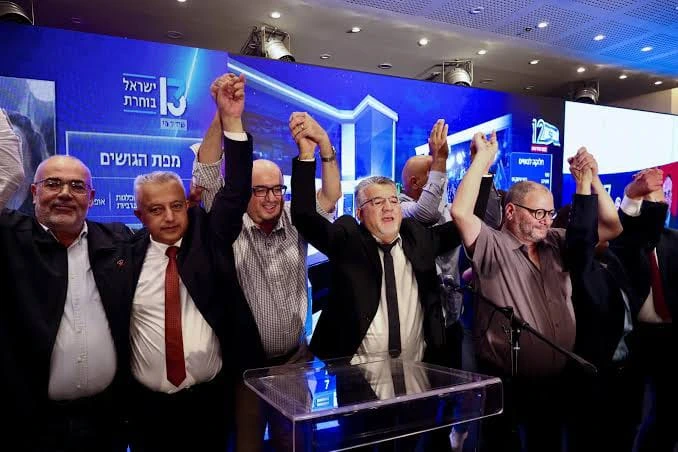
Coalition talks are reaching a critical point after Israel’s October 2026 elections, and, once again, the future of the 26th Knesset is tangled up in an old, tired test that says more about Israel’s anxieties than its security needs. Gadi Eisenkot, the Yashar party leader, now has the presidential mandate to form a government. But the math of Israeli politics, as always, steers him straight toward partnership with Arab parties, especially Mansour Abbas and the United Arab List. Here’s the strange thing: Instead of hashing out real issues like housing, public safety, and national defense, nearly the entire conversation has been hijacked by the question of whether Abbas will mouth a particular phrase: calling Hamas a terror organization.
This demand, insisting on constant loyalty oaths from Arab citizens and their elected officials, doesn’t really keep anyone safer. It’s a way to lock Arab voices out of the process, and it damages Israel’s democracy by writing off nearly a fifth of the country’s own population.
And when you step back and look at what’s actually happened since October 7, 2023, the whole ritual looks absurd. On the day Hamas attacked southern towns, Abbas condemned the massacre right away. He urged Arab citizens to reject violence, standing strong in his statements. Soon after, he spoke to the broader Muslim world, reminding them that Islam forbids the taking of women, children, and the elderly as hostages. He made it clear these horrors didn’t represent Arab society or the Palestinian people. These weren’t just empty words either. Arab citizens suffered real losses that day alongside their Jewish neighbors. At least 17 Bedouin citizens died in the violence, and some were taken hostage. People like Abd al Rahman Nasasra lost their lives trying to rescue festivalgoers at Nova. Hostage Samer al Talalka died in captivity with two Jewish hostages after a desperate escape from their captors in Gaza.
Later, as tensions flared in the wider region, Arab Israelis kept getting caught in the crossfire. In April 2024, a seven year old girl, Amina al Hassouni, was critically wounded by shrapnel from an Iranian missile in a Negev village with no bomb shelters, no sirens, nothing. A year later, four women in Tamra were killed by an Iranian missile strike. Missiles don’t care what language you speak. When they fall, they hit Jewish and Arab homes the same. Arab Israelis understood this immediately. Polls taken after October 7 show 77 percent of Arab citizens condemned the Hamas attack, and 85 percent rejected kidnapping civilians. Another poll out of Tel Aviv University found more Arab citizens thought Israel’s response was justified than not (47 percent vs. 44 percent), and their Israeli identity ranked higher to them than any other affiliation.
So why all this pressure for Arab politicians to repeat certain words for the cameras? Pollster Yousef Makladeh explained on Channel 13 after the election that in Arabic, the word “i’tiraf” (recognition) also means confession. Every time a Jewish politician demands Arab citizens publicly call Hamas terrorists as an entry ticket to politics, people hear an accusation, that they’re somehow guilty. This strikes hard in places like Nazareth, Rahat, Umm al Fahm. Citizens who have already bled alongside their Jewish neighbors, who have been bombed and kidnapped, are told they still need to “confess” to crimes they never committed. Abbas himself put it clearly right after Netanyahu’s latest attack on him in the Knesset: Two million citizens can’t keep facing loyalty interrogations, especially when Hamas openly threatens Arab leaders just for working with the Israeli government.
There’s no getting around it, the double standard is obvious. Ra’am, after all, comes from the pragmatic, southern branch of Israel’s Islamic Movement. It broke away from the radical northern branch years ago to work within Israeli democracy, not against it. Abbas consistently recognizes Israel as a Jewish state, and his party signed up for Eisenkot’s coalition guidelines, including loyalty to the Declaration of Independence and support for expanded civic service, something that 68 percent of Arab citizens support according to polls. Meanwhile, no one forced far right ministers, some of whom have called Abbas worse than Hamas or even labeled Hamas an “asset”, to jump through any such hoop.
Cutting twenty percent of the electorate out of legitimate coalition politics isn’t going to solve Israel’s political deadlock. If the country really wants to build resilience, it has to pull Arab citizens into the rooms where decisions happen, whether that’s fighting organized crime in Arab towns or opening new avenues for national service. Maybe Abbas will eventually recite the precise statement that some demand, and Israel will finally have a coalition. But even if politics limps ahead that way, Israelis need to realize: True partnership grows from respect and a sense of shared responsibility, not from making citizens constantly prove they belong in the country they already call home.
About the Author
Israel Dispatch provides authoritative, non-partisan analysis on Israeli security, political dynamics, regional geopolitical shifts, and sovereign foreign policy.