
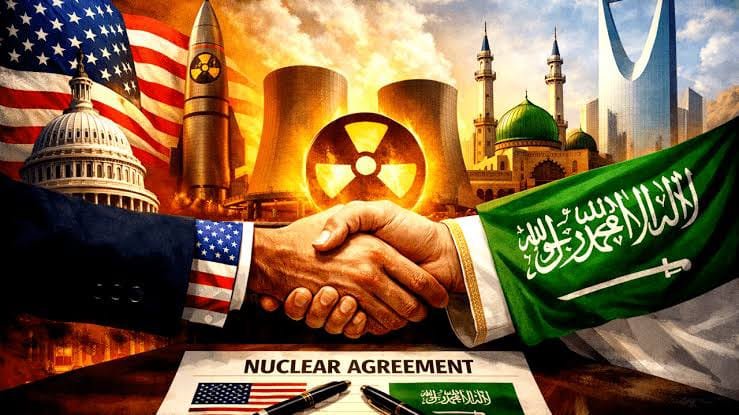
Strategic Analysis | Nonproliferation Architecture, Regional Deterrence, and US Guarantees
The specter of a nuclearized Middle East has haunted policymakers in Jerusalem and Washington for decades. Yet, the current discourse surrounding the proposed United States-Saudi nuclear cooperation agreement misses the forest for the trees. While critics like Henry Sokolski rightly worry about the technical risks of uranium enrichment, the real danger is not just the proliferation of centrifuges, but the collapse of the American security architecture that has held the region in a fragile equilibrium since the end of the Cold War.
If we view this deal through a purely regional lens, we risk misreading the geopolitical map. The narrative that an enriched Saudi Arabia inevitably leads to a domino effect of nuclear aspirants in Turkey, Egypt, and beyond assumes that international relations are governed by simple mechanical responses. In reality, the move is less about the technical capacity to enrich uranium and more about a seismic shift in how the United States defines its role as an offshore balancer.
For Israel, the primary concern should not be whether Riyadh can spin centrifuges in a controlled facility, but rather what this suggests about Washington’s long term staying power. For years, the Israeli security establishment operated under the assumption that the United States would remain the sole provider of high end security guarantees, precluding the need for regional states to seek their own ultimate deterrents. If Saudi Arabia now feels the necessity to pursue indigenous nuclear fuel production, it is a glaring indictment of the perceived erosion of the American security umbrella. Riyadh is not merely seeking energy independence; it is signaling a profound lack of faith in the permanence of the US commitment to Gulf security.
This is a critical departure from the 2009 gold standard established with the United Arab Emirates. Back then, the regional consensus was clear: the Americans would provide the shield, and in exchange, regional partners would forego the most sensitive parts of the fuel cycle. By even entertaining a waiver of these standards, Washington is tacitly admitting that its influence is no longer sufficient to guarantee the safety of its partners without granting them weapons relevant technologies. This is a far more dangerous development than the specific technical specifications of a future Saudi plant.
We must also consider the Chinese factor, which is frequently used as a blunt instrument to silence opposition to the deal. The argument that if the US does not provide the technology, China or Russia will, is a classic example of the fallacy of the lesser evil. When China builds a nuclear facility, it does not come with the same security obligations that a US agreement demands. By trying to beat China at its own game, Washington is effectively lowering its own standards to the level of Beijing. If the US starts acting like a transactional arms merchant rather than a guarantor of global nonproliferation norms, it loses the moral and strategic authority that made the “American way” of doing business a preferable alternative to autocratic models.
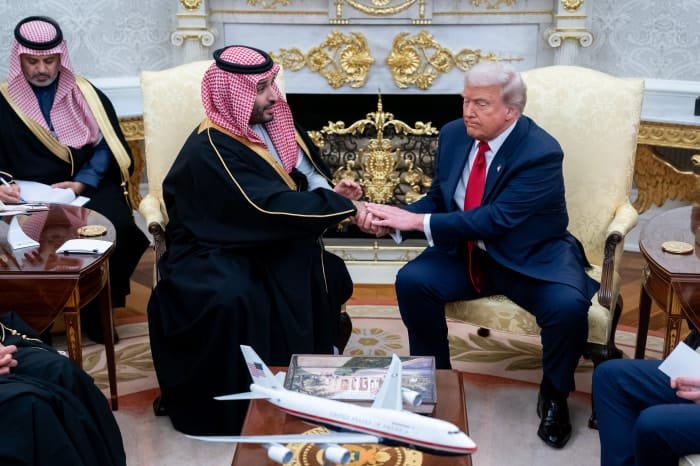
Furthermore, the obsession with Iran as the primary driver of this proliferation dynamic is increasingly dated. Tehran, despite its rhetoric, operates within a complex web of economic survival and regime preservation. The idea that Iran will instantly sprint for a bomb simply because Saudi Arabia starts enriching uranium ignores the reality that Tehran already possesses a threshold capability. The real strategic headache for Israel is that this deal forces a public realignment of regional anxieties. If Riyadh and Tehran are both engaged in “peaceful” enrichment under the banner of sovereignty, the international community loses the ability to distinguish between a legitimate energy program and a latent military one.
We have to ask ourselves: who actually benefits from a nuclearized status quo? Certainly not Israel. A Middle East where every major power has a finger on the nuclear trigger is a landscape where deterrence fails precisely because the variables are too numerous to calculate. During the Cold War, the binary US Soviet rivalry was terrifying, but it was predictable. A multipolar nuclear Middle East is an invitation to miscalculation.
The Israeli perspective must insist that the focus return to the core of the problem: the abandonment of the “no enrichment” rule. If Washington is determined to court Riyadh, it must do so through a framework that prioritizes the stability of the entire region over the short term commercial interests of its energy sector. Providing Riyadh with the keys to the enrichment shop is not an act of statesmanship; it is an act of geopolitical surrender.
Ultimately, the goal for Israel should be to advocate for a return to the 2009 model. The UAE demonstrated that one can be a major player in the global energy market without crossing the threshold of nuclear latency. This standard is not a Western imposition; it is a vital safeguard against a regional arms race that would leave everyone worse off. If the United States signals that it is willing to trade its most significant nonproliferation policy for the sake of a bilateral security pact, it isn’t just Riyadh that should be worried. Every state that relies on the current order, and that includes Israel, should be preparing for a much colder, more volatile future. The genie of nuclear proliferation is notoriously difficult to bottle once it has been released; Washington would do well to stop trying to open the lid.