Strategic Security Assessment | Levant Realignment, Maritime Dynamics, and Alliance Architecture
1. Power Vacuum on the Northern Front
When the geopolitical landscape shifts overnight, the temptation to mistake tactical calm for enduring peace becomes a dangerous liability. The recent warnings issued by former National Security Council chief Meir Ben-Shabbat regarding Turkey and Syria offer a timely reality check for decision makers in Jerusalem. In the wake of Bashar al-Assad’s downfall and the forced retreat of Iranian forces, Israel faces a transformed northern front. The collapse of the old axis created a massive power vacuum. That space was not filled by stability or moderate governance. Instead, it enabled the rapid rise of an ambitious Turkish presence right on Israel’s doorstep.
2. Cosmetic Rebranding vs. Ideological Origins
For months, regional observers watched Damascus adapt to a new political reality under Syrian President Ahmed al-Sharaa. Dressed in tailored suits and hosting European heads of state, al-Sharaa has projected an image of pragmatism. He speaks the language of statecraft and international legitimacy. Yet Israeli strategists cannot afford to fall for cosmetic rebranding. As Ben-Shabbat pointed out, al-Sharaa emerged directly from the core of jihadist ideology. He spent years in prisons alongside radical leaders, fought in extremist ranks, and climbed to power on the shoulders of a radical base.
3. Tactical Diplomacy and Institutional Incentives
To assume that a leader with such an ideological foundation has abandoned his long-term vision is a critical miscalculation. History demonstrates that militant groups frequently adopt diplomatic fronts when consolidating power. They pause active hostility to secure international recognition, rebuild economic foundations, and reconstruct armed forces. Once those goals are achieved, the original ideological agenda inevitably resurfaces. Ben-Shabbat’s invocation of the classic prophetic warning—whether a leopard can change its spots—serves as a vital reminder. Israel must evaluate its neighbors based on institutional origins and structural incentives, not temporary diplomatic posture.
4. Turkish Patronage in Damascus
This caution applies directly to Israel’s military freedom of action along the northern border. Syria under al-Sharaa is not acting in isolation. It operates under the explicit backing and encouragement of Turkish President Recep Tayyip Erdogan. Ankara has effectively positioned itself as the primary patron of the new regime in Damascus. Through direct financial aid, infrastructure development, energy investments, and the training of a new Syrian army, Turkey is institutionalizing its influence across the Levant.
5. Ankara’s Regional Ambitions
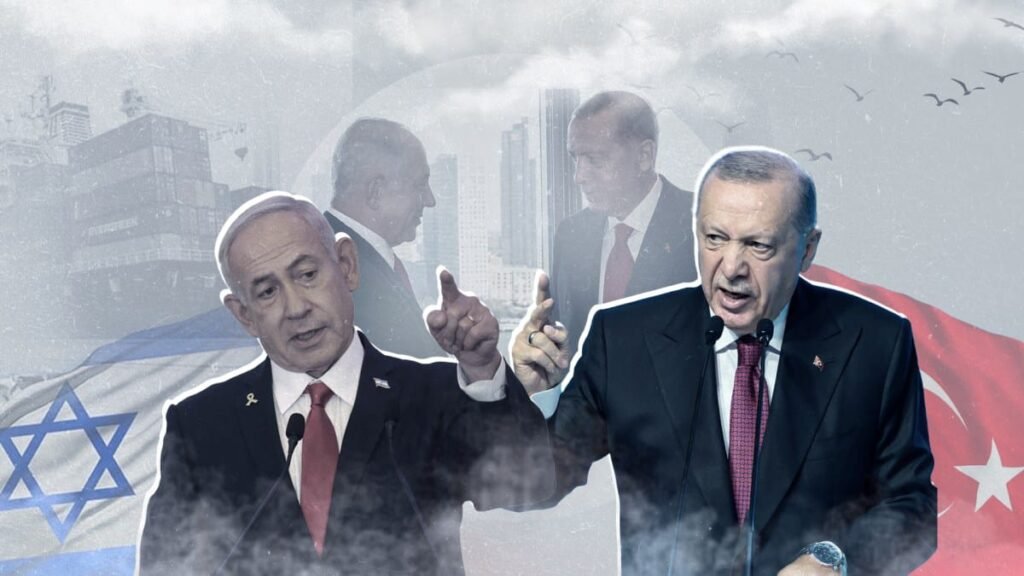
Turkey’s expanding posture in Syria is part of a broader strategy to assert regional leadership. Erdogan has long envisioned Ankara as the central power broker of the Sunni Muslim world. The withdrawal of Iranian military dominance provided the perfect opportunity for Turkey to step into the void. This strategic expansion directly increases the potential for confrontation with Israel. Ankara’s vision for the region fundamentally conflicts with Israel’s long-term security interests, creating new operational friction points.
6. Maritime Dominance and the Mavi Vatan Doctrine
Nowhere is this friction more evident than in the maritime arena. Turkey’s Blue Homeland doctrine, known as Mavi Vatan, represents an explicit push for naval dominance in the Eastern Mediterranean. This doctrine challenges established maritime boundaries and directly threatens Israel’s strategic energy partnerships. Over the past decade, Israel built strong tripartite alliances with Greece and Cyprus to protect offshore gas fields and energy pipelines. Turkey’s aggressive maritime claims seek to disrupt these networks and reshape trade routes to its own advantage.
The economic and energy security of Israel relies on unhindered access to Mediterranean shipping lanes and joint infrastructure projects like the India-Middle East-Europe Economic Corridor. Turkey’s assertive naval posture creates a constant state of low-level tension. By pushing its maritime borders outward, Ankara aims to force Israel and its regional partners into a position of dependency or compromise.
7. Emerging Defense Architectures: The Sunni Axis
Beyond Syria and the Mediterranean, Turkey is reshaping the broader defense architecture of the Middle East. The signature of the Mecca Joint Defense Agreement between Turkey, Saudi Arabia, and Pakistan marks the consolidation of a powerful Sunni axis. This trilateral alliance signals a profound shift in regional diplomacy. It provides its members with mutual defense coverage and strategic depth while reducing their historical reliance on Washington.
For Israel, this alliance presents a complex puzzle. While Jerusalem has sought to expand the Abraham Accords and integrate into a broader regional security framework, Turkey’s leadership within this new Sunni bloc complicates those efforts. Ankara brings significant military capabilities, a sophisticated defense industry, and nuclear-adjacent partner connections through Pakistan. As Turkey places itself at the head of this coalition, it gains greater leverage to shape regional norms and isolate Israel diplomatically.
8. Safe Havens and International Lawfare
This diplomatic pressure is already fully underway. Turkey continues to maintain a hostile posture toward Israel through active support for Hamas and its operational leaders. Ankara provides political safe havens and logistical freedom for figures who openly seek Israel’s destruction. Simultaneously, the Turkish government has launched an extensive international lawfare campaign. By initiating legal proceedings and formal accusations against Israel in global forums, Ankara attempts to delegitimize Israeli self-defense actions and paint the state as a violator of international law.
9. Strategic Differentiation: Turkey vs. Iran
Despite these growing challenges, Israeli strategists must maintain a clear distinction between the threat posed by Turkey and the threat posed by Iran. Turkey is not an apocalyptic actor driven by messianic dogma. It is a NATO member with deeply integrated global economic ties, complex institutional relationships, and formal diplomatic channels with the West. Fighting or containing Turkish expansion requires a fundamentally different toolkit than countering Tehran’s proxy networks. It calls for sophisticated diplomacy, economic leverage, and intelligence cooperation with regional allies who share concerns about Ankara’s hegemony.
10. Principles of Strategic Realism and Deterrence
Maintaining this distinction does not mean lowering Israel’s defense requirements. The strategic lesson of recent years is clear: Israel must never trade physical security assets or territorial control for paper agreements. Political alliances in the Middle East are inherently fluid. A country governed by a friendly or neutral administration today can undergo radical political shifts tomorrow. When leadership changes, paper treaties can be discarded overnight, but defensible borders and strategic depth remain.
Jerusalem must continue to pursue diplomatic normalization and regional integration wherever possible. Peace with Arab neighbors remains a vital national objective. However, that pursuit cannot come at the expense of operational flexibility or military superiority. Israel must retain complete freedom of action in Syria, Lebanon, and the maritime zone.
As Turkey expands its footprint and Syria rebuilds under jihadist-rooted leadership, Israel’s security doctrine must remain grounded in strategic realism. Deterrence is built on visible strength, unyielding intelligence capabilities, and an absolute refusal to rely on third parties for protection. Israel survived decades of regional turmoil by trusting its own power and keeping a realistic eye on the intentions of its neighbors. Facing a rising Turkey and a transformed Syria, that same sober realism must guide Israeli strategy into the future.