
Defense and Security Assessment: Transactional Diplomacy, Existential Urgency, and Strategic Realignment
1. Oval Office Friction and Mismatched War Timelines
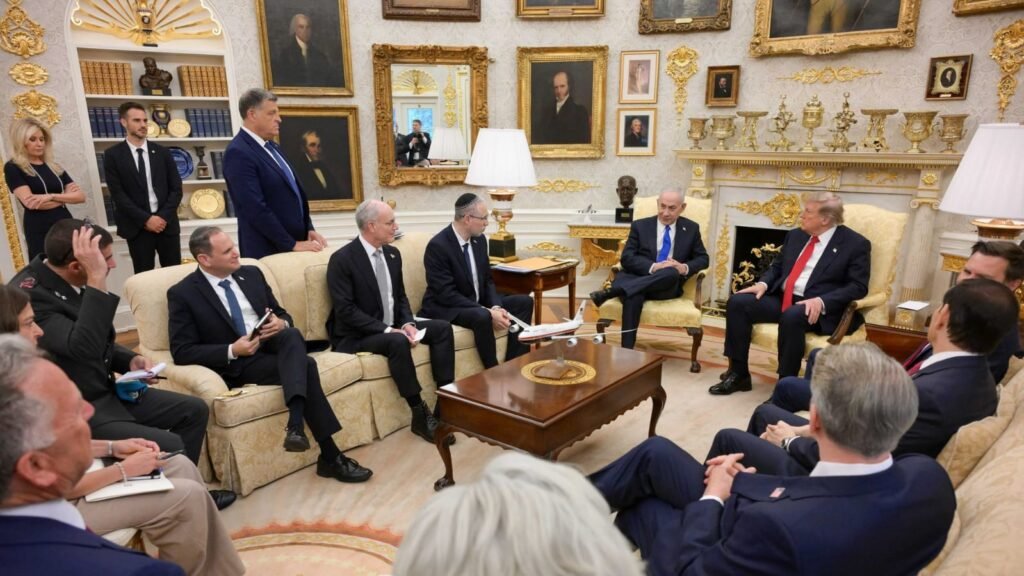
When leaders sit down behind closed doors in Washington after months of grinding military attrition, the mood in the room usually matches whatever’s happening out in the region. Trump and Netanyahu recently sat down in the Oval Office under a genuinely heavy cloud of tension over the ongoing war with Iran. Trump hasn’t hidden how frustrated he’s gotten. He wants diplomatic off ramps, he wants to avoid getting stuck in an endless regional quagmire, and he wants to protect global markets from another economic shock. Netanyahu, driven by a much less flexible security calculus, keeps pushing for aggressive, uncompromising action to fully dismantle Iran’s nuclear infrastructure once and for all. That mismatch in timing and strategy keeps pushing their alliance right up to the edge.
2. Containment Pacing versus Underground Nuclear Preemption
Trump’s frustration really comes down to a basic disagreement over how to handle the endgame with Tehran. After the heavy blows dealt during joint operations earlier this year, Washington has increasingly leaned toward testing diplomatic channels, weighing possible deals, and managing containment instead of pushing further. Trump wants fewer surprises, fewer public statements about sensitive intelligence sites like Pickaxe Mountain, and a lot more alignment with America’s own pacing on all this. When Netanyahu skips backchannels to publicize hidden Iranian nuclear developments, or orders preemptive strikes against proxy threats aimed at Israeli population centers, Trump reads those moves as erratic and unhelpful. His sharp outbursts and blunt complaints about Israeli judgment really stem from that tactical impatience more than anything else.
3. Third Party Mediation and Regional Ambitions
There’s also a powerful side factor at play here involving regional players like Qatar, Turkey, and Pakistan, since Trump increasingly seems to be buying the narratives coming out of those capitals. They’ve positioned themselves skillfully as indispensable diplomatic brokers, quietly suggesting to Washington that a broader regional accommodation could sidestep the need for endless confrontation altogether. Trump, who naturally gravitates toward transactional wins and big diplomatic headlines, often proves pretty susceptible to reassurances from governments that still hold deeply hostile underlying agendas toward Israel. When Doha, Ankara, and Islamabad market themselves as pragmatic peace brokers, they end up obscuring their own longer term regional ambitions pretty effectively, leaving the White House convinced a neat compromise is within reach if only Jerusalem would just fall in line.
4. Historical Resilience of the Bilateral Alliance
But reading these explosive disagreements as a sign the alliance is broken misunderstands the actual historical pattern of the US Israel relationship. This bond has always operated under intense pressure, functioning a lot like a tightly wound rubber band that stretches right to its limit during crises without ever quite snapping. From Bill Clinton fuming over roadblocks in the 1990s peace process to Joe Biden venting over military tactics after October 7, American presidents who genuinely care about Israel’s survival tend to clash the hardest with its long serving leader. Trump fits squarely into that same pattern. His whole leadership style runs on unpredictability and blunt force, which means his irritation with Netanyahu’s independent strategic moves was always going to spill over into sharp language sooner or later.
5. Defensive Urgency versus Washington’s Timelines
Netanyahu’s approach, meanwhile, is shaped by an existential urgency that leaves very little room for Washington’s political timelines. From Jerusalem’s point of view, there’s no luxury of waiting around for diplomatic breakthroughs when hostile regimes are actively working toward the Jewish state’s destruction. When Israeli intelligence uncovers renewed efforts by Tehran to rebuild its nuclear capabilities underground, waiting for negotiated consensus feels like an unacceptable gamble to take. That defensive urgency frequently pushes Israel toward unilateral moves that catch the White House off guard, which then triggers presidential anger and accusations of poor coordination between the two.
6. Enduring Structural Foundations and Intelligence Sharing
Despite all this friction, the core structural foundation between the two countries remains fully intact. Both administrations understand that their ultimate security interests in the Middle East line up against the same clerical regime in Tehran. Even when Trump vents his frustration over uncoordinated moves or public intelligence disclosures, American military backing and strategic intelligence sharing keep going strong behind the scenes regardless. The deep interconnection between Washington and Jerusalem runs well beyond the personal frustrations of two leaders whose political survival depends on very different domestic audiences.
7. Navigating Existential Pressure and Strategic Realities
At the end of the day, noisy disagreements and presidential outbursts are basically just the price of admission in a high stakes alliance between two strong willed nations. Indifference is really the true opposite of a deep partnership, and neither Washington nor Jerusalem is indifferent to the other’s survival and security. As Trump and Netanyahu navigate the turbulent aftermath of the Iran campaign, their public clashes don’t signal the alliance falling apart. If anything, they reflect the raw, relentless pressure of two allies fighting through an existential regional crisis side by side, disagreements and all.