
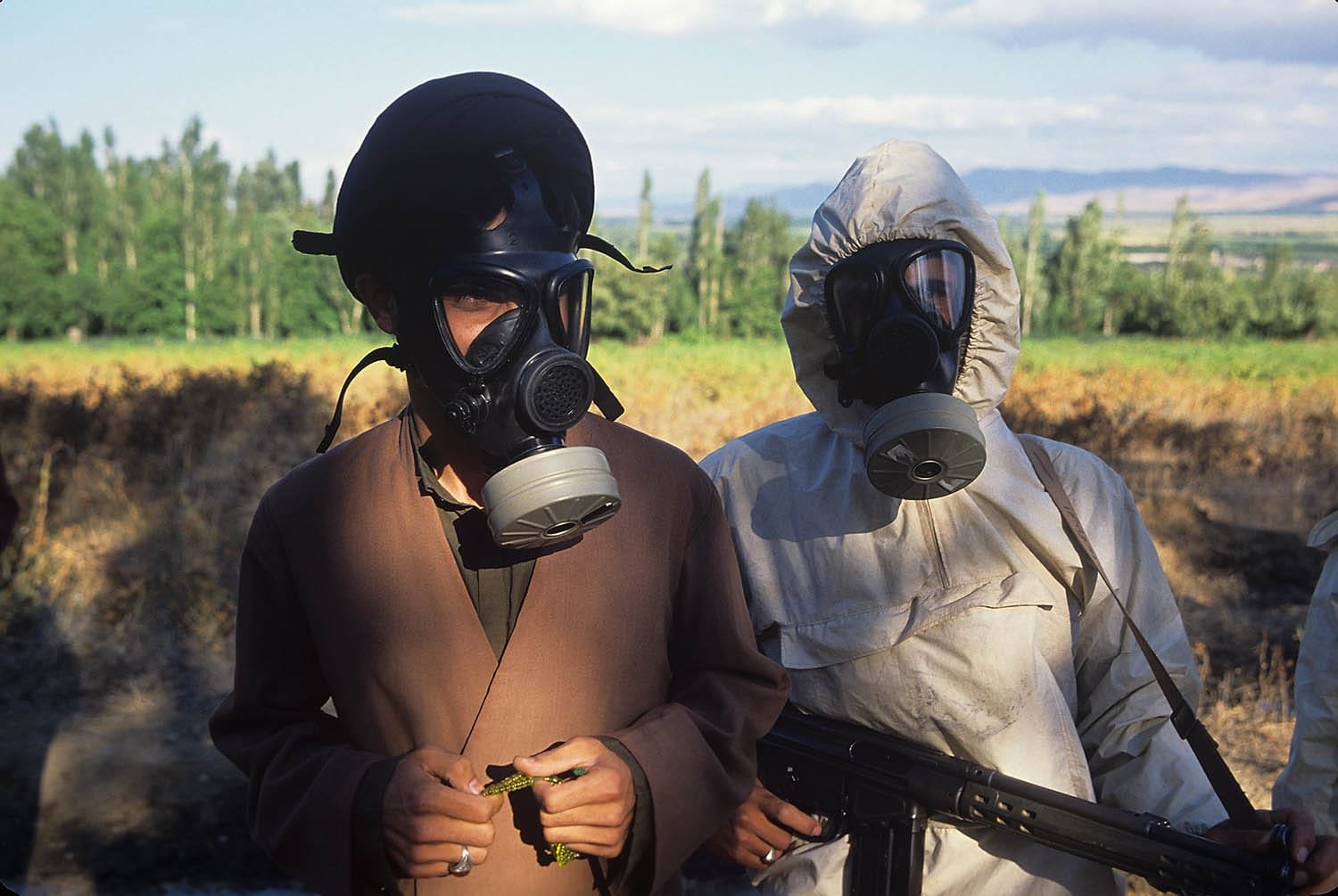
In the hyper-militarized Middle East, our obsession with hardware has blinded us to the most insidious threats. We are a region addicted to the spectacle of defense, the multi-billion-dollar air umbrellas, the intricate webs of radar, and the thunderous interception of ballistic missiles. We have become experts at defending against the loud, the visible, and the predictable. Yet, by focusing our gaze entirely on the skyline, we have left our flank exposed to a danger that does not arrive on a flight path or leave a heat signature. The most perilous component of Iran’s expanding arsenal is not a shiny new hypersonic missile or a long-range drone; it is the quiet, chillingly neglected potential for chemical and biological capabilities.
There is a tragic flaw in modern security logic: we tend to equate “dangerous” with “spectacular.” We prioritize threats based on their noise and their immediate explosive potential, effectively creating a strategic blind spot for weapons that operate in the shadows. While we celebrate the destruction of incoming missiles, we rarely pause to consider the catastrophic efficiency of a threat that doesn’t need a flight trajectory to cripple a city. Chemical and biological agents are the ultimate asymmetric weapon. They are relatively inexpensive to produce, infuriatingly difficult to track, and, most terrifyingly, they defy the binary logic of interception. You cannot shoot down a pathogen, and you cannot build a Patriot battery against a fentanyl derivative.
The reluctance to confront this reality stems from a desire for normalcy, but it is also a failure of imagination. For years, observers have pointed to the opacity of Iranian activities, noting that certain sectors of their industrial and research infrastructure are cloaked in layers of ambiguity that defy international verification. While the data may not yet confirm a full-scale, weaponized arsenal ready for deployment, the persistence of this strategic doubt is a luxury we can no longer afford. When a state as ideologically committed as Iran maintains facilities that can pivot between pharmaceutical research and the development of lethal agents, the threshold for crossing from “dual-use” to “weaponized” becomes dangerously fluid.
We have seen this movie before in our region, and the ending is rarely pleasant. The history of chemical warfare in the Middle East is not a series of isolated anomalies; it is a trajectory of shifting norms. It begins with the domestic, internal application of these tools, often under the guise of crowd control or maintaining public order, and eventually bleeds into external conflict once the political and moral barriers have been sufficiently eroded. When research circles report on the suspected use of potent fentanyl derivatives to pacify protesters within Iran, it should be read as a warning flare. It suggests that the taboo against using such substances is not just weakening; it is potentially being field-tested. If a regime proves comfortable using specialized agents against its own citizens, the assumption that it would hesitate to employ them against an external adversary during a moment of existential crisis is a gamble we are foolish to make.
The Gulf states and Israel have achieved a marvel of engineering in building advanced air defense layers, but this technological triumph has bred a dangerous complacency. We have spent hundreds of billions on the “visible” war, creating a regional psyche that feels secure because it feels watched. But chemical and biological threats do not require mass, scale, or visible signatures to produce strategic chaos. A limited, focused incident, an attack on a critical port, a water desalination plant, or a densely populated transportation hub, would not just kill; it would paralyze. It would generate a psychological shock that would reverberate far beyond the casualty count, destabilizing markets, shattering public confidence in the state’s ability to protect its own, and creating a power vacuum that our adversaries would be all too ready to exploit.
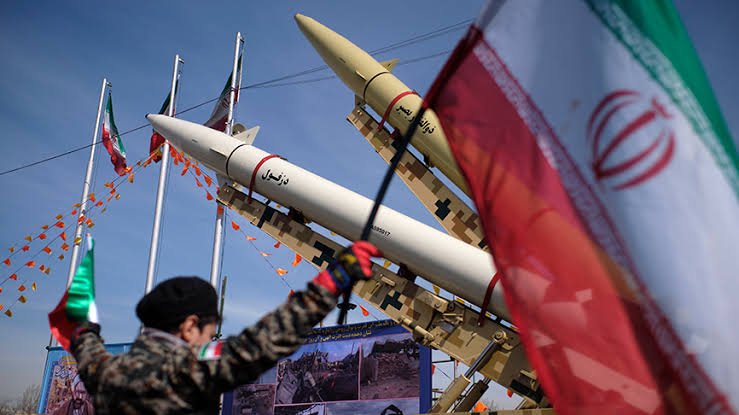
The challenge of attribution is the ultimate shield for the aggressor. Unlike a missile launch, which can be traced back to its origin in real-time, the use of chemical or biological agents can be shrouded in just enough ambiguity to delay a decisive response. In the time it takes to definitively confirm the source of a toxin, the political window for a counter-strike may have closed, and the intended disruption will have already achieved its goal.
It is time to rebalance our strategic priorities. This is not a call to abandon air defense, but a demand to integrate the chemical and biological file into the very core of our security architecture. We need early warning centers that are as sophisticated at detecting microscopic anomalies as our radar is at tracking airframes. We need health-security coordination that isn’t just about vaccines and pandemics, but about military-grade, rapid-response infrastructure capable of identifying and mitigating a targeted attack within hours. Most importantly, we need to stop treating this as a secondary issue of international treaties and oversight, and start treating it as the primary national security threat it is.
We are living in an era where the effectiveness of traditional deterrence is fading. Our enemies have learned that they cannot match us in a straight fight of conventional hardware, so they are pivoting toward the unconventional, the silent, and the terrifying. To ignore this is to cling to a comfortable, outdated sense of security while the world changes underneath our feet. We have built a magnificent shield against the fire from the sky, but we are effectively defenseless against the poison in the air. The most dangerous threat is not the one we see coming; it is the one we have convinced ourselves is too unlikely to prepare for. It is time we opened our eyes to the silence.