
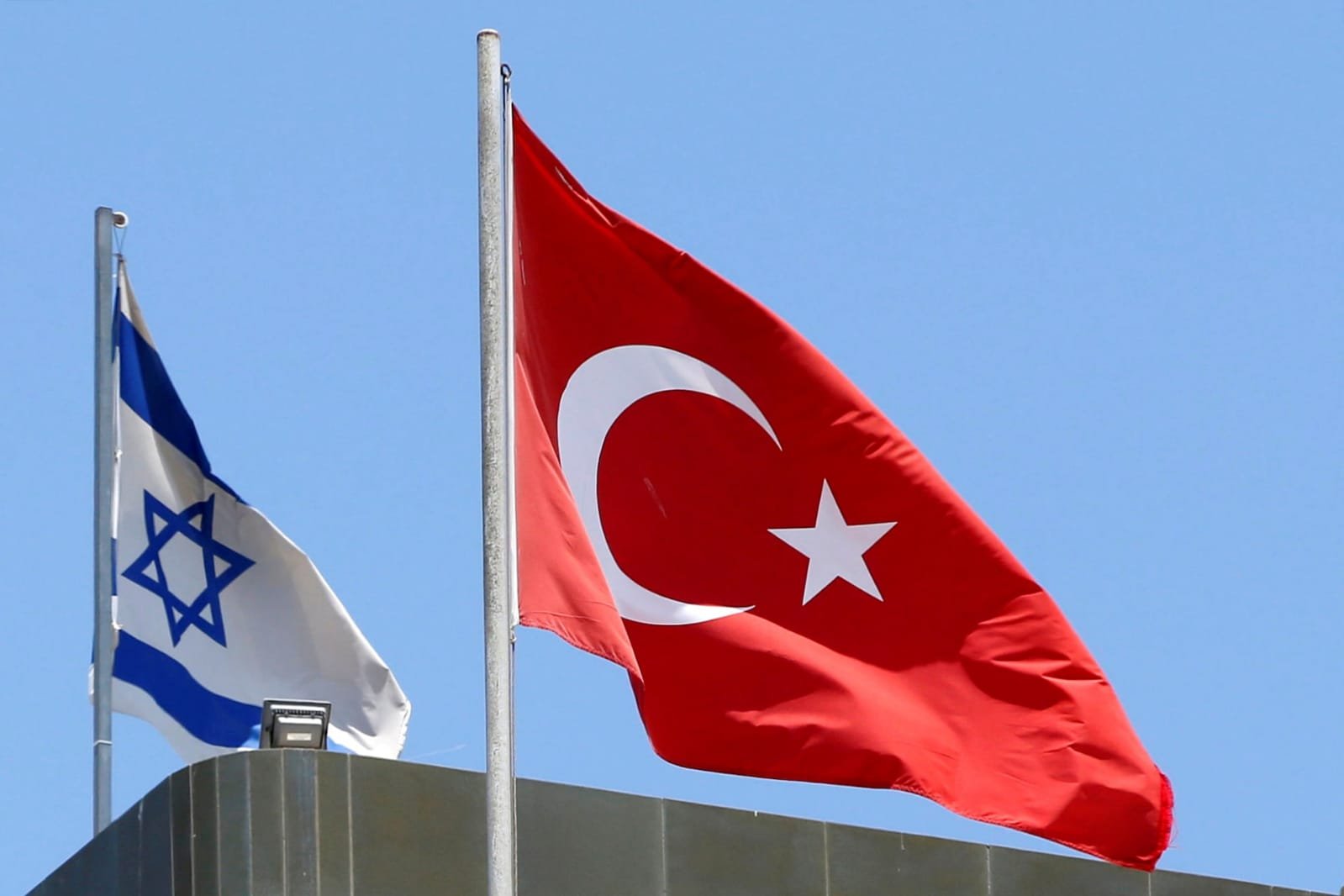
The NATO Paradox: Managing Ankara’s Imperial Ambitions in a Post-Iran Middle East
For nearly four decades, Israeli national security policy operated under a single, overarching axiom. The Islamic Republic of Iran is the supreme, existential threat to the Jewish state. From the corridors of the Defense Ministry in Tel Aviv to the podiums of the United Nations, Israeli strategists viewed the region through the prism of Tehran’s Ring of Fire, a network of proxy militias encircling Israel from Gaza to southern Lebanon, Syria, and Yemen. But as the Iranian state suffers unprecedented internal erosion and operational degradation after years of systemic military strikes, a quiet panic is setting in among Israel’s veteran defense establishment.
In a stark, pragmatic assessment, former Defense Minister Yoav Gallant laid out the strategic reality that’s going to define the coming decades. Power abhors a vacuum. As the Iranian shadow recedes across the Levant, it won’t get replaced by some benign order of liberal democracies or stable, sovereign nation states. The natural heir to regional hegemony is an actor far more institutionalized, economically powerful, and strategically complex than Tehran ever was. Türkiye.
Gallant’s warning strikes at the heart of a dangerous delusion currently circulating within parts of Israel’s political class. Some politicians naively celebrate the weakening of the Iranian axis as the end of major regional threats altogether, while others reflexively brand Ankara as merely the new Iran, something to isolate and confront the same way. Both views fail to grasp the structural power Ankara actually wields. Türkiye isn’t an isolated rogue state run by radical clerics. It’s a formidable, modern nation state with deep imperial roots, a sophisticated industrial base, and a dual identity that makes it uniquely difficult to counter using the old playbook.
Consider the structural realities separating Turkish power from Iranian ambition. Iran relied heavily on asymmetric warfare, smuggling networks, and impoverished non state actors to project influence. Türkiye operates through formal state capacity, massive conventional forces, and deep economic integration instead, a fundamentally different kind of threat.
Ankara commands the second largest standing military in NATO, fielding over 400,000 active duty personnel backed by advanced Western doctrine and real operational experience. Its defense industrial sector has undergone an unprecedented transformation too. In 2025 alone, Turkish defense and aerospace exports broke past the 10 billion dollar mark, driven by indigenous precision guided munitions, advanced electronic warfare suites, and world class unmanned aerial vehicle programs. Türkiye also serves as a vital industrial engine for Europe, maintaining bilateral goods trade with the EU approaching 210 billion euros annually.
This economic and military power pairs with undeniable strategic geography. Sitting atop the Bosporus and bridging Europe and Asia, Ankara holds irreplaceable leverage over maritime access, energy corridors, and regional migration flows. Unlike Iran, choked by international sanctions and diplomatic isolation, Türkiye remains a core member of the North Atlantic Alliance. It holds formal seats in Western security councils even while pursuing a fiercely independent, nationalist foreign policy across the Middle East at the same time.
This dual positioning creates exactly what Gallant identifies as a profound strategic dilemma for Jerusalem. Türkiye operates inside the Western security architecture while simultaneously extending its reach into areas that directly touch Israeli vital interests.
Nowhere is this more visible than in post Assad Syria. As central state authority collapsed in Damascus, Ankara moved decisively to establish an entrenched operational footprint across northern and central Syria. Through political backing, economic stabilization, and direct military presence, Türkiye has effectively turned parts of Syria into something close to a Turkish protectorate. For the first time in modern history, Turkish military assets, air defense coverage, and intelligence networks extend directly toward Israel’s northern border.
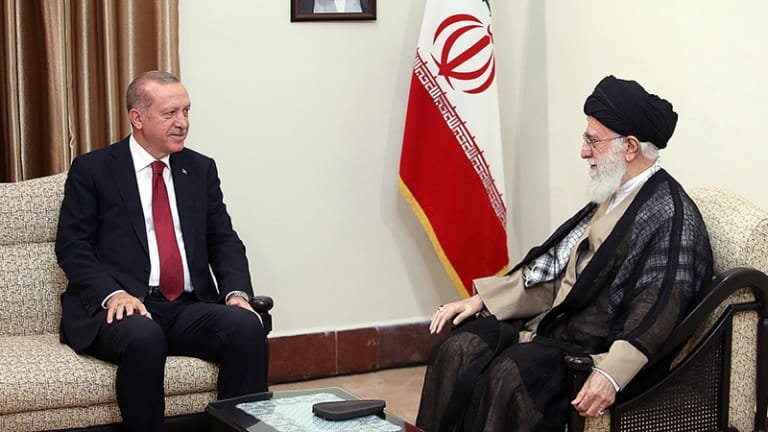
At the same time, Erdogan has systematically positioned Türkiye as a primary champion of Palestinian political causes, seeking an active diplomatic and humanitarian foothold in Gaza while asserting historical interest in the holy sites of Jerusalem too. By combining neo Ottoman sentiment with Sunni leadership ambition, Ankara is angling to lead the post Iranian Middle East.
So how should Israel respond to this seismic shift?
The worst path Jerusalem could take is treating Türkiye through the same simplistic lens used against Iran. Ideological bluster and public confrontation aren’t going to deter a nation that supplies critical components to NATO armies, controls vital straits, and maintains deep ties with Washington and European capitals. Trying to turn Türkiye into a pariah state will only alienate Western allies who view Ankara as an indispensable, if difficult, partner in containing Russia and securing Europe’s southern flank.
Israel needs a policy grounded in sober, institutional realism instead. Gallant’s analysis points toward a complex strategy combining firm deterrence with pragmatic diplomatic communication.
First, Israel needs to establish unambiguous red lines around its northern borders and airspace. Turkish military proximity to the Golan Heights introduces operational variables that demand absolute military clarity to prevent dangerous miscalculation. The IDF has to maintain complete freedom of action to protect national security without backing down from regional posturing either.
Second, Jerusalem needs to abandon the illusion that public slanging matches serve national security in any way. Direct, quiet, behind closed doors military and intelligence channels between Jerusalem and Ankara are essential going forward. Deconfliction mechanisms in Syria and maritime awareness in the Eastern Mediterranean aren’t political favors granted to Erdogan. They’re mandatory operational requirements to prevent an unwanted escalation between two regional heavyweights who genuinely don’t want that fight either.
Finally, Israel needs to strengthen its regional alliances across the Hellenic arc and the Sunni Arab world. Deepening strategic, energy, and defense ties with Greece, Cyprus, Egypt, and Saudi Arabia creates a natural counterweight to Turkish overreach, signaling to Ankara that its regional ambitions have real limits.
The era of focusing solely on the Iranian nuclear threat and proxy warfare is drawing to a close. The emerging Middle East is going to be shaped by state power, industrial scale, and historic imperial ambition instead. Türkiye is already asserting its presence across the Levant. Israel’s leadership needs to show the strategic foresight to manage this rise, combining uncompromising military readiness with sophisticated, clear eyed statecraft, before a strategic shift turns into something much harder to walk back.