
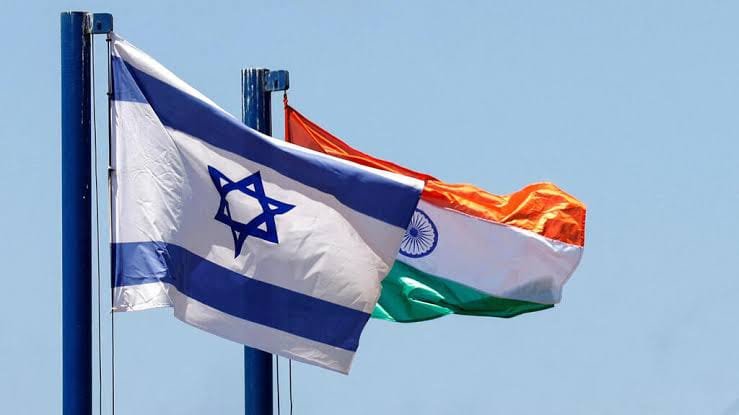
“Not Your Vassal”: What General Bakshi’s Outburst Signals for Israel
Retired Indian Major General Gagan Deep Bakshi’s recent remarks have sent a sharp jolt through the diplomatic corridors connecting New Delhi and Jerusalem. When a senior military figure of his stature openly says India will not be a vassal state to Israeli interests, that’s more than rhetorical posturing. It’s a candid expression of the cold, hard geostrategic reality now governing South Asian foreign policy. For an Israeli audience used to viewing India as an increasingly aligned partner in the struggle against regional hegemony, Bakshi’s words land as a necessary, if uncomfortable, reminder. India’s map of the world is drawn with different borders, different threats, and a completely different set of survival imperatives than ours.
At the heart of this friction sits what Bakshi calls a Sunni NATO, a strategic bloc emerging from the alignment of Turkey, Saudi Arabia, and Pakistan. This isn’t the fever dream of a paranoid general. We’re watching a real hardening of alliances across the Islamic world, one that poses an existential concern for New Delhi. For India, Pakistan isn’t a distant nuisance or a secondary competitor. It’s the primary, permanent security headache. It’s the adversary that’s engaged in persistent, low intensity warfare for decades and maintains a nuclear arsenal that, by most international estimates, numbers around 180 warheads. When New Delhi looks at the map, it doesn’t see the same Iran that Israel sees. We view Iran as the ideological fountainhead of our destruction, a state whose very existence rests on erasing the Jewish presence from the Middle East. India, by contrast, views Iran as a necessary, if problematic, geostrategic counterweight.
The logic out of New Delhi is brutal, but it’s coherent. If Pakistan is the threat, then Iran is the buffer. That’s why India can’t simply abandon its relationship with Tehran, no matter how intense the current conflict between the Islamic Republic and Israel gets. For India, Chabahar Port and the broader land corridors through Iran aren’t luxury trade routes. They’re essential lifelines, an overland bridge to Central Asia and Afghanistan that effectively bypasses hostile Pakistani territory. In a world where New Delhi is desperate to contain Chinese influence and neutralize Pakistani aggression, these routes are worth more than any diplomatic gesture of solidarity toward a friend, however close that friendship might be.
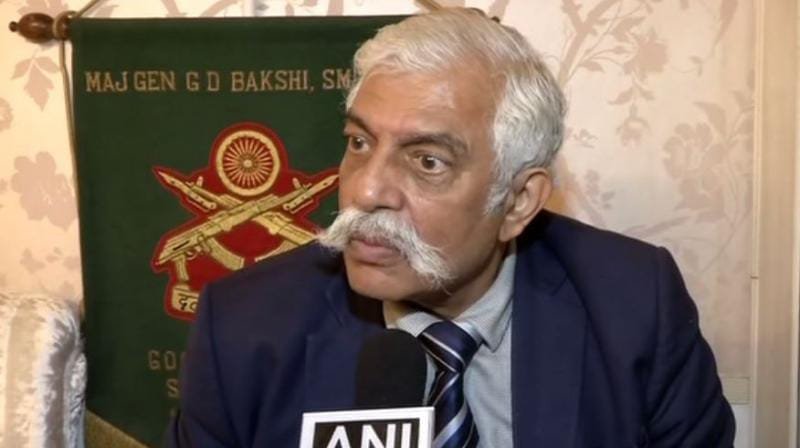
Bakshi’s frustration with Israel is rooted in a perception of asymmetry. He argues, quite pointedly, that while India has stood by Israel’s side, the reverse hasn’t always held true regarding India’s primary security threat. New Delhi feels Jerusalem has historically turned a blind eye to the implications of Pakistan’s nuclear program, largely because that program was aimed at India, not at us. To an Indian military mind, this looks like selective engagement. It suggests that while Israel expects its partners to treat its existential threats with total urgency, it’s been willing to compartmentalize or ignore the threats defining India’s own national security posture. When Bakshi says India is not a client state, he’s speaking for a political establishment growing increasingly comfortable with a multipolar world. India isn’t looking to get integrated into a Western or Middle Eastern security architecture that compromises its ability to maneuver in its own backyard.
The military specifics Bakshi cites, the Turkish transfer of drones to Pakistan and the deployment of naval assets to Karachi, are evidence this alignment is moving from theoretical to operational fast. Turkey has genuinely become a significant defense partner for Islamabad. The cooperation in drone technology and maritime security is a real game changer for the Indian Navy and Air Force, which now have to account for a more technically sophisticated Pakistani military than before. When Bakshi warns that the Indian Navy would tear apart a Turkish armada attempting to intervene in a regional conflict, he’s emphasizing that India’s military confidence is tethered directly to its maritime domain. It’s an assertion of regional supremacy, one that dares outside Middle Eastern powers to step across the line.
Still, this situation presents a real danger to the India Israel relationship. Both nations have built a robust, deep rooted partnership on shared democratic values and advanced defense technology. Israel has been a critical provider of intelligence, avionics, and radar systems for the Indian military over the years. But that partnership has always operated on the understanding that both sides act in their own interest first. Bakshi’s outburst reveals the limits of that consensus. He’s signaling that New Delhi’s threshold for Israeli pressure has been reached. When Jerusalem asks India to curtail its engagement with Tehran, it’s asking for something that directly contradicts the very nature of Indian security planning.
We in Israel need to understand that India’s refusal to sacrifice its ties with Iran isn’t a betrayal. It’s a strategic calculation by a nation that sees its neighbors as constant threats, the same way we do ours. We’d be wise to recognize that India’s pivot toward Iran is a product of its own fears, not a shift in its feelings toward us. If we force India to choose between its economic lifeline in the Persian Gulf and its security partnership with Israel, we may find we’ve pushed a critical ally into a corner it never wanted to occupy in the first place.
The way forward requires a higher degree of diplomatic maturity than we’ve shown so far. We need to accept that the Middle East and South Asia are linked by complex, overlapping interests that no longer allow for simplistic, binary alignments. India is a rising power with its own set of regional nightmares, and it’s going to keep cultivating the relationships it believes are essential to its own survival, regardless of how that looks from Jerusalem. If we want to maintain the strength of our ties with New Delhi, we have to stop expecting them to view the world through a Jerusalem centric lens. We have to engage with India as an equal partner living in a much tougher neighborhood than the one we’re used to discussing. The era of diplomatic hedging really is over, and for both Israel and India, the coming years will be defined by the hard, unvarnished recognition of where our interests converge and where they must, inevitably, remain apart.