

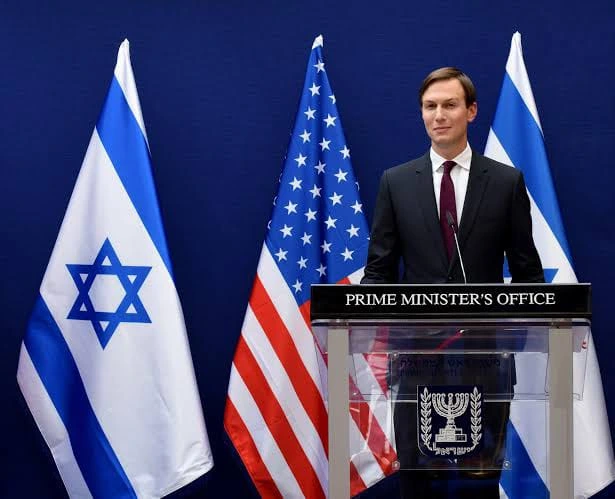
When Jared Kushner sounds the alarm that Israel risks becoming a global outcast if it does not change course on Gaza, this is not something Jerusalem can just shrug off as noise from the opposition. He is not some distant critic. Kushner carries a track record in Washington that few others can match when it comes to backing Israel, architect of the Abraham Accords, close confidant of Prime Minister Benjamin Netanyahu, and main driver behind Trump’s Middle East deals. So, when he lets loose with a blunt warning in a New York Magazine profile on November 23, 2026, it lands with extra weight. Kushner says Israel is standing at a real crossroads. It can channel its military achievements since October 7 into broader regional cooperation, or double down on a path that only deepens its isolation.
Kushner’s irritation is not theoretical, as he is frustrated because things have ground to a halt with the Board of Peace, Trump’s flagship initiative for Gaza’s transformation. That panel was set up to steer Gaza’s cleanup, demilitarization, and rebuilding. The magazine reveals: Kushner, not content to sit back, met face to face with Hamas in Egypt last August to drive home the need for disarmament. Afterward, he flew straight to Jerusalem urging Netanyahu to sign off on the recovery plan. Netanyahu held out, and the freeze became public last week when the Board of Peace took its complaints straight to the U.N. Security Council on November 17. According to their report, Hamas and Palestinian factions did put their names to a July agreement for decommissioning weapons, but nothing is budging. The Palestinian technocratic committee tapped to oversee civilian affairs has not even entered Gaza, and the planned stabilization force remains MIA.
Inside Washington, patience is running out fast. People are tired of waiting and the tone is shifting. Days ago, senior Board of Peace adviser Josh Gruenbaum went public, accusing elements inside Netanyahu’s government of shooting down even limited steps to test if Hamas would stick to its word. Gruenbaum did not mince words; he threatened to let the United Nations, or the next U.S. administration, pick up the Gaza file if Israel will not cooperate. Even Ron Dermer, Netanyahu’s own former strategic affairs minister and a reliable ally, told a podcast last week that Israel needs to give the Board of Peace a fair shot, release tax funds, support police training, and let technocrats do their job.
To be fair, Israeli doubts about promises of voluntary Hamas disarmament are not born in a vacuum. They are rooted in harsh reality. Even though Hamas now controls less than forty percent of Gaza, its grip on civilian life is strong. The group bullies Palestinian Authority staff, sabotages international aid projects, and fights tooth and nail to keep any other form of rule out. So, when Israel insists on ironclad proof of disarmament before letting in reconstruction supplies, it is not paranoia, it is hard earned caution. After years of seeing basic materials turned into weapons, this feels like the only responsible approach. Meanwhile, critics in Washington have not been easy on Kushner either. House Oversight ranking Democrat Robert Garcia, for one, has demanded a closer look at Kushner’s business ties, especially regarding his firm Affinity Partners and its Gulf backers.
Still, investigating Kushner’s finances and acknowledging Israel’s security fears only scratches the surface. None of this resolves the core dilemma Jerusalem faces. Keeping two million Gazans stuck in a devastated, leaderless vacuum does not undermine Hamas; it actually strengthens its hand. With no civil authority, whatever is left of Hamas just fills the gap, all while the world watches Gaza’s misery mount and Israel’s diplomatic support shrinks. And there is another risk, by stalling a project that has Trump’s personal imprint, Israel could lose the support of the most pro Israel U.S. administration possible. If America walks away and leaves Gaza in the hands of the U.N., an idea met with suspicion and distrust from Jerusalem, Israel ends up less secure, with fewer allies, and even more isolated.
Now, with coalition talks underway after the October elections, Israel’s next government faces a clear reality. Military might is not enough, as a real exit strategy depends on political choices. Testing the Board of Peace process under strict security monitoring is not caving to Hamas. It is the only credible path to replacing its rule and keeping Arab states and Washington involved. Kushner’s warning feels harsh because it comes from someone invested in Israel’s future, someone who sees dangers others are glossing over. Real victory in Gaza is not about how long Israel can hold the rubble; it is about whether leaders have the nerve and vision to turn battlefield gains into lasting security and regional acceptance.
About the Author
Noam Shalev is a Political Affairs Commentator covering Israeli government policy, US Israel relations, coalition politics, and diplomatic engagement across the Middle East.