

Defense & Strategic Policy Briefing | Institutional Integration, Sovereign Security, and Co-Production Architecture
1. Strategic Survival versus Washington’s Political Narrative
Recent intelligence assessments and leaked policy memos circulating in Washington love to paint a picture of a desperate Jerusalem frantically engineering an institutional lock to safeguard the bilateral alliance against shifting political winds. Critics in progressive circles and media outlets lament this adaptation as an evasion of democratic oversight, framing defensive technological integration as a backdoor maneuver designed to bypass future congressional friction. From an Israeli perspective, this narrative is profoundly backwards and fundamentally dishonest. What Washington’s intelligence analysts diagnose as a calculated circumvention of American political evolution is, in reality, a textbook exercise in strategic survival. When an indispensable democratic anchor faces the fickle tides of partisan polarization and radicalized blockades, codifying structural cooperation is not a subversion of sovereignty. It is the only rational response for a nation under siege.
2. Multifront Warfare and the Evolution of Aid Dependencies
The premise that Israel is panicking over declining favorability misses the core engine driving our national security policy. Decades of existential warfare, culminating in the complex multifront campaigns against Hamas, Hezbollah, and the clerical regime in Tehran, have taught Jerusalem a brutal, unforgiving lesson. Relying solely on the goodwill of transient political coalitions in Washington is a fool’s errand. When public opinion in Western capitals is weaponized by hostile narratives, and when annual funding packages become political footballs in domestic congressional brawls, proactive states must adapt. Transitioning from traditional foreign aid dependencies to deep industrial, intelligence, and defense technological co production represents the pinnacle of sovereign maturity.
3. NDAA Section 219 and Joint Defense Innovation
Provisions like Section 219 of the National Defense Authorization Act, which establishes a structured framework for defense technology cooperation inside the Pentagon, are constantly maligned by critics as threats to American autonomy. This complaint completely ignores the mutual benefit embedded within modern military architecture. Israel is not a charity case seeking perpetual handouts. We are a global powerhouse in defense innovation, cyber warfare, missile defense, and artificial intelligence integration. When the United States military incorporates cutting edge Israeli counter drone systems, advanced air defense concepts, and data fusion capabilities, American soldiers on foreign battlefields gain a direct tactical edge. Securing this pipeline protects American lives just as surely as it reinforces Israeli deterrence.
4. Shared Regional Threats along the Civilizational Fault Line
The handwringing over American sovereignty rings hollow when measured against the stark reality of shared threats. The Middle East remains a volatile theater where radical Islamist proxies, backed by illicit funding and regional subversion, seek to destabilize Western interests far beyond the Levant. Israel stands on the frontline of this civilizational fault line, absorbing the initial shockwaves of terror so that democratic allies do not have to face them alone. Deepening the institutional ties between our defense establishments ensures that the technological superiority required to defeat these common enemies cannot be arbitrarily switched off by a hostile future administration pandering to radical domestic factions.
5. Defense Technological Integration into DoD Programs of Record
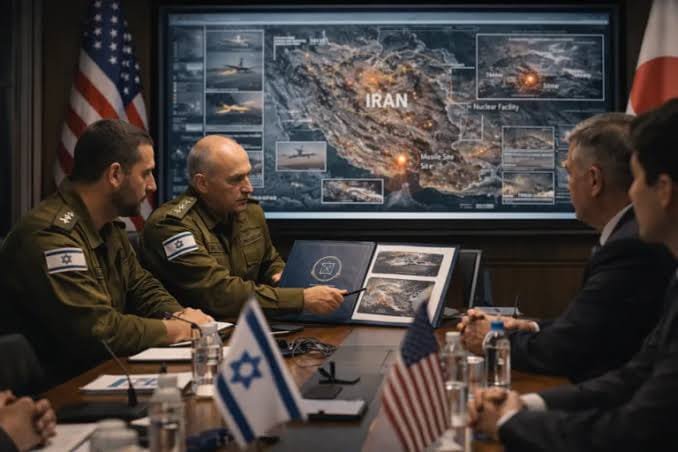
True allies do not let their vital security architecture become hostage to the cyclic mood swings of social media politics or campus agitation. By embedding Israeli defense technology directly into programs of record within the United States Department of Defense, Jerusalem and Washington are building an alliance robust enough to withstand political turbulence. Far from undermining democratic principles, this integration fortifies the bedrock of Western security. In a world growing increasingly hostile to free nations, anchoring the U.S. Israel partnership into the permanent bedrock of industrial and technological reality is not just smart diplomacy. It is the absolute guarantee of our shared survival.
6. Economic Pragmatism and R&D Return on Investment
Examining the mechanics of this cooperation reveals why shifting from cash based foreign aid to deeply integrated defense R and D is a win for both nations. For decades, military aid packages have served as easy targets for populist politicians on both extremes of the American political spectrum who wish to score cheap domestic points. By moving away from visible financial transfers and toward joint technological development, the partnership shifts to a pragmatic, business like foundation. American taxpayers are not writing blank checks; instead, they are investing in joint ventures that yield superior military hardware, strengthen the defense industrial base of the United States, and foster direct economic collaboration between tech sectors in Tel Aviv and Silicon Valley.
7. Battlefield-Proven Innovation and Rapid Procurement
Furthermore, the nature of modern warfare demands unprecedented speed in technological adaptation. Traditional procurement cycles in Washington are notoriously sluggish, often taking years to field critical innovations against rapidly evolving asymmetric threats. Israel operates on the front lines of technological warfare, where cyber defense systems, electronic countermeasures, and autonomous drone interceptors are tested and refined under real combat conditions daily. Integrating these battlefield proven innovations directly into the U.S. military apparatus gives American forces an invaluable strategic advantage against near peer adversaries across the globe.
8. Sovereign Autonomy and Long-Term Strategic Realities
Critics who argue that this integration undermines American democracy fundamentally misunderstand the nature of sovereign treaties and institutional co dependence. Alliances are built on mutual interest, and when two democratic nations face overlapping threats from rogue states and terrorist networks, locking in security cooperation is a sign of strength, not weakness. Jerusalem refuses to apologize for taking proactive steps to ensure its defense capabilities remain uncompromised by political shifts in foreign capitals. Israel will continue to forge unbreakable ties with its greatest ally, securing a safer future for both nations through shared innovation and unyielding resolve.