
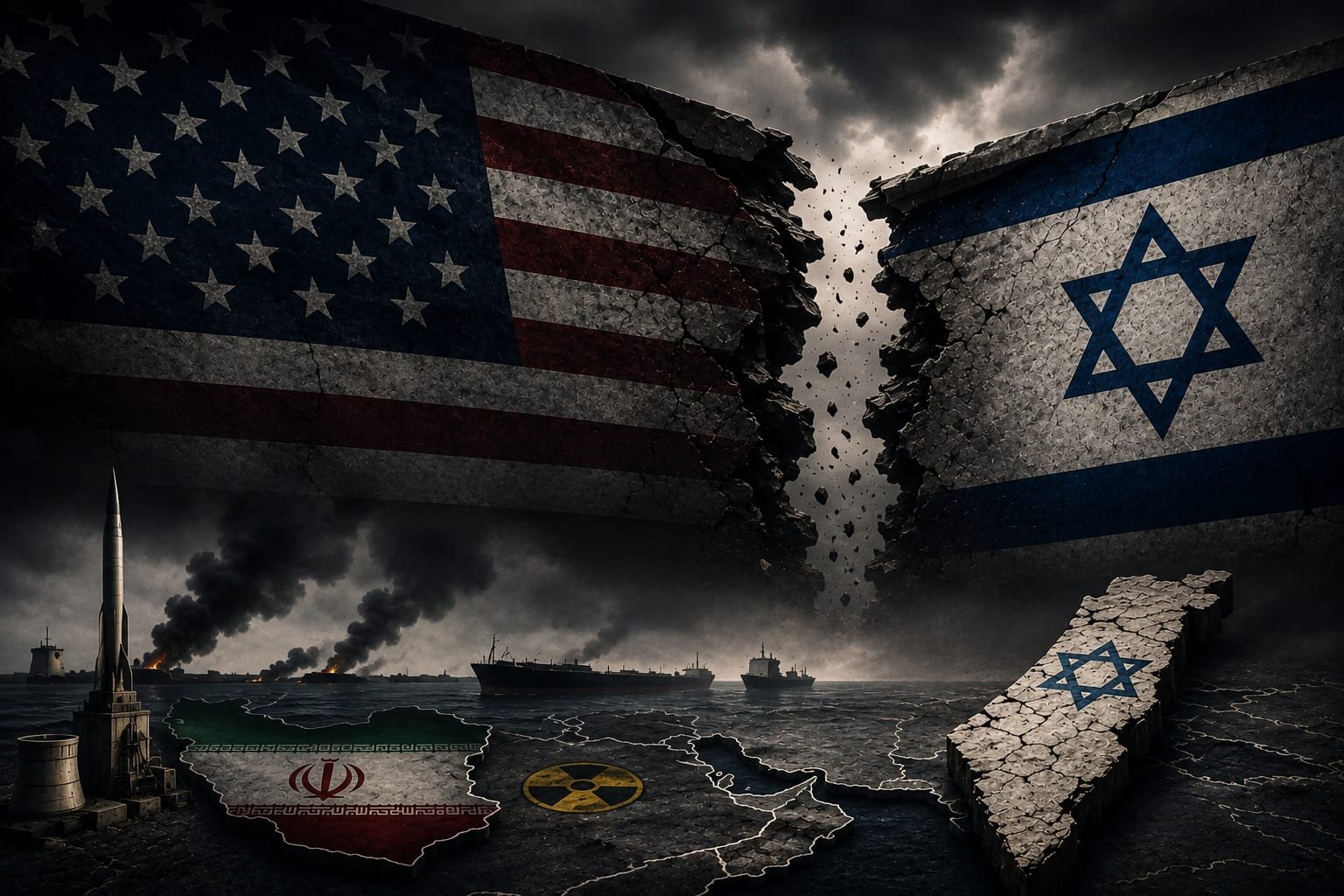
The diplomatic rift currently unfolding between the Trump administration and the Israeli government has reached a dangerous zenith. Vice President JD Vance’s recent public rebuke, essentially telling Israel to “get on board” with a, U.S.-brokered peace deal or risk standing alone, is more than a tactical disagreement between allies. It is a fundamental misreading of the Middle East and a profound insult to Israel’s strategic autonomy. Vance’s assertion that the U.S. is Israel’s “only powerful ally” left is a calculated attempt to isolate Prime Minister Benjamin Netanyahu, signaling that Washington is no longer merely a partner, but a chaperone dictating the strict limits of Israel’s security.
Vance’s rhetoric betrays a transactional view of the U.S.-Israel alliance that risks trading long-term regional stability for short-term political headlines back in Washington. By pressuring Israel to accept a Memorandum of Understanding (MoU) with Iran that critics view as a fragile, hollow veneer of peace, the White House is essentially asking Jerusalem to trust a regime that has spent the last several months in active, violent conflict with both nations. The U.S. strikes on Iran on July 7, 2026, in response to attacks on commercial shipping in the Strait of Hormuz, confirm what Israel has been warning about all along: Tehran’s word is worthless. While the administration pursues a “reconstruction fund” and sanctions relief, Iran remains committed to its long-term objectives, emboldened by the belief that Washington is now prioritizing a quick, optics-driven exit over a durable, permanent solution.
Vance’s “my way or the highway” approach ignores the brutal reality of Israel’s geopolitical position. Netanyahu was entirely correct to push back. Israel is not a client state to be managed; it is a regional power with legitimate security requirements that transcend the internal political cycles of a White House desperate for a “win”. When Vance warns that Israel “cannot just kill its way out” of its problems, he conveniently ignores the fact that Israel is trying to survive in a neighborhood where Tehran has spent decades attempting to destroy its existence. Israel’s intelligence and military operations are not acts of reckless aggression; they are the necessary, defensive responses to an adversary that has never negotiated in good faith.
Furthermore, the arrogance of the “only friend” claim is intellectually bankrupt and diplomatically amateurish. It serves to weaken Israel’s standing by implying that Jerusalem is a pariah, desperate for Washington’s scraps. The reality is that Israel’s technological edge, cyber leadership, and defense innovation have made the nation indispensable to global powers, including India and other emerging partners who value our resilience and expertise. This is not about being “isolated”; it is about maintaining independence in a world where interests are shifting. Netanyahu’s firm rejection of Vance’s narrative was a necessary assertion of Israeli sovereignty.
The administration’s strategy of publicly bullying a long-standing ally while simultaneously negotiating with a regime that just attacked U.S. and international shipping is a recipe for catastrophic failure. If the White House continues to prioritize the appearance of a ceasefire over the necessity of permanently dismantling Iran’s malign infrastructure, it will only succeed in alienating its most committed, reliable partner. A peace deal that leaves Iran free to reconstitute its nuclear capacity is not a victory; it is a deferral of a much larger, more dangerous war.
Mr. Vance would do well to realize that “strength” is not defined by how effectively one can pressure an ally into submission. It is defined by how effectively one can deter a persistent adversary. Israel has done more to degrade the Iranian threat in the last few months than the international community has in the last decade. Instead of lecturing Israel, the White House should be aligning with the only nation that clearly understands what is at stake.
The “options” the Vice President speaks of are disappearing, not because Israel is being difficult, but because American strategy has become dangerously divorced from the reality on the ground. It is time for Washington to stop treating this partnership as an obstacle to be overcome and start treating it as the foundational pillar of regional stability it actually is. Netanyahu’s message was clear: Israel values the U.S. relationship, but it will never trade its national survival for the convenience of an American election cycle. The White House is currently playing a game of chicken with a regime that has no fear of consequences. If the administration does not pivot toward a policy of actual deterrence, it will not just be Israel that is left holding the bill for this failed diplomacy. The stability of the entire Middle East, and the credibility of American power itself, hangs in the balance. Time is not on the side of those who prefer rhetoric to reality.