
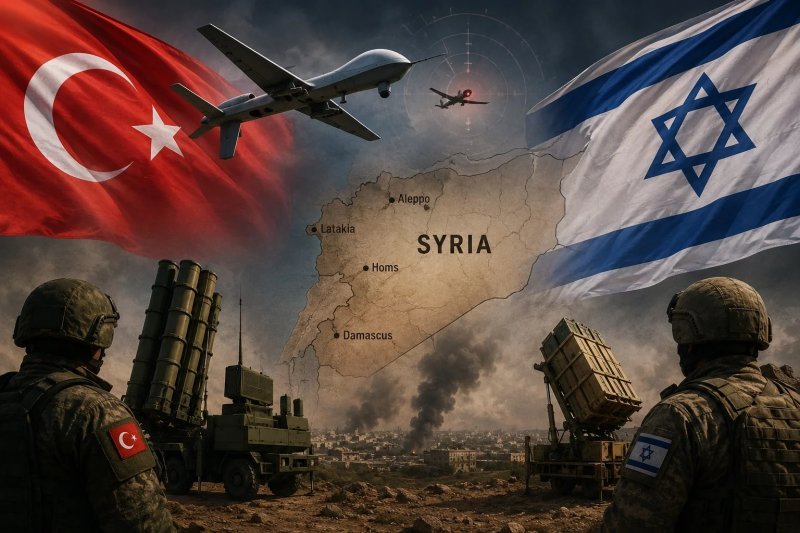
The Eastern Mediterranean is no longer merely a theater of local maritime disputes; it has become the crucible of a new, high-stakes geopolitical order. For Israel, the emerging alignment involving India, the UAE, Greece, and Cyprus is not just a collection of diplomatic handshakes. It is a strategic necessity. Ankara’s increasingly hostile posture, marked by aggressive “Blue Homeland” doctrine claims, the hosting of Hamas leadership, and inflammatory rhetoric comparing Israel to historical villains, has effectively forced a realignment of regional powers. Israel is finding that its security is best guaranteed by a robust, multi-layered architecture that deliberately constrains those who seek to destabilize the region.
Turkey’s transformation under its current leadership is unmistakable. Ankara has moved far beyond the role of a traditional NATO partner, positioning itself as a central, revisionist force that actively contests the established order. By fostering deep ties with Qatar and Pakistan and providing a sanctuary for Hamas operatives, Turkey has turned itself into a strategic adversary for Israel. This is not a matter of mere diplomatic friction. It is a structural opposition. When Turkish officials openly discuss the “liberation” of Jerusalem or label Israel an “enemy state,” they are signaling a long-term intent to export regional disorder. Israel must treat this not as temporary agitation, but as a persistent, permanent threat to its southern and northern flank stability.
The formation of the Israel-India-UAE-Cyprus-Greece axis is the natural, logical, and inevitable response to this Turkish encirclement. This is a “hexagon” of shared interests. India provides the technological depth and a massive market that values security cooperation. The UAE contributes critical financial and diplomatic weight, serving as a vital bridge in the Gulf. Greece and Cyprus, meanwhile, are the essential anchors in the Eastern Mediterranean. Together, these nations offer Israel a profound strategic depth that is impossible to achieve in isolation. The integration of maritime security, intelligence sharing, and joint military exercises among these partners creates a “hard” deterrence that Ankara cannot easily maneuver around.
This alliance is increasingly vital because the traditional Western security framework is in flux. Washington is often distracted by the Indo-Pacific or prone to viewing Middle Eastern threats through a lens of “calculated risk management” that often ignores the existential concerns of its allies. Israel cannot afford that luxury. When Israel’s Ministry of Defense officials, such as Maj. Gen. (res.) Amir Baram, call for a “tailored force buildup” and a broader alliance stretching from India to Greece, they are articulating a vision of regional self-reliance. It is a departure from total dependence. It is a recognition that if Israel does not build its own safety net, no one else will do it for the state.
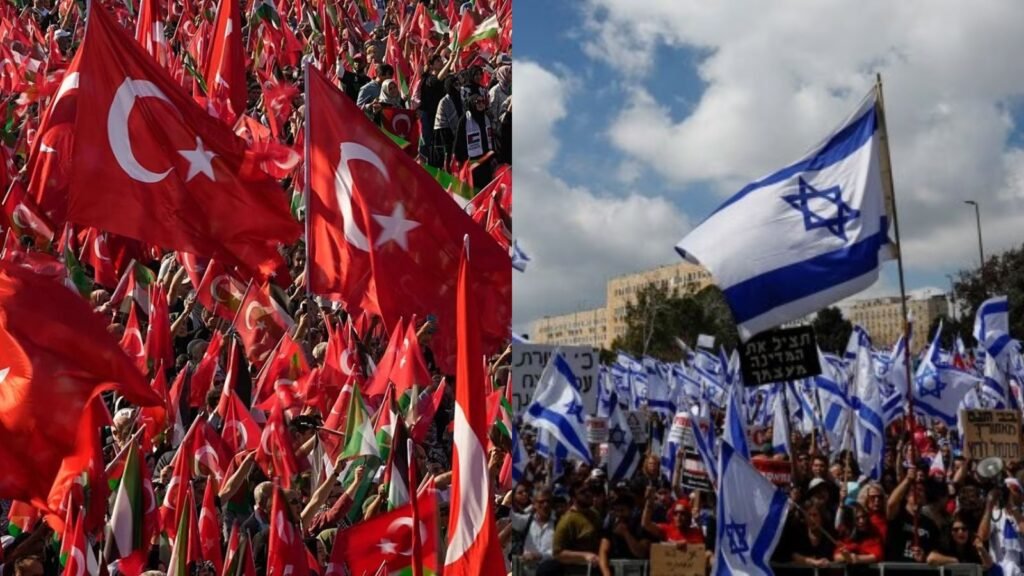
Ankara views this alignment with genuine alarm precisely because it is effective. Turkish Foreign Minister Hakan Fidan’s recent complaints about an effort to “encircle” Turkey betray a deep-seated frustration. Ankara understands that this axis limits its freedom of action. It restricts Turkey’s ability to project power into the Eastern Mediterranean at the expense of Greek and Cypriot sovereignty. By diversifying energy corridors, moving gas from Israel and Cyprus to Europe, this axis also chips away at Turkey’s ambition to be the sole energy gatekeeper for the continent. Israel, for its part, benefits from a resilient, multilateral network that makes it less vulnerable to the whims of any single regional actor, including Turkey.
The stakes are highest in the maritime domain. Ankara’s “Blue Homeland” doctrine, which seeks to redraw maritime boundaries in defiance of international norms, is a direct challenge to the regional status quo. Israel and its partners are not just protecting shipping lanes; they are protecting the very principle of international legality against a revisionist power that uses force to create facts on the ground. By deepening institutional ties with Nicosia and Athens, Israel is ensuring that its strategic interests are woven into the fabric of European energy and security concerns. This is a long-term play. It is about creating a regional order that is too interconnected, and too well defended, for Ankara to disrupt.
Ultimately, the Israel-India-UAE-Cyprus-Greece alignment represents a maturation of Israeli foreign policy. It is a shift away from the fragile, binary relationships of the past toward a complex, interdependent structure designed for a new era. While Turkey continues to lash out, searching for influence through proxy support and rhetorical aggression, Israel is quietly building a tangible, resilient future with partners who share a common vision of regional stability. This is not about seeking confrontation with Turkey. It is about building a wall of deterrence so formidable that the cost of confrontation becomes prohibitive for those who would oppose it. The architecture of the future is being built today, and it is anchored firmly in a reality that respects strength, sovereignty, and shared strategic purpose.