
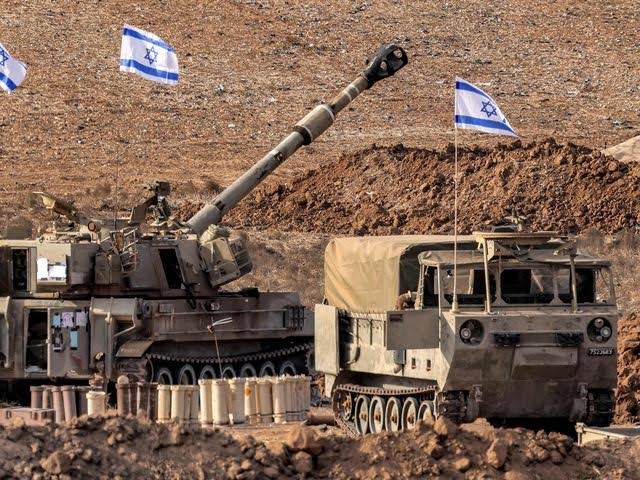
For decades, the national security doctrine of Israel has been based on a stark, uncompromising reality: in a neighborhood where weakness is an invitation to aggression, the only reliable guarantor of survival is raw, unadulterated strength. Prime Minister Benjamin Netanyahu has spent his tenure elevating this necessity into a foundational ideology. It is a philosophy that views the regional landscape not through the lens of potential partnership, but through the hard prism of power dynamics. Yet, as Israel navigates the middle of a conflict that began in early 2026, a campaign of unprecedented scale involving joint U.S.-Israeli strikes and a massive regional conflagration, the question of whether this “super-Sparta” doctrine can deliver a stable future has become the most pressing issue in Jerusalem.
This ideology rests on the premise that peace is a reward for the powerful. It is a belief system that has moved beyond mere deterrence, evolving into a policy of perpetual readiness where the state no longer tolerates the emergence of any threat on its periphery. Netanyahu’s rhetoric, often invoking the necessity of being “very strong” to survive, reflects this commitment to a doctrine of proactive, unilateral action. When officials speak of the need to continue work against the “Iranian axis,” they are essentially admitting that the goal has shifted from decisive, clear-cut victory to the permanent, grinding suppression of enemy capabilities.
The problem, however, is that this strategy lacks a clear political horizon. Sparta is the historical archetype often cited in these debates, a city-state synonymous with military prowess yet perpetually exhausted by the folly of endless conflict. History shows that even a powerhouse eventually succumbs when it prioritizes the tactical “big stick” over the long-term diplomatic strategy that early Israeli leaders like David Ben-Gurion understood so well. Ben-Gurion’s Israel was undoubtedly strong, but it was also a nation that knew how to cultivate alliances and seek pragmatic paths forward. Today, the focus has narrowed; the state is increasingly isolated in its doctrine of total military intolerance, even as its regional environment shifts beneath its feet.

Take the situation in Syria, for example. Israel’s continued aggressive operations there, while aimed at degrading Iranian influence, are increasingly being viewed by its own American partners as counterproductive. In mid-2026, U.S. lawmakers like Joe Wilson began to voice public concern that Israel’s insistence on military intervention is complicating the stabilization efforts of its closest ally. When a friend and patron like the United States warns that such actions harm shared interests, Israel must consider whether its “strongest” policy is actually a strategic liability. The pursuit of security through purely military means risks creating a diplomatic vacuum that others, who may not share the same interests, will inevitably fill.
Furthermore, the “Sparta” approach struggles to account for the demographic and material realities of the 2026 Middle East. With over 4,000 Lebanese citizens killed since March 2026 and more than 1.2 million people displaced, the human and economic costs of a strategy based solely on attrition are mounting. While Iran’s conventional military apparatus was severely degraded during the initial “Operation Epic Fury” launched in February 2026, the underlying strategic confrontation remains. A policy that relies on “lightning speed” operations to destroy industrial bases is not a substitute for a grand strategy that defines what victory actually looks like. If the state is always at war, the state is always in a state of exhaustion, and the threshold for what constitutes “strength” becomes increasingly difficult to maintain.
Israel is certainly strong enough to dictate tactical outcomes on the battlefield, but the current course risks missing the broader regional shifts. If the ultimate goal is to move beyond a permanent state of belligerence, then strength must be the foundation of a more judicious and responsible policy, not the entirety of the policy itself. The world is changing, and the tools that secured the state in the twentieth century may not suffice for the complexities of 2026. If Israel truly wants to be respected, it must learn to walk quietly while carrying its big stick, proving that its strength is a tool for stability rather than just an engine for perpetual conflict. Without that transition, the Sparta model may well lead exactly where it led in history: to a hollowed-out victory that leaves everyone, including the victor, exhausted and uncertain of what comes next.