
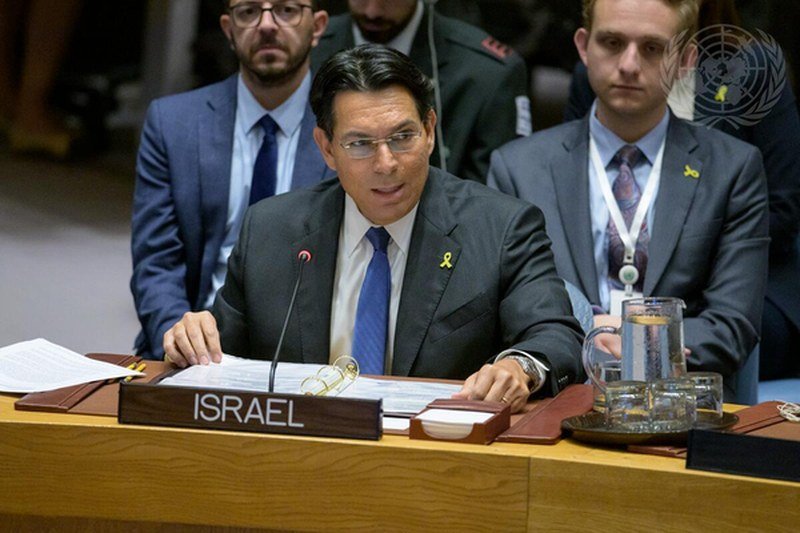
For decades, the standard Israeli reflex toward the United Nations has been one of indignant, often performative dismissal. From the halls of the General Assembly to the investigative chambers in Geneva, the prevailing sentiment in Jerusalem has long held that the UN is a fundamentally broken institution, a theater of bias where anti-Israel resolutions are pre-ordained and moral equivalency is the currency of the day. Yet, while this characterization of the UN’s institutional hostility is largely accurate, Israel’s policy of reflexive hostility, punctuated by periodic, half-hearted disengagement, has proven to be a strategic failure of the first order. By choosing to stand outside the tent, Israel has effectively ceded the narrative battlefield to its adversaries, allowing UN-generated libels to harden into international law and policy.
The current diplomatic reality is stark: Israel is facing a systemic attempt to categorize its military actions as genocide, a claim recently repeated by UN-commissioned investigative bodies. Simply dismissing these reports as “sham” or “antisemitic” is an emotionally satisfying, yet strategically bankrupt, approach. In the eyes of the international community, including many of Israel’s wavering allies, these reports carry the imprimatur of global legitimacy. By refusing to engage directly with the complex, bureaucratic processes that generate these findings, Israel has allowed them to travel, unimpeded, to the International Court of Justice and the International Criminal Court. This is not merely a public relations disaster; it is a profound failure of political containment.
Furthermore, Israel’s policy toward UN-affiliated agencies in the Palestinian territories has oscillated between periodic outbursts of anger and a begrudging, status-quo tolerance, often failing to articulate a coherent, long-term vision for their replacement. For years, the reliance on the United Nations Relief and Works Agency (UNRWA) was justified by the fear of a humanitarian vacuum. However, the reality of 2026 demonstrates that this reliance has only served to perpetuate the conflict by providing a bureaucratic and material cushion for Hamas. Israel’s failure was not merely in opposing UNRWA, but in failing to champion, resource, and implement viable, sustainable alternatives that could provide services without serving as a proxy for Palestinian irredentism.
The impending withdrawal of the UN Interim Force in Lebanon (UNIFIL) offers a mirror image of this strategic stagnation. After nearly five decades of mission failure, where the force was effectively neutralized by Hezbollah’s military buildup, the conversation has finally shifted toward what comes next. Yet, Israel’s discourse remains stubbornly stuck on the failures of the past rather than proactive, creative diplomacy. Instead of waiting for the inevitable expiration of mandates, a sophisticated foreign policy would have seen Israel leading an international coalition to craft a post-UNIFIL reality years in advance, rather than allowing the vacuum to be filled by yet more vague, ineffective international mandates that offer the illusion of security while enabling our enemies to entrench.
Israel’s habitual policy, a toxic mix of performative outrage and tactical abandonment, has left it isolated in forums where the rules of the international game are being written. While it is true that the UN structure is often tilted against democratic interests, Israel’s withdrawal has only accelerated this trend. By not participating in the committees, forums, and working groups that dictate the daily life of international law, Israel has surrendered the power to influence the very definitions that are now being used to frame its soldiers as war criminals.
It is time to abandon the myth that Israel can afford to be an island in the international system. A more effective approach would be to adopt a policy of “surgical engagement”, where Israel aggressively challenges biased mandates while simultaneously investing heavily in the creation of alternative, functional mechanisms for regional cooperation. This means moving beyond the reactive stance of calling for the defunding of the UN and instead leading the construction of new regional frameworks that prioritize verifiable outcomes over the circular, performative resolutions of the General Assembly.
The goal should not be to exit the world, but to change the terms upon which Israel engages with it. The world is moving toward a post-UN-centric reality in the Middle East, as evidenced by the success of American-led initiatives like the Abraham Accords and the recent regional frameworks. Israel should be the primary architect of this transition, not its most cynical bystander. If Israel continues to treat the international community as an immutable monolith of hatred, it will ensure that it remains the target of that hatred. It is time to treat international diplomacy as a strategic theater of operations, one that requires as much preparation, engagement, and objective-based strategy as any military campaign. Dismissal is not a policy; it is a surrender of the future. The time has come to stop complaining about the UN and start outmaneuvering it.