
By Eitan Levi
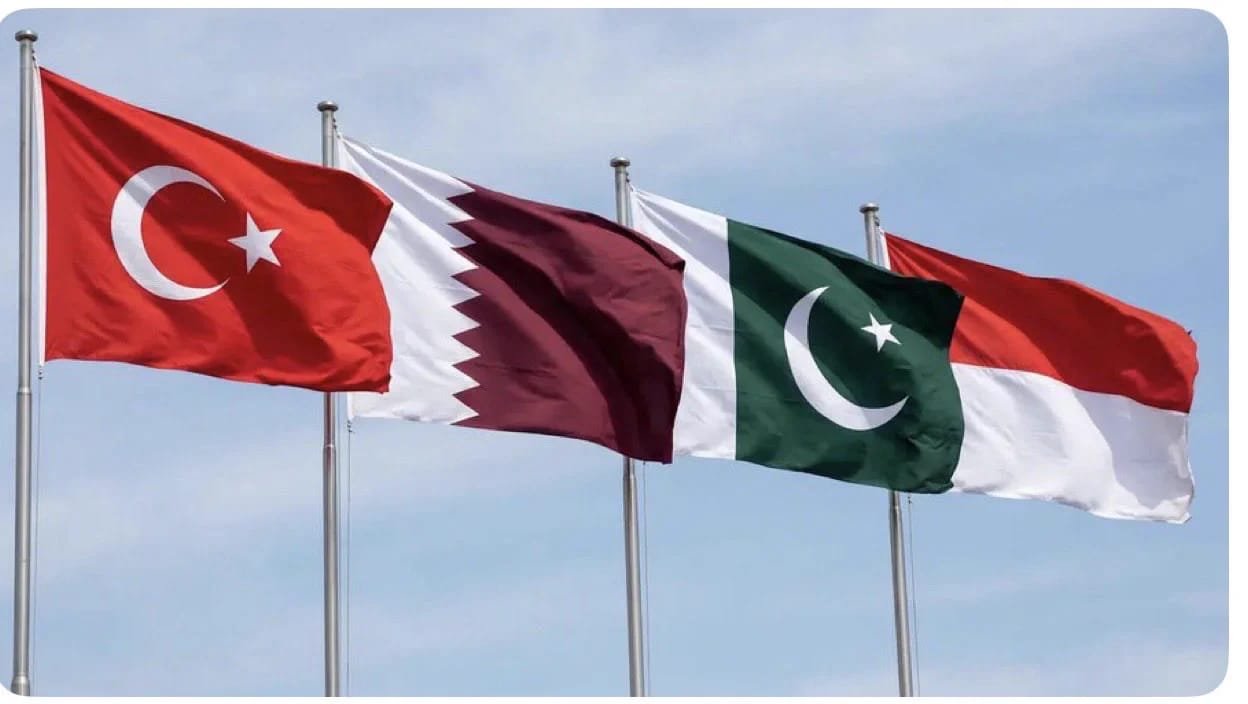
When Turkiye, Qatar, Pakistan, and Indonesia signed the Badr defense industrial memorandum in Doha on October 21, 2026, they sent a clear signal: non Western states are serious about reshaping how they build and buy weapons. Predictably, Western analysts rushed to declare Badr the birth of a Muslim NATO. That is a misreading, one that misses the nuances at work and, more importantly, the real implications for Israel and the region.
Badr is not the Mecca Defense Pact, and it should not be confused with it. The Mecca Pact, inked just two months earlier by Saudi Arabia, Turkiye, and Pakistan, included a mutual defense clause and cemented itself as a classic military alliance: commitments, obligations, the whole package. Badr is different. It has no collective security promise. No one is rushing to anyone is defense if things turn hot. Badr is focus is industrial. It is an agreement to combine manufacturing, research, and technical capacity, taking what each country does best in the defense sector and trying to stitch those strengths together.
In Israel, defense planners and intelligence officials need to parse Badr carefully. On the surface, there is no new axis arrayed against Jerusalem. No immediate danger of four militaries pooling tanks and jets for joint operations. But in the long term, Badr packs a punch: it challenges the landscape of regional defense and risks chipping away at Israel is technological advantage.
The way Badr works is both practical and smart. Turkiye stands at the center, playing the role of technological anchor. Over the past ten years, Ankara has built itself up from a buyer of Western arms to a confident exporter. Today, Turkish drones and armored vehicles do not just serve in Turkish hands, they are popping up across conflict zones, and Turkish companies are co developing everything from corvettes (think: Babur class for Pakistan) to tanks (the KAPLAN MT with Indonesia) to small arms and remote weapons with Qatar.
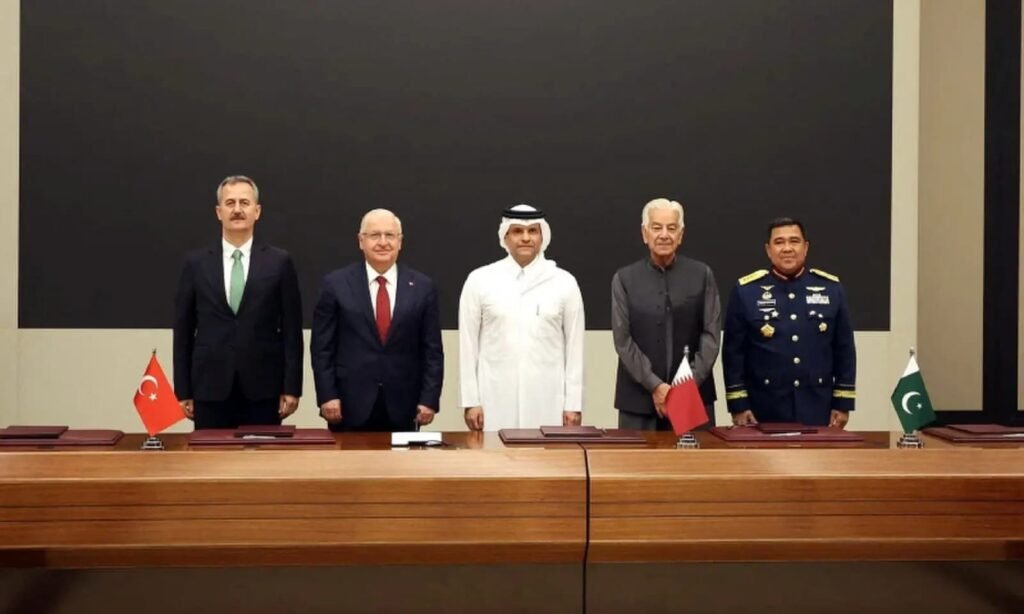
Badr is real aim? Fuse all those pieces together. Instead of one off deals between two countries, you get a system. Qatari money, Pakistani engineers, Indonesian factories, Turkish R and D, all feeding into a shared pipeline. Facilities in Bandung, Karachi, Ankara, and Doha can work different segments of a platform, each country bringing something essential and unique.
So, why do these countries care? For Qatar, it is about never being caught off guard by Western arms embargoes or disruptions, they lived through the Gulf rift and learned their lesson. For Indonesia, it is a way to modernize without giving up their non aligned, independent foreign policy (they are not looking to become anyone is client state). Pakistan needs technology and investment. Its military is big, but its economy has been shaky. And Turkiye? This opens new markets and cements their role as a natural leader for Muslim majority defense modernization.
Israel is main headache is not the prospect of a regional juggernaut rolling across its borders. It is the speed and autonomy with which weapons, especially drones and electronic warfare tools, are now being developed, manufactured, and improved outside of Western regulation. Traditionally, Washington is arms sales and strict export controls helped maintain Israel is edge. The QME, Qualitative Military Edge, was not just about better weapons, but about being the only one with access to certain technologies. Both the hardware and the software were closely monitored by U.S. officials, who could pull the plug if exports got risky.
Badr changes that calculus. With shared R and D and manufacturing spread across the Muslim world, these states can collectively bypass Western scrutiny. Algorithms get iterated faster, as do drone designs and electronic warfare suites. It is not hard to imagine the next Bayraktar TB3 or Akinci drone, assembled with Pakistani precision engineering, Qatari finance, and tested over Indonesia is jungles, completely outside the reach of U.S. export controls.
But it is not just about products. It is about system integration: sharing data links, telemetry, and technical standards. Over time, these hardware ties can mature into something more operational. You do not need a written alliance to achieve real world tactical coordination. If everyone is running similar sensors, drones, and naval combat systems, they become interoperable in a way that is tough to counter.
Meanwhile, Pakistan acts as a bridge. It is the only state in both the Mecca and Badr frameworks, an industrial engine for Badr, a defense partner in Mecca. This creates a two tiered security ecosystem for Sunni middle powers: Mecca handles the political and deterrent posturing, Badr supplies the military tools.
Moreover, by pooling resources and manufacturing know how, Badr insulates its members from Western diplomatic sticks. For decades, if the U.S. or Europe fell out with a regional power, weapons sales were the first thing to go. Now? Spares, upgrades, even whole platforms can come from inside the bloc, making sanctions less threatening and increasing each country is freedom of action.
That said, growing pains are inevitable. Joint manufacturing deals often falter over how to share intellectual property, who gets the high value jobs, or what to do when a key component (like electronics or jet engines) comes from the West and lands under export restrictions. Turkiye, for all its progress, is still dependent on foreign inputs for critical systems. If the U.S. or Europe tightens controls, Badr is supply chains could see real pain, unless these countries pump time and money into local alternatives.
For Israel, the lesson is plain. Badr is not an enemy coalition, but it is a wake up call. A parallel supply chain, set up expressly to be less dependent on the West, is maturing across multiple time zones from the Eastern Mediterranean to Southeast Asia. New tech will not arrive overnight, but the pace will accelerate, and the regional arms race could get bumpier.
To keep its strategic edge, Jerusalem has to work faster and smarter. Counting on Washington is export controls is no longer enough. Real innovation, in counter drone defenses, AI driven command systems, and networked EW, is the only answer. Intelligence agencies must stay close to Badr is plants and labs, watching not just what is being built, but how and by whom.
Israel is qualitative military edge has always relied on an uneasy mix of its own genius and support from Western allies. That formula is shifting. Going forward, real security will depend less on diplomatic guarantees, and more on staying ahead of the emerging, autonomous defense networks that Badr represents. The region is getting more multipolar, and Israel cannot afford to ignore the warning signs.
About the Author
Eitan Levi is a Security and Geopolitical Analyst with expertise in Israeli defence strategy, Iran’s regional operations, Middle Eastern power rivalries, and Israel’s security partnerships.