
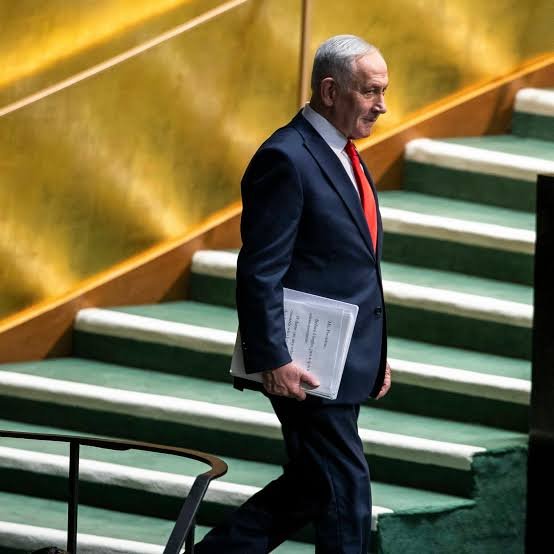
There is no way around it: the upcoming national election on October 27 carries far more weight than just another political contest. This is not about bickering over procedures, airing personal grudges, or giving cover to anyone on trial. The stakes are bigger. This vote forces Israel to confront what happened on October 7, 2023, a day that shattered the most basic sense of security most Israelis took for granted.
Let us call it what it is. Benjamin Netanyahu has been the dominant figure in Israeli politics for almost two decades. His approach could not have been clearer. He believed, really believed, that Israel could sidestep the Palestinian issue completely. That meant splitting Palestinian leadership apart, weakening the Palestinian Authority in Ramallah, keeping Gaza cordoned off, and convincing most Israelis they could “manage” the conflict. It was a promise of endless control without ever having to make peace, or offer statehood. For a while, a lot of people bought into that.
But it was never sustainable. And on October 7, everything fell apart. Hamas gunmen broke through the border fences, murdered 1,200 Israelis, and abducted 251 more into Gaza. The operational and intelligence failures ran top to bottom, but none of that happened in a vacuum. Netanyahu’s grand strategy was supposed to keep Israel safe. Instead, it laid the groundwork for disaster.
We do not have to guess why it went wrong, his major policy choices are right there in black and white. Starting in 2019, Netanyahu authorized the transfer of millions in Qatari cash straight into Hamas controlled Gaza. He was not shy about it, either. The plan was simple: keep Hamas afloat and cut off any chance for Palestinian unity with the West Bank. This helped Jerusalem sell the idea, to the world and to Israelis, that there was “no partner for peace.”

Meanwhile, Gaza boiled over. Two million people trapped under blockades and endless restrictions. Youth unemployment soared over 60 percent. You had generations of bright, educated young people staring at a blank wall, no future to build, nowhere to go. Sure, none of that excuses terror. Hamas alone is guilty for its brutality. But a responsible government has to look reality in the eye. Israel convinced itself that an enemy could be cornered and boxed in with periodic military strikes. It was a fantasy, and it blew up in our faces.
And still, with all that, we have not learned. The October 2025 ceasefire officially ended the big battles, and an American led Board of Peace pulled together a new blueprint. There was a roadmap, swap Hamas control for a Palestinian technocratic government, deploy international peacekeepers, start piecemeal reconstruction, and lay the groundwork for Hamas to disarm and Israeli forces to step back. Only, it is all jammed in place. Netanyahu insists on total Hamas disarmament first, refusing even preliminary Israeli withdrawals. By blocking these steps, he has created a dangerous vacuum. Hamas still manages to cling to power in the chaos, and we are inching right back to the situation that blew up before.
You see the same failures playing out in the West Bank. In 2025, the UN counted 925 physical obstacles, checkpoints, metal gates, military posts, choking the lives of 3.4 million Palestinians. Settlement expansion is relentless. Just last July, Finance Minister Bezalel Smotrich rammed through approval for 34 more outposts. That brings new outposts under his watch to over 100. On top of that, extreme settler violence is out of control, 1,380 attacks in the first seven months of 2026 alone. One particularly brutal incident saw more than a hundred settlers storm Jalud, torching homes and even injuring Israeli soldiers who tried to stop them. And when top ministers openly announce that a Palestinian state will never happen, what hope can anyone hold for peaceful progress? You cannot keep an entire population under your boot forever without sparking perpetual violence.
Netanyahu’s government is not just reshaping foreign policy, it is warping the country from within. To stay in power, he yoked himself to the extreme right, handing serious authority to politicians like Itamar Ben Gvir (now overseeing national security) and Smotrich (controlling civilian life in the West Bank). This alliance has shredded Israel’s old social contract. IDF reservists and their loved ones keep bearing the lion’s share of military duties, while the coalition shelters the ultra Orthodox from the draft. Military spending is bleeding public resources dry, spiking debt, freezing vital budgets for education, social programs, and healthcare. Hospitals cannot hang on to top medical talent, who leave for better jobs abroad.
Globally, Israel has never been this alone. Sure, there is plenty of hypocrisy in international criticism, but like it or not, global legitimacy matters for our security. This country depends on world trade, tech exports, intelligence networks, and, above all, the unwavering support of the United States. Ignoring those alliances is not strength, it is carelessness.
Netanyahu’s gift has always been political survival. But outlasting rivals is not the same as leading a nation out of crisis. The idea that Israel could “manage” endless conflict, well, that illusion combusted on October 7. Delay came due, with interest.
It is time to face reality. Israel needs a bold new approach, one that does not depend on occupation, but looks toward a practical political settlement that lets Israel stay true to its Jewish and democratic identity and finally lets Palestinians forge their own future.
The upside is huge. The region is changing fast. Ambitious projects are breaking ground everywhere. The India Middle East Europe Economic Corridor is a once in a generation opportunity, and Israel is right in the heart of it all. Imagine a country plugged into a vast web of railways, energy grids, and trade links, stretching out to Saudi Arabia, the Gulf, Jordan, Egypt, and all the way to Europe. That is real prosperity. That is real security.
But none of this happens while the Palestinian wound keeps festering. That is the real choice on October 27. Stick with the failed cycle of “conflict management,” or take a leap toward lasting safety, democracy, and peace that actually lasts. As voters, we have to hold Netanyahu accountable for what happened, and demand leadership with the courage to move Israel forward.