
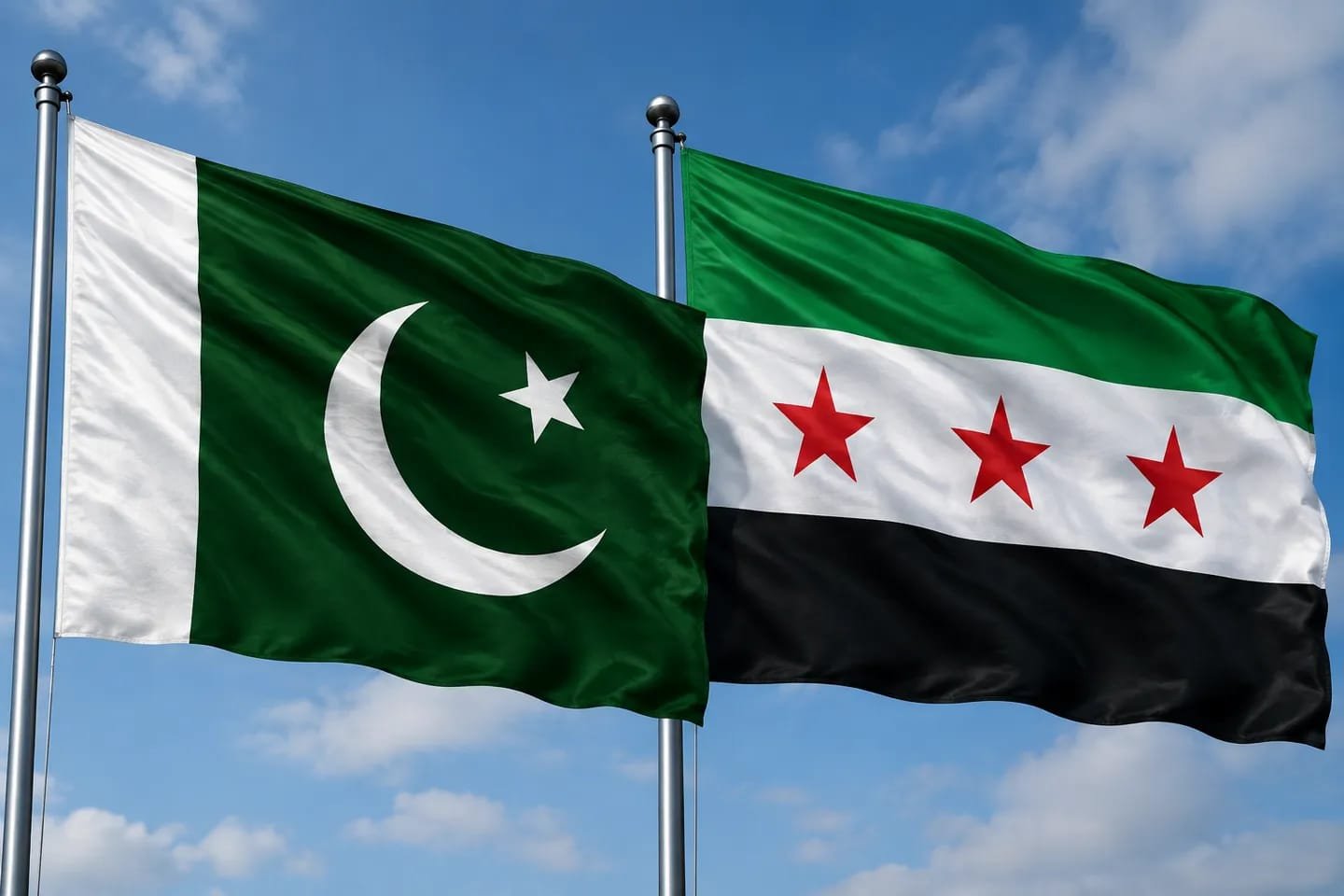
Something is shifting across Islamabad and Damascus, and it’s worth paying attention to. After Israeli airstrikes hit a military airbase near Aleppo, Syrian Foreign Minister Asaad Hassan al Shaibani flew to Pakistan for a historic visit, the first high level engagement between the two countries in nearly two decades. Rather than pushing Damascus into isolation, the strikes seem to have done the opposite. Middle powers across the region are consolidating alliances fast, leaning into institutional diplomacy, and building frameworks specifically designed to hedge against unilateral military pressure.
This diplomatic flurry lands right in the shadow of the newly signed Mecca Joint Defense Agreement between Saudi Arabia, Turkey, and Pakistan. Syrian leadership wasn’t formally at that table, but the underlying alignment still offers explicit diplomatic and strategic backing to Damascus as it rebuilds under Ahmed al Sharaa. Turkey in particular has positioned itself as the principal guarantor of Syrian state reconstitution, pairing military and intelligence coordination with high level economic and energy diplomacy. When Turkish energy ministers walk the halls of the presidential palace in Damascus just days after Israeli warplanes strike regional infrastructure, that’s not a coincidence. It’s a message, and Jerusalem knows exactly who it’s addressed to.
For Israeli strategists, this growing web of alliances presents a genuinely complicated puzzle, one that doesn’t fit neatly into conventional deterrence thinking. For decades, Israeli defense doctrine rested on maintaining undisputed air superiority and using targeted preemptive strikes to disrupt hostile staging grounds before they could take root. But as regional heavyweights weave together mutual defense frameworks and diplomatic networks, the political cost of unilateral military action keeps climbing. Turkey and Saudi Arabia are signaling something new here. They no longer treat continuous military friction as an inevitable fact of regional life. They’re increasingly viewing it as a destabilizing force that needs to be actively contained through collective political maneuvering instead.
Why the shift toward diplomatic insulation rather than direct retaliation? Mostly economics. After years of devastating regional conflict, capitals across the Middle East and South Asia are heavily invested in long term development agendas that need a predictable security environment to actually work. So instead of rushing into costly military confrontation, these nations are biding their time, institutionalizing bilateral ties, and building collective defense architecture instead. The Mecca pact, which commits signatories to treating an attack on one as a challenge to all, reflects a growing regional appetite for self reliance and coordinated pushback against what they see as overreach.
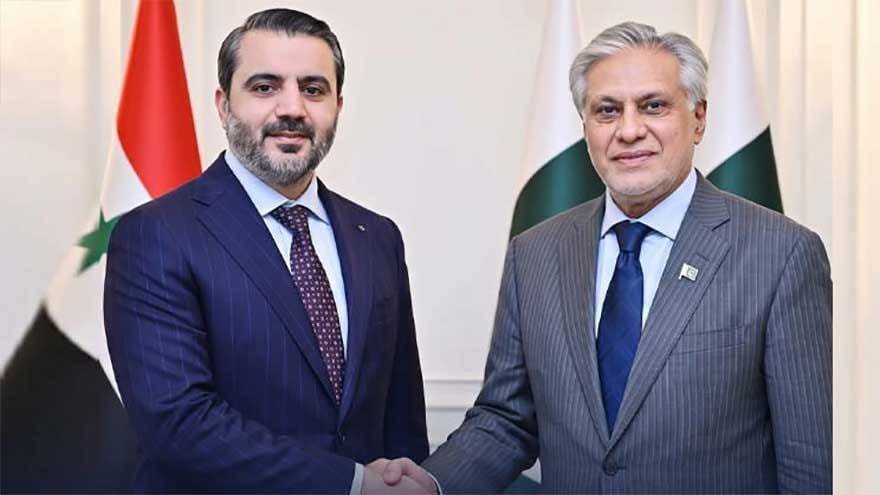
The timing of al Shaibani’s Islamabad trip carries real symbolic and practical weight for Jerusalem. Landing in Pakistan with a high level delegation at the invitation of Pakistani Deputy Prime Minister and Foreign Minister Ishaq Dar, al Shaibani used the platform to explicitly welcome the Mecca agreement. His meetings with Prime Minister Shehbaz Sharif and Field Marshal Asim Munir signaled something important too, that Damascus is actively seeking external security anchors well beyond its immediate borders. For Israel, that means the post Assad Syrian state isn’t drifting into isolation or bending under the weight of military pressure. It’s successfully plugging into a wider transregional security network stretching from the Eastern Mediterranean all the way to South Asia.
This kind of outreach directly challenges Israel’s strategic thinking in the northern theater. Jerusalem has long argued that aggressive preemption is necessary to keep hostile forces from establishing a foothold near the border. But when the target of those strikes, Syria, responds by deepening diplomatic and defense coordination with nuclear armed Pakistan and NATO member Turkey, the diplomatic fallout starts to outweigh the tactical value of a bombed runway pretty quickly. Pakistan’s Ministry of Foreign Affairs strongly condemned the airstrikes as a flagrant violation of international law, echoing similar language out of Ankara. That unified diplomatic front tells you something important. Regional capitals no longer view Israel’s northern operations as simple counterterrorism measures. They’re reading them as aggressive overreach threatening broader regional stability.
All of this complicates long held assumptions in Jerusalem about the future of normalization and regional integration. Israeli officials have often imagined a security architecture anchored by shared concern over radical actors. But the rapid consolidation of alternative Sunni and regional blocs shows that neighboring governments aren’t going to separate regional diplomacy from the ongoing Palestinian file or sovereign concerns in places like Syria. When Jerusalem draws rigid red lines in northern Syria and insists on an unyielding policy of strikes, it runs headlong into Ankara’s expanding sphere of influence and Islamabad’s elevated diplomatic profile at the same time.
Navigating this shifting landscape is going to require a sober recalibration in Israeli foreign policy. Leaning solely on military dominance and tactical preemption risks locking the country into a permanent cycle of strategic isolation, alienating potential regional partners who increasingly see dialogue and institutional stability as the primary path forward. If Israel wants to secure its borders and build genuine long term stability, military resolve needs to get paired with a more nuanced diplomatic approach, one that actually acknowledges this new, coalescing regional order. Ignore the growing cohesion of these diplomatic axes, and today’s tactical victories risk becoming tomorrow’s lasting strategic liabilities.