
Strategic Analysis of Regional Nonproliferation Breakdown
1. The Transition of a Middle Eastern Nightmare
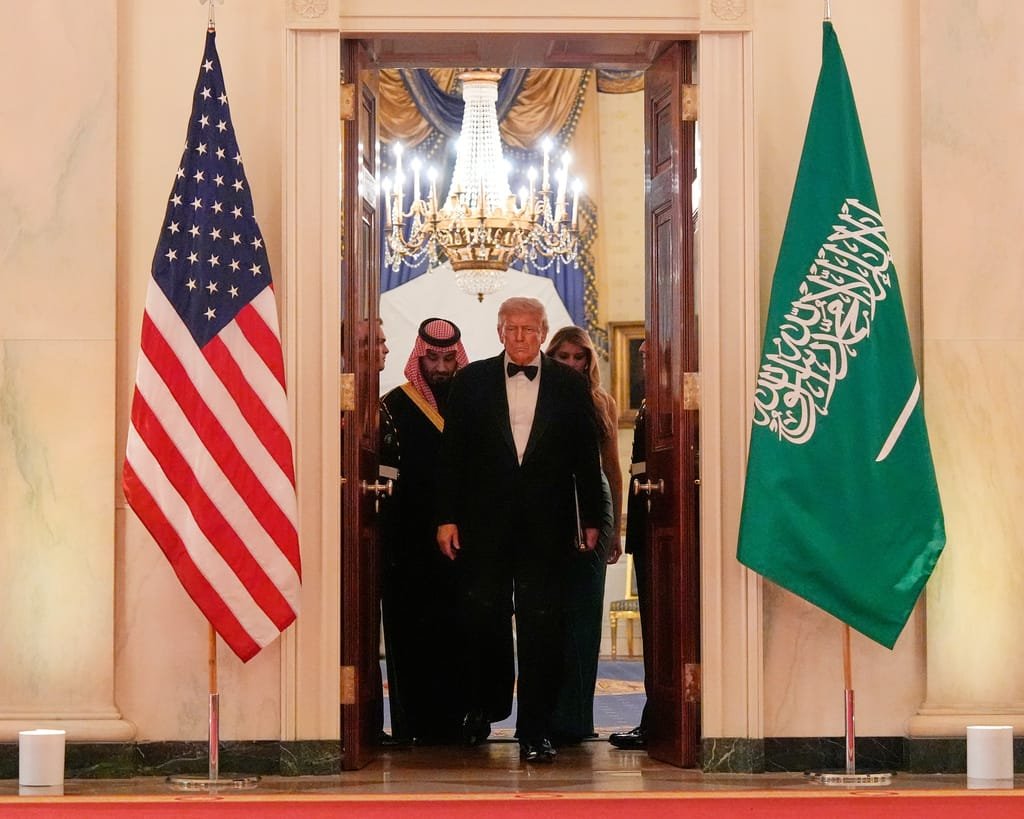
The concept of a nuclear Middle East has transitioned from a distant nightmare into an imminent reality. For years, the security establishment in Jerusalem focused its energy on the underground centrifuges of Iran. We watched the Islamic Republic advance its enrichment capabilities while the international community stumbled through ineffective diplomacy and toothless sanctions. Now, a stunning disclosure from Washington reveals that the threat is no longer contained to a single rogue actor. The Trump administration has tentatively agreed to a draft civil nuclear accord that would permit Saudi Arabia to enrich uranium on its own soil. More alarming still, the deal bypasses the rigorous international oversight mechanisms explicitly designed to prevent the birth of a clandestine weapons program.
2. The Dismantling of Nonproliferation Architecture
For Israel, this development represents a profound strategic crisis. The architecture of regional nonproliferation is being dismantled not by our enemies, but by our most vital superpower ally. The draft agreement, which concluded negotiations in October 2025 but remains unsigned by US President Donald Trump, grants Riyadh unprecedented nuclear concessions. Most notably, the White House has waived the requirement for Saudi Arabia to sign the International Atomic Energy Agency’s Additional Protocol. This standard is widely considered the baseline for global nuclear safety, granting UN inspectors the authority to conduct short-notice visits to undeclared sites. By replacing this gold standard with a private, bilateral US-Saudi safeguards arrangement, Washington is setting a dangerous precedent.
3. Transactional Logic vs. Regional Volatility
The rationale driving the White House is anchored in a highly transactional foreign policy. The administration views the deal as a massive commercial windfall for a resurgent American nuclear industry. Advocates also argue that if Washington refuses Riyadh’s terms, the kingdom will simply turn to China or Russia to construct its reactors. But this mercantile logic completely ignores the volatile geopolitical realities of 2026. The region is currently engulfed in an active war with Iran, a conflict launched in large part to freeze Tehran’s path to a nuclear weapon. Introducing domestic enrichment capabilities to Saudi Arabia at this precise moment is equivalent to dousing a raging fire with gasoline.
4. Fissile Pathways and the Risk of Nationalization
Crown Prince Mohammed bin Salman has made his intentions explicitly clear on multiple occasions. He has warned that if Iran acquires a nuclear weapon, Saudi Arabia will follow suit immediately. By granting the kingdom the domestic capacity to enrich uranium and reprocess plutonium—the two primary pathways to creating a fissile core—the United States has handed Riyadh the keys to a rapid breakout capability. Nuclear experts have raised urgent alarms over the lack of traditional guardrails. Andrea Stricker, the deputy director of nonproliferation at the Foundation for Defense of Democracies, warned that even a facility under American control carries immense risk. She noted that a future Saudi leadership could simply choose to nationalize the infrastructure, forcing a future American president to choose between launching a military strike or accepting a new nuclear state.
5. Technological Creep and the Legacy of Proliferation
The historical precedents for this type of technological creep are terrifyingly clear. Stricker pointed to the legacy of Pakistani scientist Abdul Qadeer Khan, who utilized centrifuge blueprints acquired while working for a European company to jumpstart a clandestine bomb project. Khan later transferred that lethal expertise to Iran, Libya, and North Korea. Once the technical know-how of enrichment is established within Saudi borders, it cannot be unlearned. The kingdom’s scientists will possess the capability to build and operate centrifuges, a skill set that can easily be replicated in secret, underground facilities far away from the eyes of American regulators.
6. Systemic Erosion of Global Standards
Furthermore, the erosion of these global standards compromises the West’s ability to police other aspiring nuclear states. Kelsey Davenport of the Arms Control Association highlighted the long-term systemic damage of this policy. She questioned how the United States could possibly object if Russia or China began implementing their own bespoke bilateral safeguards with rogue nations in lieu of intrusive UN oversight. By breaking the global consensus on nonproliferation to secure a commercial contract, the White House is undermining the legitimacy of the entire international regulatory framework.
7. The Myth of Permanent Regional Alignments
From the perspective of Jerusalem, a critical reality must be acknowledged. We cannot tolerate a nuclearized Saudi Arabia simply because Riyadh currently shares our hostility toward the Iranian regime. Regimes in the Middle East change with dizzying speed. A moderate, forward-looking monarchy today can transform into a radical, hostile state tomorrow. The qualitative military edge that Israel has fought for decades to maintain would vanish instantly in a region populated by multiple nuclear powers. The strategic depth that has protected the Jewish state since its founding would be replaced by a fragile balance of terror, where a single miscalculation could trigger an existential catastrophe.
8. Political Limbo and the Congressional Front
Fortunately, the deal is currently stalled in a state of political limbo. The ongoing war with Iran has forced the White House to hesitate, recognizing the profound hypocrisy of fighting a war to stop Iranian enrichment while simultaneously greenlighting Saudi enrichment. At the same time, lawmakers on Capitol Hill are preparing for a massive legislative fight. Elements within both parties are quietly organizing a bipartisan disapproval resolution to block the accord the moment the executive branch formally submits it to Congress.
9. Preserving the Nuclear Status Quo
Israel must actively but discreetly support these congressional efforts to preserve the nuclear status quo. We cannot allow our long-term existential security to be traded away for short-term commercial considerations or temporary diplomatic alignments. The lesson of the last few years is clear: air-gapped security frameworks are a myth, and once the atomic genie is let out of the bottle, it can never be put back. Washington must be reminded that a true alliance is built on shared long-term stability, not transactional shortcuts that leave its closest partners facing a multipolar nuclear nightmare entirely alone.