Diplomatic Legitimation, Ideological Alignment, and the Erosion of NATO Guarantees
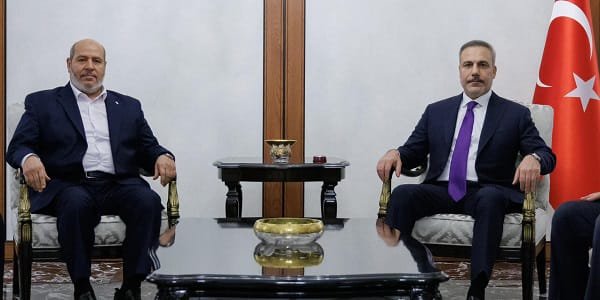
Turkish Foreign Minister Hakan Fidan recently rolled out the red carpet in Ankara to host Khalil al Hayya, the newly named leader of Hamas. This high profile meeting marks Hayya’s very first major international appearance since taking over the group’s political bureau. For anyone actually paying attention to how the diplomatic map of the Middle East has been shifting lately, none of this comes as a surprise. It’s just the latest sign of Ankara’s deepening embrace of violent Islamist extremism under President Recep Tayyip Erdogan. While Western capitals try to midwife fragile ceasefires and piece together postwar governance plans for Gaza, Turkey is openly doubling down on backing an organization dedicated to Israel’s destruction.
The optics of the meeting say a lot about Turkey’s actual regional agenda. State run Anadolu Agency and pro government outlets like Yeni Safak eagerly broadcast images of Fidan warmly congratulating Hayya, effectively legitimizing a man overseeing a network responsible for mass killing, systematic sexual violence, and hostage taking. During the talks, Hayya ran through the usual script, complaining about Israeli counterterrorism operations while trying to paint Hamas as a willing partner in peace talks. Fidan responded with a full throated reaffirmation of Turkish backing, pledging that Ankara would champion the group’s cause on every international stage it could find. This isn’t passive diplomacy sitting on the sidelines; it’s an active, aggressive alignment with a group that most of the world should be working to dismantle instead.
The ideological connection between Ankara and Gaza runs deep, rooted in shared historical ties to the Muslim Brotherhood. Turkey’s ruling AKP has long viewed the Brotherhood as something close to an ideological sibling. Over the past decade, that affinity has quietly transformed Turkey from a NATO ally into the primary operational and political safe haven for Hamas outside Gaza itself. Senior Hamas operatives move freely through Istanbul and Ankara, setting up financial networks, coordinating media campaigns, and directing outside operations, all with the tacit protection of Turkish intelligence. When Fidan sits down with Hayya, he isn’t meeting with a legitimate statesman; he’s meeting with a terrorist commander being sheltered by a NATO member state.
Over the past decade, that affinity has quietly transformed Turkey from a NATO ally into the primary operational and political safe haven for Hamas outside Gaza itself.
This open support for Hamas fits into a broader, increasingly aggressive neo Ottoman strategy that Erdogan’s government has been pursuing. Turkish leadership has spent months leaning on anti Israel rhetoric to project regional influence and rally domestic support amid serious inflation and political tension at home. Just days before Fidan’s meeting with Hayya, other senior Turkish officials were publicly floating fantastical claims about reclaiming Jerusalem and lecturing Israel on sovereignty. By tying its foreign policy so closely to defending Hamas, Ankara is deliberately positioning itself as an adversary to Israel’s basic security, testing just how far Western tolerance actually stretches.
For Israel, this development calls for a clear eyed, uncompromising response. Any illusion that Turkey could ever act as an honest broker or neutral mediator in the Israeli Palestinian conflict has been thoroughly shattered by this. When a foreign government rolls out the red carpet for the leader of an organization that killed hundreds of civilians, that government has made its choice. Israel’s defense and intelligence apparatus needs to treat Ankara not as some detached observer, but as a hostile actor actively sheltering and encouraging what’s left of the Hamas terror network. As Israel keeps fighting to secure its borders and neutralize regional threats, whatever mask Ankara was wearing has slipped off entirely, revealing a government fully committed to legitimizing terror under the cover of diplomacy.
Looking closer at how this alliance actually functions, Ankara’s financial and logistical shielding gives Hamas a genuine lifeline. Even though military setbacks in Gaza have badly degraded Hamas’s governance structure and military command, its external leadership keeps operating with impunity from Turkish soil. Funds move, political directives get issued, and international propaganda campaigns get coordinated out of upscale neighborhoods in Istanbul. Turkish authorities consistently look the other way on all of this, prioritizing shared Islamist ideology over any real counterterrorism obligations.
Ankara wants to keep enjoying the economic and security benefits that come with formal ties to Western institutions while simultaneously acting as a sanctuary for radical jihadist movements on the side.”
This whole situation also exposes a real moral failure across the broader international community, especially among Western allies who keep tolerating Turkey’s double game. By hosting Hayya and praising Hamas’s supposed peace efforts, Erdogan is actively trying to rehabilitate a terrorist group on the world stage, pushing for international acceptance of the group into whatever future governance framework emerges for Gaza.
Israel has warned for years that terrorism can’t be compartmentalized or appeased away. When regional actors hand out political legitimacy, diplomatic cover, and safe harbor to mass murderers, they become complicit in what those groups do. The embrace between Fidan and Hayya is a stark reminder that Israel is largely standing alone in its determination to root out the existential threats sitting on its borders. There’s no room for illusions or diplomatic niceties when dealing with a Turkish leadership openly championing Israel’s enemies. The response has to be total vigilance, refusing to hand any diplomatic credibility to a state that nurtures terror while dreaming of imperial restoration on the side.