An Analysis of Hamas’s Exiled Bureau Bureaucracy and Strategic Pivot
1. End of the Leadership Vacuum
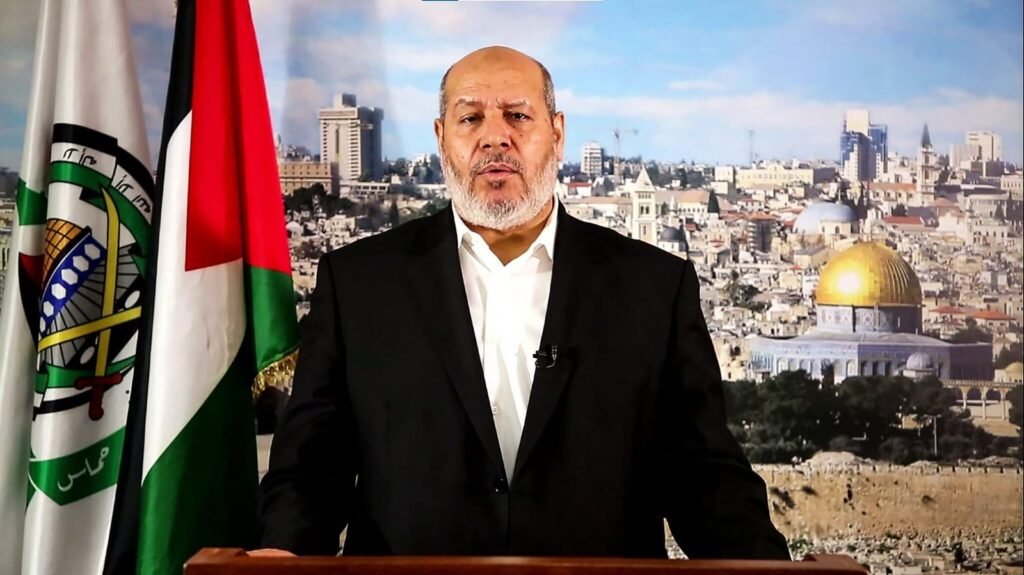
The official elevation of Khalil al-Hayya to the head of Hamas’s political bureau marks the end of an extraordinary leadership vacuum that persisted for nearly two years. Since the elimination of Yahya Sinwar in Gaza back in October 2024, the terror organization relied on an opaque, five-man ruling council to manage its fractured operations. By formally installing Hayya, the first official bureau chief since Sinwar’s death, Hamas is sending a deliberate signal to the world. It is attempting to project structural continuity and political resilience despite years of relentless military decapitation. But for Israeli strategists, this appointment represents something far more dangerous than a routine organizational update. It signals the complete transition of Hamas into a shadow entity that intends to rule Gaza by proxy from the safety of foreign capitals.
2. Ruling Gaza by Foreign Proxy
Unlike Sinwar, who directed operations from deep inside the underground tunnel network of Khan Younis, Hayya is firmly rooted in exile. Based primarily in Qatar, he survived a targeted Israeli strike against Hamas’s leadership council in Doha back in September 2025. His physical distance from the battlefield is not a sign of weakness; it is a calculated structural pivot. Operating from abroad allows Hayya to play a double game that directly threatens Israel’s post-war governance strategy. Hamas can publicly claim it is willing to hand administrative control of the Gaza Strip over to a neutral civil authority or an international body. Simultaneously, Hayya can direct the remaining armed cells, manage covert financial pipelines, and pull the strings of power completely behind the scenes.
3. Ideological Rigidity and Operational History
Hayya’s personal history offers a sobering look into the ideological rigidity that will define his tenure. Born in Gaza in 1960, he is a founding member of the organization who joined during the First Intifada in 1987. He spent three years in an Israeli prison during the 1990s and served as the leader of Hamas’s parliamentary bloc after the 2006 Palestinian elections. Crucially, Hayya was a primary architect of the 2011 Gilad Shalit prisoner exchange, which freed over one thousand security prisoners in exchange for a single captive Israeli soldier. That trade deeply shaped his operational philosophy. Hayya has publicly boasted for years that the Shalit deal proved mass abductions are the only language Israel understands, repeatedly promising more kidnappings to achieve political leverage.
4. Unyielding Wartime Diplomacy
Furthermore, Hayya’s track record as a wartime negotiator exposes the futility of expecting a diplomatic breakthrough under his leadership. He served as Sinwar’s direct deputy starting in 2017 and led the group’s delegation through every major round of hostage talks during the current war. Even as the Gaza Strip suffered catastrophic destruction, Hayya remained unyielding. In international interviews, he praised the October 7 massacre as a historic achievement that future generations would celebrate with pride. His long history of diplomatic involvement includes orchestrating the 2022 reconciliation between Hamas and the Assad regime in Syria, as well as maintaining deep operational channels with Tehran. He is an uncompromising hardliner wrapped in the suit of an international diplomat.
5. The Insulated Regional Center of Gravity
For Israel, Hayya’s appointment completely guts the narrative that destroying Hamas’s military infrastructure in Gaza would automatically dismantle its political influence. By solidifying its political center of gravity in Doha, Hamas has effectively insulated its top leadership from direct military pressure. From his sanctuary in Qatar, Hayya can leverage his international platform to rally regional support, demand open borders, and exploit human rights rhetoric in Western media. He has already demonstrated a willingness to destabilize neighboring states, publicly calling on citizens in Egypt and Jordan to march toward the borders to break the blockade.
6. Expanding Beyond Tactical Defense
This new leadership structure presents a profound challenge for Israeli public diplomacy and military strategy. Jerusalem can no longer treat the threat from Hamas as purely tactical, localized to the alleyways of Gaza City or Rafah. Hayya’s appointment forces Israel to confront the broader regional ecosystem that nurtures and protects radical ideology. As long as foreign governments allow Hayya and his cohorts to operate freely from luxury hotels while directing terror campaigns, the root cause of the conflict remains completely untouched.
7. Countering the Proxy Governance Model
Israel must adapt its strategy to counter this proxy model. First, Jerusalem must intensify diplomatic pressure on Washington and European allies to strip host nations like Qatar of their immunity if they continue to harbor the political leadership of a designated terror group. Leaving Hayya unmolested in Doha guarantees that Hamas will retain its command structure indefinitely. Second, Israel must ensure that any post-war administrative framework established in Gaza possesses total operational independence from Hamas’s exiled bureaucracy. If a civil government is installed while Hayya maintains covert veto power from abroad, Israel will simply find itself fighting the same war under a different name a few years down the line.
8. The Strategy of Endless Attrition
The elevation of Khalil al-Hayya is not a step toward moderation or compromise. It is the consolidation of a long-term strategy designed to wear down Israel through endless attrition while shielding the top decision-makers behind foreign borders. Hayya has made his personal losses and lifelong radicalism the centerpiece of his political identity. He will not abandon the path set by Haniyeh and Sinwar. If Israel hopes to achieve true security, it must recognize that the battlefield has expanded far beyond the sands of Gaza, and target the political machinery of terror wherever it chooses to hide.