
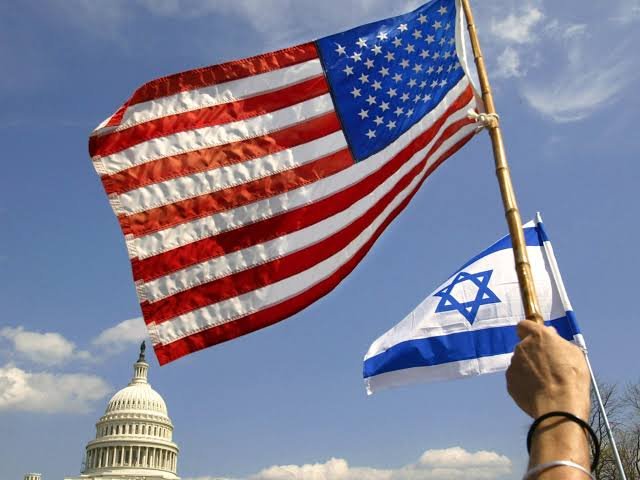
The American Democratic Party is currently undergoing a structural transformation that poses a direct, systemic challenge to the traditional US-Israel alliance. What began as fringe dissent within the progressive movement has matured into a well-oiled political machine. This machine is now actively targeting pro-Israel incumbents in primary elections, leveraging donor fatigue, campus activism, and a re-engineered foreign policy doctrine that characterizes Israel not as a strategic asset, but as an international pariah. For Israel, the upcoming primary calendar is not merely a series of local contests; it is a bellwether for whether the bipartisan consensus that has long underpinned the relationship is officially dead.
The data from recent cycles is jarring. In New York, the electoral victories of candidates endorsed by Mayor Zohran Mamdani demonstrated that an anti-Israel platform is no longer a liability in certain urban Democratic districts, it is a winning strategy. This momentum is not localized to the Northeast. The primary victory of Melat Kiros in Denver was a watershed moment, proving that the populist fervor against Israel’s policies has crossed the Continental Divide. These candidates are not just campaigning on domestic issues like healthcare or infrastructure; they are making the cessation of military aid to Israel their primary legislative mandate.The involvement of the Democratic Socialists of America (DSA) has provided the infrastructure that once belonged to establishment institutions. With vast volunteer networks and clear, uncompromising messaging, these insurgents are effectively shifting the Overton window of the Democratic Party. In Arizona’s 4th District, Kai Newkirk is challenging Rep. Greg Stanton with a platform demanding a total arms embargo. Newkirk’s rhetoric, which oscillates between human rights advocacy and the use of inflammatory, anti-Zionist tropes, is becoming the new standard for the insurgent left. His ability to draw support from organizations like “Track AIPAC” signals that the goal is no longer just to win a seat; it is to dismantle the influence of pro-Israel lobbying groups entirely.
Perhaps the most significant theater in this ongoing conflict is Missouri, where the shadow of the “Squad” looms large. The rematch between former Rep. Cori Bush and Wesley Bell is a high-stakes test of organizational power. Bush, who has consistently refused to condemn Hamas and actively promotes the boycott, divestment, and sanctions (BDS) movement, remains a darling of the hard left. Her platform has normalized positions that were, until recently, beyond the pale of mainstream American politics. The fact that she maintains robust support from figures like Bernie Sanders and anti-Zionist groups demonstrates that the institutional Democratic left has abandoned the traditional pro-Israel stance.
The race in Michigan for an open Senate seat offers a glimpse into how far this sentiment has penetrated. Dr. Abdul El-Sayed’s candidacy, fueled by a coalition of hardline critics and a substantial war chest, shows that the anti-Israel movement can compete for statewide office. His public attacks on Rep. Haley Stevens, labeling her a “suit with a large AIPAC bank account,” reveal the hostility now directed at anyone who dares to maintain a pro-Israel record. This is a deliberate campaign to make “pro-Israel” synonymous with “corrupt” or “beholden to foreign interests” in the minds of young Democratic voters.
The trend extends into Wisconsin and Florida as well. State Rep. Francesca Hong’s push to repeal laws banning state contracts with businesses that boycott Israel is not just a policy shift; it is an effort to codify anti-Israel activism into state law. Similarly, Oliver Larkin’s challenge to Rep. Jared Moskowitz in Florida suggests that even in swing districts, the hard left intends to force a referendum on Israel. Larkin’s attempt to link the cutting of military aid to Israel with domestic spending is a powerful, if factually flawed, narrative that resonates with voters squeezed by economic insecurity. It frames Israel as a direct competitor for tax dollars that belong at home.For Israel, the implications are chilling. The “Squad” and their ideological successors are not merely voicing criticism of current government policies; they are attacking the moral legitimacy of the state’s existence. When candidates like Jason Poulos in Massachusetts call Israel an “apartheid state” and label its actions “genocide,” they are using the language of international law as a weapon to strip Israel of its right to self-defense. They are not interested in nuanced debate or diplomatic solutions. Their platform is one of divestment, isolation, and, ultimately, the severance of the security umbilical cord that has protected Israel for decades.
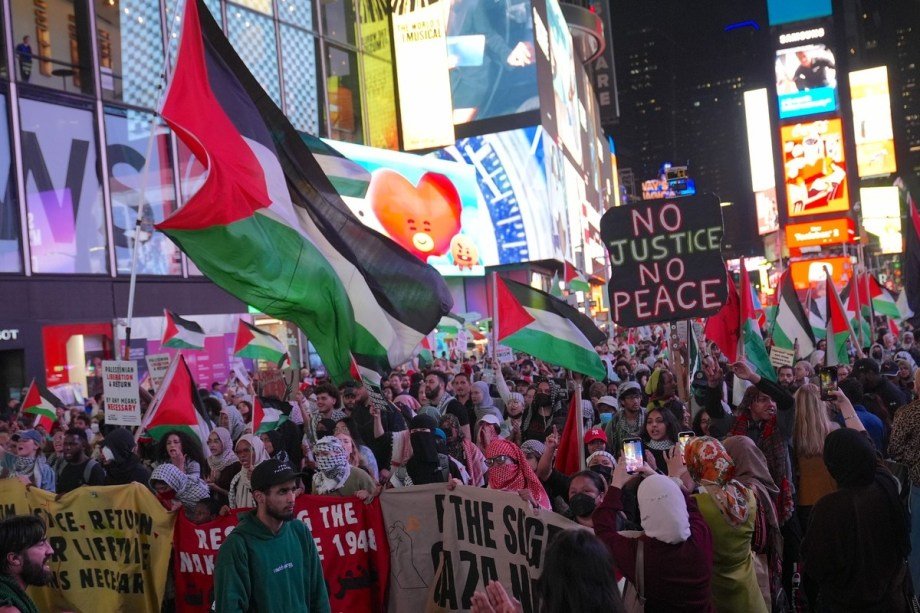
A critical reality here is the role of AIPAC and groups like the Democratic Majority for Israel. They are, for the moment, successfully deploying massive super PAC spending to defend pro-Israel incumbents. However, money cannot buy back ideological ground. The insurgent candidates are winning on energy, youth appeal, and a coherent, albeit distorted, moral narrative that paints Israel as the aggressor and themselves as the vanguard of a new, globalized human rights movement. They have successfully framed the Israel-U.S. relationship as an obstruction to American domestic progress.
As the primaries progress toward the August and November deadlines, Israel must grapple with a sobering prospect: the Democratic Party is becoming a house divided against itself. The moderate core, which has historically been the guardian of the alliance, is under constant, withering fire from a base that views support for Israel as a stain on their progressive credentials. The success of these insurgent candidates suggests that the party’s center of gravity is moving. Even if many of these candidates lose in the general election, they are winning the battle of ideas. They are training a generation of activists to see Israel as the enemy.The upcoming months will confirm whether this is a temporary radicalization or a permanent realignment. If these candidates continue to notch wins, the next U.S. Congress will house a caucus that is not only indifferent to Israel’s security but actively hostile to its survival. Israel cannot afford to view this through the lens of local electoral cycles. It is a fundamental shift in the American psyche regarding the Jewish state. The era of unquestioned, bipartisan support is receding, replaced by a climate where the survival of the state must be defended not just in the Middle East, but in the halls of Congress and the urban neighborhoods of the U.S.