

France’s reported effort to coordinate national sanctions against “violent” Israeli settlers marks another escalation in Europe’s increasingly direct involvement in Israel’s internal political and territorial disputes. While presented as a targeted response to fringe violence in the West Bank, the policy is widely interpreted within Israel as part of a broader European attempt to reframe the settlement enterprise itself as illegitimate, and by extension, to revive diplomatic momentum toward a Palestinian state under conditions that no longer reflect Israeli political realities after October 7.
The initial diplomatic rationale provided is one that is well-known: sporadic episodes of settler attacks that destabilize the Palestinians and make the effectiveness of Israeli law-enforcement capabilities in the West Bank highly suspect. However, the political environment in which these measures have been put forward is decidedly unlike those that existed during previous rounds of confrontation between the Europeans and Israelis on the issue of settlements.
The onset of the October 2025 War and subsequent escalation throughout the region has completely changed how Israeli citizens view withdrawals of territory.This shift is not confined to the political right. Even centrist and center-left constituencies, once supportive of territorial compromise under the Oslo framework, now express deep skepticism toward external diplomatic pressure that assumes a linear connection between settlement removal and conflict resolution.
The experience of Gaza after disengagement in 2005 has become central to this perception. For many Israelis, the rise of Hamas and the subsequent cycles of war are not interpreted as failures of incomplete withdrawal, but as evidence that withdrawal itself does not resolve the underlying rejection of Israel’s presence.
It seems unlikely that sanctions imposed by the Europeans will be seen as a well-considered human rights instrument in Israel. On the contrary, they will be seen as part of a well-established diplomatic tradition through which European nations try to isolate particular policies on the part of Israel without applying enough pressure on the armed Palestinians and their authorities.
The consequence is that the rift between the parties is deepened not only in terms of diverging policy priorities but also in terms of the very nature of the problem, the settlements become an essential obstacle to peace for the Europeans while Israelis see them as one of the problems in a bigger context.
This creates a number of implications for Israeli politics itself. While one would expect the sanctions to strengthen moderate forces who are more willing to compromise on territory, in reality, the impact is quite opposite and the sanctioning process becomes politically used by Israel to justify their views on Europe being against Israeli positions vis-a-vis territory outside the Green Line.
In other words, based on historical precedent, it is quite possible that the French plan will end up being utilized not as a form of pressure, but rather as evidence of what Israelis have always suspected regarding European diplomacy.On the other hand, such a framing of sanctions against ‘violent settlers’ fails to capture the complex web of politics that exists surrounding settlement growth and Israeli policy.
Indeed, various Israeli governments, regardless of their political orientation, have supported settlement entrenchment in the West Bank both via planning and financial resources, and through the administrative process of integrating settlements. While European policy focuses on punishing certain individuals or groups, Israel’s situation is one where settlements are no longer a marginal activity, but rather part of a system with several levels of support.
In addition to that, the European approach is also based on the persistent idea that Israeli policy is basically responsive to external incentives/constraints in diplomacy. Nevertheless, in the context of post-October 7 developments in Israel, domestic policies have been gaining predominance over the foreign policy agenda in the country. National security considerations have become a central concern in domestic politics and policymaking in Israel.
Under such conditions, foreign pressure is more likely to be perceived in terms of security rather than diplomacy. Israeli policymakers’ primary concern has shifted from legitimization to prevention of large-scale attacks.Additionally, there has been a realization by Israeli politicians that the diplomatic efforts being made by Europeans are becoming outdated as compared to the actual situation on the ground.
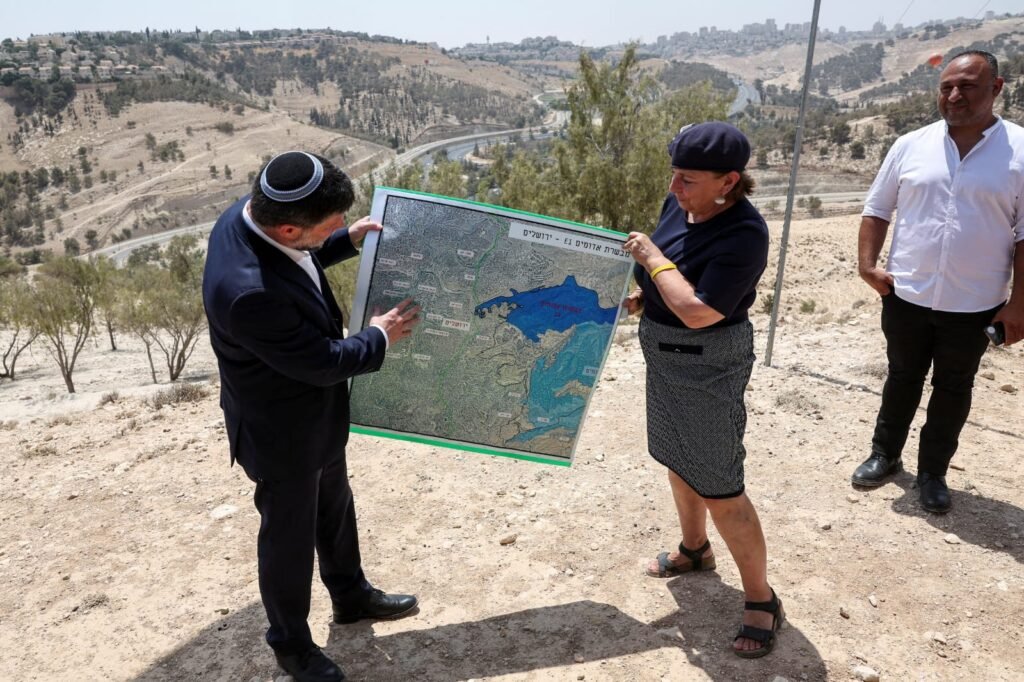
With the breakdown of the existing peace framework, the lack of political unity among Palestinians, and the general insecurity in the wider region of Lebanon, Syria, and Gaza, the perception has emerged that the situation is moving away from the premises under which past two-state solution diplomacy was carried out.
In this context, sanctions on settlements would only be relevant to the old conflict dynamic.This does not mean that concerns over settler violence lack legitimacy or that enforcement gaps should be ignored. On the contrary, there is broad recognition within Israeli security institutions that isolated extremist activity in the West Bank poses both moral and strategic risks.
The challenge, however, is that externalization of this issue through sanctions risks reducing policy space for internal Israeli enforcement mechanisms to operate without political polarization. What might be intended as pressure for accountability can, in practice, weaken domestic consensus around how to manage law enforcement in contested areas.
Ultimately, what will be at stake in the looming clash of Europe and Israel on the imposition of sanctions on the settlers is not just the people being targeted but two different approaches to understanding the new strategic reality that came into play after October 7. The settlement question retains its importance as the main vehicle for Europe in reaching out to Israel diplomatically. For Israel, everything revolves around security consolidation within a volatile region.