By Eitan Levi
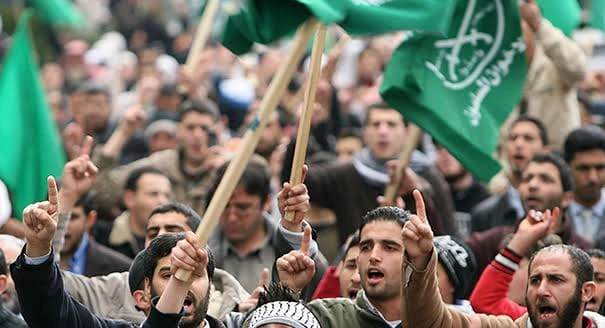
The overwhelming antisemitic marches that swept through European cities after October 7, 2023, along with repeated urban riots across France, revealed something deeply unsettling: a strange alliance between modern Islamists and the radical left. These groups, even if their worldviews are wildly different on the surface, share a burning hostility toward Israel and the very heart of Western democratic values. It is more than just noisy protests. What is emerging is a broad ideological front that challenges the core of what it means for a society to be free and open. And here is the real problem, if we treat these outbursts as just local flare ups or isolated European episodes, we miss the bigger story entirely. As Tina Ghazimorad explained in a sweeping piece for The Jerusalem Post, there is a kind of ideological DNA at work here, linking today’s global jihadist networks and their venomous hatred of Israel right back to the Muslim Brotherhood of 1928 and the 1979 Islamic Revolution in Iran.
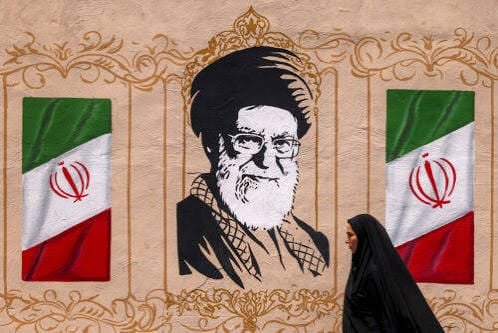
To make sense of why the Iranian regime acts less like a typical government and more like a revolutionary command center welded onto a country with thousands of years of history, you have to go back to the original playbook written by Egypt’s Muslim Brotherhood. Hassan al Banna founded the Brotherhood as a stealth movement for Islamic supremacy, not with instant bombs, but with a slow, patient plan to take over from the inside. His method was infiltration: target schools, the civil service, professional associations, courts, slowly bend the whole system to the cause. By the time Sayyid Qutb took up the mantle in the 1950s, patience gave way to rage. Qutb pitched the battle as good vs. evil, where every secular government was an impostor, a relic stuck in jahiliyyah, pre Islamic backwardness. Human law itself, he argued, was a slap in the face to God’s rule (hakimiyyah), and that, in turn, became the theoretical engine for violent jihad.
But this vision did not stay confined to religious texts. It jumped boundaries. During World War II, Haj Amin al Husseini, the Grand Mufti of Jerusalem, made alliances with the Nazis, meeting Hitler and Himmler and helping draft Muslims into the Waffen SS, like the 13th Handschar Division. That was a dark blueprint for mixing religious radicalism with totalitarian force. These crosscurrents did not just wash over Europe, they circled back into the Middle East, shaping Iran’s own destiny. Westerners often view Mohammad Mosaddegh, Iran’s famous nationalist, through rose colored glasses, as if he was just a secular hero. But Mosaddegh’s ties ran deeper. He worked tactically with Islamist leaders like Husseini, reframed the oil debate as an Islamic cause rather than a purely nationalist one, arguing Iran’s petroleum belonged to all Muslims, not just Iranians. He even shut the Iranian consulate in Jerusalem, laying the groundwork for the anti Israel postures that Iran’s clerics would later cement.
The bridge between these Sunni and Shia radicalisms came in the form of Navvab Safavi. After traveling to Egypt and meeting Qutb, Safavi brought back the Brotherhood’s tactics, founding Fadayan e Islam in Iran and preaching political assassination as a holy act. When Mosaddegh fell in 1953, his followers took up the torch as the Freedom Movement of Iran under Mehdi Bazargan, pushing for Islamization of society as a stepping stone to full political control. Out of this ferment came the Mojahedin e Khalq, mixing Islamism with Marxism, showing just how elastic this revolutionary current could be. It is no coincidence that Ali Khamenei, now Iran’s Supreme Leader, spent the pre 1979 years translating Qutb’s most incendiary works, including The Future of This Religion, directly injecting Qutbist ideology into the Iranian clerical mind.
Then came the earthquake of 1979. Khomeini’s revolution did not just topple the Shah and his push for Western oriented modernization. It sent shockwaves around the world. Suddenly, religious fanatics proved they could topple a modern state. Islamist movements throughout the Middle East took note and began plotting to repeat the feat, time and again, they tried to copy Iran’s script. When secular regimes in Syria, Egypt, and Algeria fought back with brute force in the 1980s and 1990s, Islamist organizers escaped to Europe, where a different game began.
Thanks to well meaning but naive asylum laws, these seasoned activists put down deep roots across Western Europe. Universities, mosques, charities, these became new fronts in their continued struggle. The really striking thing is how, just as clerics and leftists joined hands during Iran’s revolution, Islamist groups in Europe cozied up to radical leftists, forming what is now called the Red Green alliance. This partnership helped shield them from deep scrutiny and smuggled identity politics into the mainstream, splintering societies and pushing against Europe’s Judeo Christian traditions.
Iran’s regime today is basically a Shia remix of the Brotherhood blueprint. Yes, there are bitter theological and political rivalries between Tehran and Sunni jihadists, but the fact is, the revolution supercharged radical Islam everywhere. Iran’s drive to spread its influence, from Hezbollah in Lebanon to militias in Syria, Iraq, and Yemen, forced Sunni groups to up the ante, giving rise to monsters like al Qaeda and ISIS. So the seeds planted in Cairo back in 1928, turbocharged by Tehran’s clerics in 1979, have turned global politics into a battlefield of endless religious war.
For Israel and the rest of the free world, denying or ignoring these connections is not an option anymore. Supporting the millions of Iranians who want to break the regime’s grip and reclaim a free country, people inspired by figures like Prince Reza Pahlavi, is not just an act of distant solidarity. It is a matter of survival. Democratic societies depend on pulling out the roots of revolutionary Islamism, shutting down its funding, dismantling its networks, both in Iran and across the world. Only then can the foundation of free civilization endure.
About the Author
Eitan Levi is a Security and Geopolitical Analyst with expertise in Israeli defence strategy, Iran’s regional operations, Middle Eastern power rivalries, and Israel’s security partnerships.