

By Noam Shalev
After the November 2026 American midterm elections, you could feel the political mood in Washington shift. Republicans suffered serious losses in both the House and Senate, and US Vice President JD Vance wasted no time blaming their defeat on the military campaign against Iran and the growing frustration among voters about America’s strong alliance with Israel. It was a bold claim, but for anyone in Israel’s corner, whether you are a strategist, foreign policy watcher, or simply someone who supports the US Israel alliance, those words felt like more than just the usual search for someone to blame after a tough election. They echoed something older and far more worrying: a deep rooted habit of turning the Jewish state into a scapegoat when things go wrong at home.
History is full of this kind of finger pointing. Whenever a country hits tough times, economic collapse, wars going badly, government gridlock, you often see people start blaming the Jews. Think about it: from the wild accusations of medieval Europe to the economic scapegoating that let the Nazis rise to power, blaming Jews has led to some of humanity’s darkest moments. Now, when senior politicians pin America’s foreign policy headaches or election losses on its relationship with Israel, they are playing with that same dangerous fire, just dressed up with modern political spin.
Blaming Israel for a party’s defeat at the polls just is not true, and it is not even good strategy. The Republican Party’s losses came from a mess of homegrown problems: stubbornly high inflation, expensive energy, widespread exhaustion with endless overseas military campaigns, and constant battles over how the country should be run. The campaign against Iran was not something Israel tricked the US into; Washington launched it to deal with real threats, nuclear risks and regional turmoil that put American assets and world security on the line. By casting Israel as the political fall guy, US officials sidestep their own mistakes on policy, communication, and leadership.
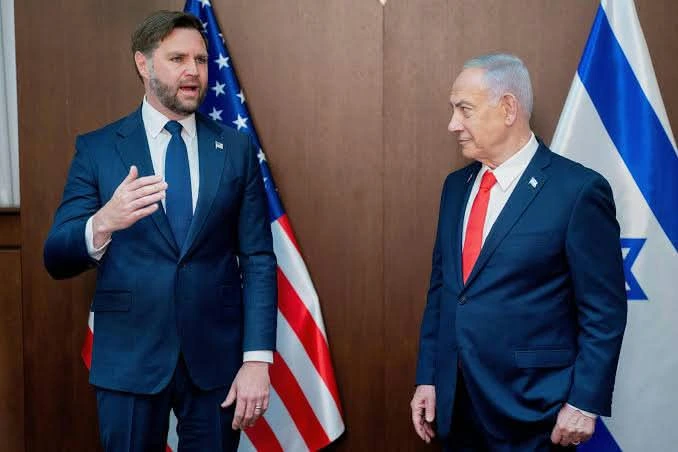
The rhetoric does not just stop at policy, it cuts into something deeper for a huge chunk of the American public, especially conservative Christians. Laurie Cardoza Moore, who heads Proclaiming Justice to the Nations, ripped into Vance’s comments, reminding politicians that standing with Israel is not just a political tactic, it is woven into the fabric of Christian belief, right down to biblical commandments. Millions of Evangelical voters see supporting Israel as a moral duty. So when politicians float the idea of turning away from Israel or tweaking the relationship because it supposedly costs political points, they risk alienating their most loyal supporters. That is not just bad politics, it is abandoning principle for temporary cover.
What is also alarming is the context. Vance’s comments are just the latest in a growing chorus on the right talking about pulling back from the world, flirting with isolationism, and making room for figures who peddle antisemitic conspiracy theories and even try to rewrite the history of the Holocaust. When people in power turn a blind eye to the kind of talk that paints Jews or Israel as the secret puppeteers behind government moves, they tear down the moral walls that keep public debate honest and safe. Sure, Americans should argue about the best foreign policy, how much to spend on defense, and what America’s role in the world should be. That is part of democracy. But blaming a Jewish ally for losing elections drags the conversation back into the ugliest pages of history.
For Israel, this new scapegoating talk rings alarm bells. It is a reminder: Israel cannot afford to link its fate or its security only to the changing winds of American politics. National alliances, real ones, are not built on a handshake between individual leaders. They rest on deeper ties: shared intelligence, military cooperation, the common ground of democracy and mutual interests, foundations that last beyond any one election.
Every alliance needs solid footing. When it leans too heavily on personal ties and the fortunes of a single party, it is just too easy for things to unravel when political tides turn. America’s partnership with Israel needs to be locked in institutionally, built to withstand the ups and downs that come with elections and shifting administrations.
Now, with the dust still settling from the midterms, it is on America’s leaders, on both sides, to find some moral clarity and learn from history. The responsibility for political failure belongs where it always does: at home, in Washington, not 6,000 miles away in Jerusalem. Voters judge their leaders on what matters most: jobs, safety, competent government. Passing the blame to a steadfast ally is not just lazy leadership; it risks long term damage to an essential strategic partnership and breathes new life into toxic prejudices that should have been buried long ago.
Israel needs to stand its ground and call out these narratives. The country remains a committed ally, providing essential intelligence, advanced defense technology, and playing a stabilizing role in the region. Israel is not a convenient fall guy for America’s internal mess, and it never should be. At times like these, that message needs to be clear, both from Jerusalem and from anyone who cares about the truth, and the future of the alliance.
About the Author
Noam Shalev is a Political Affairs Commentator covering Israeli government policy, US-Israel relations, coalition politics, and diplomatic engagement across the Middle East.