By Noam Shalev
When Donald Trump issued his “Complete and Total Endorsement” of Benjamin Netanyahu on Truth Social, the Prime Minister’s campaign apparatus wasted no time. Within minutes, Likud’s digital media team disseminated a slick 30 second video compilation highlighting years of foreign praise lavished on the Israeli leader by the former American president.
Facing an uphill battle ahead of the October 27 national election, where opposition figures like former IDF Chief of Staff Gadi Eisenkot lead in key polling metrics, an explicit intervention from the White House represents a significant headline. Trump’s declaration framed Netanyahu as an indispensable “Great Warrior Prime Minister,” explicitly warning Israeli voters that electing anyone else would leave Washington forced to confront Iran without a trusted regional partner.
Yet, as the immediate media dust settles in Jerusalem, a sober assessment reveals a stark reality: external endorsements from foreign leaders carry virtually zero capacity to shift the structural mechanics of an Israeli election.
The fundamental limitation of Trump’s backing lies in the rigid nature of Israel’s political electorate. Electoral preference across the country has hardened into deeply entrenching, inflexible voting blocs. As political scientists like Dr. Ilana Shpaizman of Bar Ilan University point out, foreign political declarations arrive at a time when voters have already made up their minds.
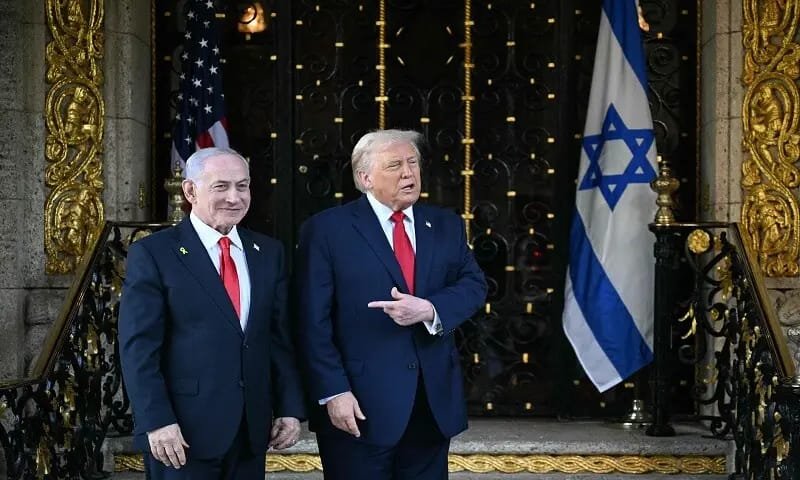
Netanyahu’s core base does not require validation from Washington to believe in his international standing or his security credentials; they already view him as a global statesman. Conversely, the majority of Israelis who oppose his continued rule will not be swayed by a Truth Social post. Opposition voters view Trump’s past pressure on Israel, including pushing for ceasefires and managing the broader conflict with Iran, as proof that American policy ultimately serves American interests, regardless of personal chemistry between leaders.
From a purely tactical perspective, the endorsement provides Likud with a momentary narrative victory. Former Netanyahu adviser Michael Bushinsky notes that the statement temporarily refocuses the national conversation away from damaging domestic controversies. Over recent weeks, the political debate had drifted toward deeply divisive issues, including the Haredi draft law, judicial reform controversies, and socioeconomic frustration.
By injecting Trump’s statement into the news cycle, Netanyahu attempts to return to his most comfortable campaign posture: framing himself as the sole leader capable of navigating the existential Iranian threat alongside Washington. It allows him to ask voters a simple, persuasive question: “Who else can finish the job with the President of the United States?”
However, shifting the conversation to Iran is not a guaranteed path to a 61 seat Knesset majority. Even optimistic political analysts estimate that the endorsement might yield Likud an incremental margin of a single seat. In a parliament where governments are built through complex, multi party coalition building, one extra mandate does not solve Netanyahu’s core arithmetic problem. Current polling averages continue to place the pro Netanyahu bloc well short of a stable majority, while Eisenkot’s opposition alliance retains a structural advantage.
Furthermore, the timing of Trump’s endorsement undermines its strategic weight. According to surveys conducted by Professor Tamar Hermann at the Israel Democracy Institute, the Israeli public’s perception of Trump has undergone a notable decline over the past six months. Confidence in the US President as an unyielding guarantor of Israeli security fell from 70% earlier this year to 42% following diplomatic negotiations with Tehran that failed to decisively eliminate the Iranian nuclear threat.
When an endorsing figure’s standing drops significantly among the electorate, the political value of that endorsement diminishes accordingly. To many voters, Trump’s backing feels both too late to sway undecided citizens and too early to sustain momentum through election day.
This dynamic is further complicated by visible divisions within Washington itself. Less than a day after Trump’s statement, US Vice President JD Vance publicly declined to endorse Netanyahu, stating explicitly that his focus remained strictly on American midterm candidates. When Israeli voters see key figures in the same administration distance themselves from Trump’s declaration, the narrative that Netanyahu enjoys unanimous, unconditional backing from American leadership begins to fray.
There is also a growing public fatigue regarding foreign political interference. While Netanyahu famously protested American presidential involvement in past Israeli elections during the late 1990s, his current reliance on external political lifelines highlights a subtle vulnerability. Pundits across Israeli media outlets have questioned the propriety of an American president attempting to dictate who belongs in the Prime Minister’s Office, viewing it as an unnecessary intrusion into sovereign democratic processes.
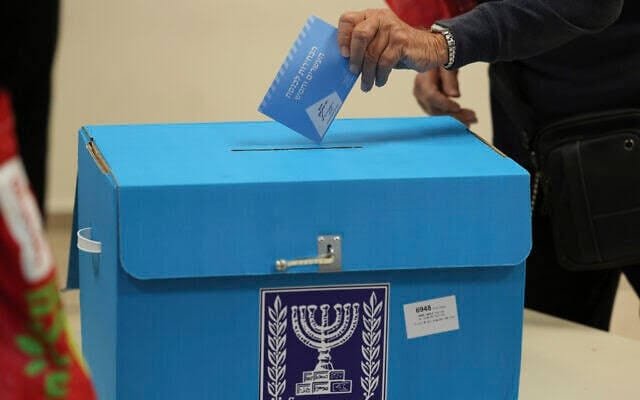
Ultimately, elections in Israel are not decided in Washington, Mar a Lago, or on social media platforms. They are decided at the ballot box by citizens weighing cost of living pressures, military service equality, national cohesion, and the sobering reality of living in a post October 7 security environment.
Netanyahu’s attempt to frame the election as a binary choice between himself and regional chaos may energize his loyalists, but it does not expand his political coalition. Foreign endorsements are dramatic theatrical moments in a political campaign, but they cannot replace a viable domestic strategy. On October 27, Israeli voters will choose their leadership based on sovereign national interests, proving once again that true political legitimacy is earned at home, not granted from abroad.
About the Author
Noam Shalev is a Political Affairs Commentator covering Israeli government policy, US-Israel relations, coalition politics, and diplomatic engagement across the Middle East.