

It’s hard to overstate how fast things are moving in South Asian security circles right now. Suddenly, you have US defense deals, business connections to the Trump family, Ukrainian drone technology, and Pakistan’s military shopping cart, all colliding in one storm. If you’re looking at this from New Delhi, it’s more than just an odd series of transactions. It’s a red flashing warning for India’s military planners. And for analysts in Jerusalem, where the balance of power across Asia is always under the microscope, there’s no way to see the new memorandum between American drone company Powerus and the Pakistani Army as “just business.” This isn’t another arms deal. It’s a gamechanger that could pull the rug out from under India’s entire defense setup and tilt the regional security scale.
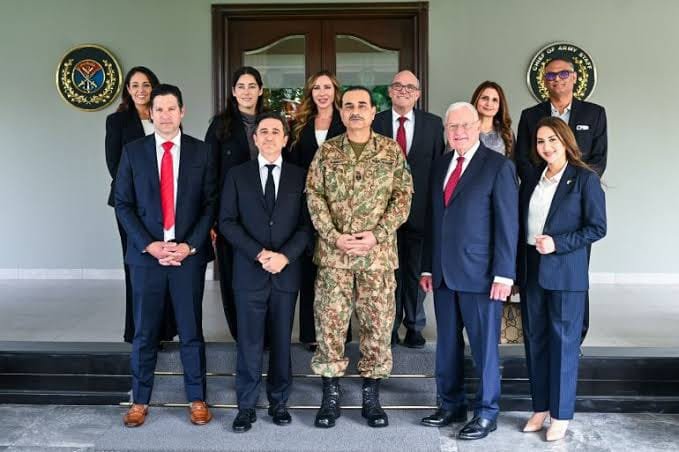
Powerus isn’t some old defense establishment player. It’s a fast mover, fueled by venture capital with direct lines to Donald Trump Jr. and Eric Trump, and it just inked a formal agreement with Pakistan’s top military chief, Field Marshal Asim Munir, right in Rawalpindi. This deal gives Pakistan the green light to use Ukrainiandeveloped autonomous drone systems, plus the blueprint for manufacturing them locally. What’s unsettling is the timing, barely after Powerus set up a commercial deal with India’s own Paras Defense. So, you have one company feeding both sides of a tense security rivalry, using private money and connections to rewrite the rules that, until now, kept things generally predictable. For Israeli defense strategists, the worry is immediate, giving advanced, battletested counterdrone and interceptor systems to Pakistan seriously cuts into India’s sense of security.
At the heart of all this is the tech itself. Powerus didn’t just buy hardware; it picked up intellectual property from Ukraine’s G1 Exploration, stuff born in the mud and chaos of the war with Russia. These drones, plus the commandandcontrol systems that drive them, are hardened against electronic warfare, built for autonomous navigation, and designed to work even when signals get jammed. They can skim at low altitudes and intercept fastmoving targets, something few militaries in the region can match. The moment this kind of capability lands inside Pakistan’s defense ecosystem, it’s not just a step forward. It’s a leap, a shortcut that lets Pakistan skip all the messy learning curves and catch up to India’s edge.
This isn’t a hypothetical threat for India. After the Operation Sindoor standoffs, when border tensions were whitehot, Pakistan went allin on revamping its drone arsenal, focusing on spreading out production and maximizing bang for the buck with expendable, lowcost strike units. Now, with Ukrainian software and Guardian interceptor designs, Pakistan can let loose swarms of smart, autonomous drones, machines that can sneak by Indian air defense, shadow positions along the Line of Control, and relay targeting info in real time.
From Israel’s vantage point, having worked handinglove with Indian security for so long, this shakes things up. India has spent years, and billions, partnering with Israel to build a layered border defense: cuttingedge radars, early warning networks, missile shields, and highend drones. This whole system relies on staying a step ahead technologically. But now, by piping Ukrainian drone brains and interceptor knowhow straight to Pakistan, Powerus hands Islamabad the keys to counter all of that. With advanced counterdrone tech, Pakistani forces can scan, jam, and even overwhelm Indian detection corridors, suddenly India’s protective shield starts to look thin, its ground units and supply lines more exposed.
The stakes get higher if Pakistan goes beyond just importing drones. If Powerus and its local partners set up shop to massproduce these systems on Pakistani soil, it changes everything. Modern wars aren’t just about quality, they’re about how many tools you can throw into the fight. If Pakistan starts cranking out thousands of drones for pennies on the dollar, India is forced to shoot back with expensive missiles. It’s a lopsided game, an economic and tactical nightmare for Indian commanders.
None of this is helped by the unusual business mechanics powering Powerus. The company didn’t just walk in the back door; it won major US Air Force contracts, a $90 million order for interceptor drones, a $22.3 million deal for infrastructure protection in the Middle East, beating out giants like Boeing and Lockheed Martin. Add in the financial muscle from American Ventures, an investment group close to the Trump family, and suddenly Powerus isn’t just moving quickly; it has political winds at its back.
Here’s where things really get alarming: Powerus isn’t shy about selling the same firstinclass tech to both India and Pakistan. When politicallyconnected private firms chase profits in a conflict zone, all bets are off, loyalties blur, and strategic commitments become bargaining chips. India now faces a scenario where its investments, military intelligence, and hardwon advantages could be neutralized by the same commercial ecosystem supplying its chief rival. That’s not just business risk, it’s a security dilemma.
From Jerusalem’s security community, the threat is bigger than South Asia. Pakistan works closely with China, Turkey, and a web of thirdparty players, some of them not even states. Once sophisticated drone code and American hardware blueprints go local inside Pakistan, there’s no good way to keep them contained. Those technologies could pop up across the Middle East or Central Asia, landing in the hands of actors who have zero interest in regional stability, directly imperiling Israeli or even Western forces wherever they operate.
The view from Washington isn’t making things clearer for India, either. The US has scaled back direct hardware sales to Pakistan, but venturebacked companies like Powerus open a back door that’s nearly impossible to monitor. This isn’t just a loophole, it undermines America’s promises to help India build up as a counterweight in the IndoPacific. It plants real doubts in New Delhi: how much can you rely on American commitments when business interests can simply work around them?
So what does India do now? It can’t just sit and hope this blows over. The urgency is real, India needs to speed up its orders of electronic countermeasures, directed energy systems, and carve out new, tougher drone defenses. New Delhi will have to hold Western contractors far more accountable, insist on transparency, enforce real oversight, and push for tighter regulation of any foreign player in its defense market.
In the end, this PowerusPakistan deal isn’t some abstract lesson in geopolitics. It’s a warning that old assumptions, about alliances, technological superiority, or even businessasusual, don’t hold up anymore. When battlefield innovation from Ukraine is packaged by American firms with heavyweight political backing and sold to a longtime rival, India’s security balance isn’t just shaken, it’s redefined overnight.