
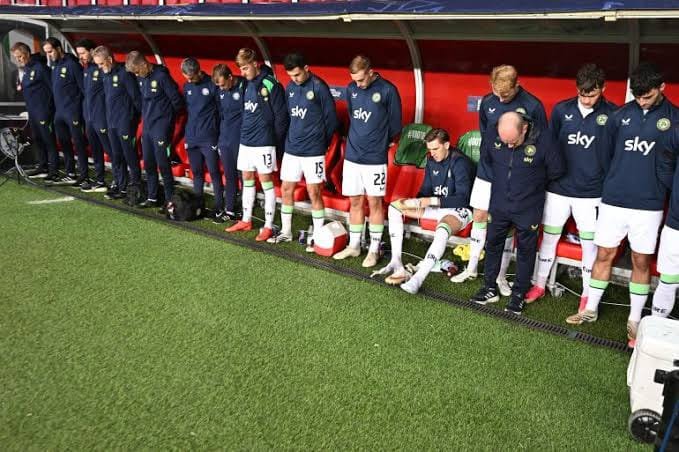
When sports crash into global politics, things usually get loud and messy, not subtle. Look at Sunday night in Debrecen, Hungary, the scene was supposed to be just another UEFA Nations League match between Ireland and Israel. Instead, Ireland’s national team turned a standard fixture into a fullblown protest. The Irish players wore black armbands, stood with their heads bowed during the Israeli anthem, and skipped the usual prematch and postmatch handshakes. Sure, they scored three goals early and wrapped up a 30 win, but let’s be honest, the real game wasn’t about soccer. The main event was political theater, broadcast live for everyone to see.
International sports exist to rise above politics, not to become another stage for it. Handshakes, fair play, they aren’t just nice extras or oldfashioned rituals. These are the ground rules that let countries, even those at odds, meet and compete, side by side, without bringing their diplomatic grudges onto the field. When a team decides to ignore these basics because politics at home demand it, they’re chipping away at the idea that sport can be neutral ground. They’re taking a shot at the very idea of a fair contest.
UEFA’s rules on things like black armbands really are clear. They’re for recognized national tragedies or to honor major figures in football, nothing else. Teams need to get written permission ahead of time for a reason: so sports events don’t get hijacked by political statements. But Ireland’s team threw that rulebook out the window. The image of Jack Moylan kissing his armband in front of the cameras after scoring wasn’t just a tribute to victims of violence. It was a bold, deliberate message designed for people watching back in Dublin. This wasn’t subtle or silent solidarity, it was a political performance, loud and clear.
All this isn’t just coming from the pitch. Leading up to the match, reports showed that Ireland’s camp was anything but unified. Apparently, some players wanted to skip the game entirely, even if it meant losing by default, just because they didn’t want to play against Israelis. Finn Azaz, who has Israeli heritage, was benched for the match after team arguments got heated. He even tried to remind his teammates what sportsmanship and team unity mean, but was left out of the game. The fallout here was more than just who lined up on the field, it exposed how political pressure can tear through locker rooms, pushing aside personal bonds and professional duties.
What happened that night didn’t come out of nowhere. Ireland’s track record is clear: it’s been one of the loudest critics of Israel among EU nations for years. But Dublin’s eagerness to claim the moral high ground doesn’t always line up with its own history. Israeli Foreign Minister Gideon Sa’ar didn’t hesitate to point out, through social media, how Irish neutrality has led to some pretty questionable moments before. He brought up the time back in 1945 when Ireland’s Prime Minister sent condolences on Hitler’s death, contrasting that awkward bit of history with today’s gestures draped in righteous language. It was a reminder that moral posturing in politics (or on the field) often comes with blind spots.
Turning a match into a platform for protest is risky. When teams feel free to rewrite basic protocols to fit whatever’s hot at home, it’s not long before everyone joins in, boycotts, snubs, political gestures left and right. If a handshake can be withheld for one conflict, why not for another? Pretty soon, the field stops being a shared stage and turns into yet another battleground for international grudges.
Amid all this, you have Israeli athletes stuck in the middle. Under visible pressure, they handled themselves with professionalism, stood for the anthems, played the game, followed the rules, even while surrounded by hostility. For the last few years, Israeli teams have dealt with everything from stadium bans to angry demonstrations and serious safety worries across Europe. To keep playing, to act with dignity in the face of outright disrespect, takes a kind of determination and maturity that isn’t easy, especially when you know the world is watching.
So, what should international sports authorities do? They can’t just look the other way. If they allow teams to break rules, wear unapproved symbols, skip mandatory gestures like handshakes, and face no consequences, they send a clear message: The rules exist only for show, and political protest is fair game. UEFA and other bodies have regulations to keep competition neutral and fair. If those rules stop meaning anything, if officials turn a blind eye when players bend them, the sport starts to lose its unique place outside politics.
Sunday night’s match wasn’t really a win for Irish soccer, and it definitely wasn’t a proud moment for international sports. All we saw was a field transformed into a stage for protest, moral outrage carefully chosen, basic sportsmanship ignored. But none of it brings people closer to peace or helps those actually hurt by war. It just erodes the values that supposedly hold international sport together. Israel will keep showing up, keep competing, but now the question falls to those in charge: Are the rules still the rules, or do headlines and shifting political winds dictate who shakes hands at the end of the game?