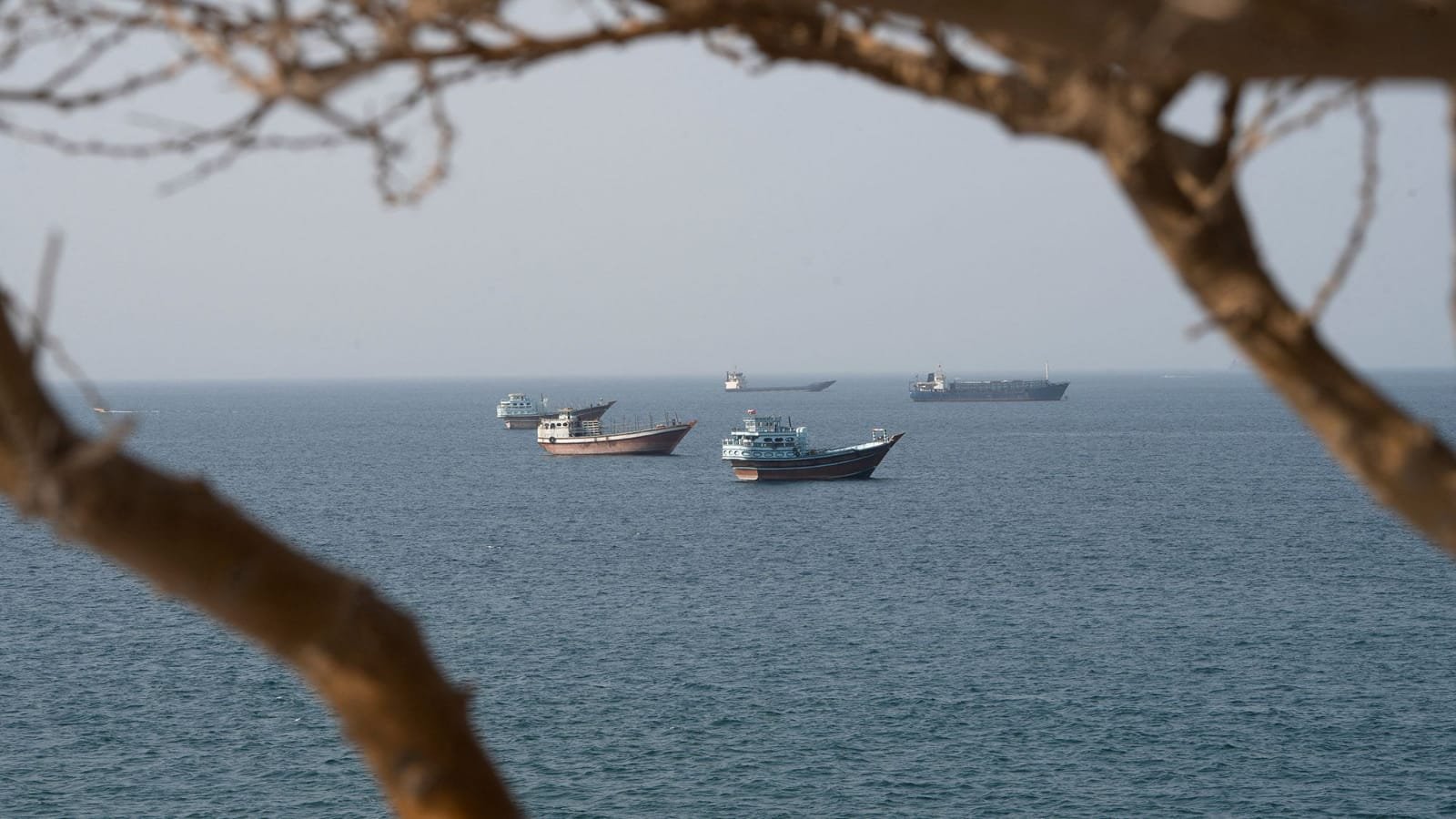
For decades, Israeli defense strategists viewed Iran’s ability to shut down the Strait of Hormuz as the ultimate threat to global economic stability. It was Tehran’s strategic shield, an economic dead man’s switch designed to deter direct military intervention or foreign-backed regime change by promising immediate global financial turmoil. If Washington or Jerusalem pushed the Islamic Republic to the brink, Iran held the leverage to simply strangle the world’s primary energy artery. That long-standing strategic calculation has now fundamentally broken down.
As energy and geopolitics strategist Thomas O’Donnell noted, Iran’s most formidable non-nuclear weapon is rapidly losing its potency. The collapse of Tehran’s regional leverage did not occur overnight. Instead, a combination of severe military setbacks, major structural market shifts, and aggressive infrastructure bypass projects have steadily stripped the regime of its primary economic leverage. Following the systematic degradation of its regional proxy network and severe setbacks to its nuclear infrastructure over recent military campaigns, Tehran finds itself backed into a perilous geopolitical corner. Its remaining insurance policy consisted almost entirely of ballistic missiles, attack drones, and the physical disruption of Gulf shipping lanes. Yet, as the ongoing crisis reveals, this final trump card is turning into a rapidly diminishing asset.
The primary flaw in Iran’s strategic calculus is an outdated understanding of global energy resilience. Decades ago, choked supply lines in the Persian Gulf meant immediate, catastrophic global recessions. Today, the structural makeup of the international oil trade looks vastly different. Western Hemisphere production now accounts for roughly 35 to 40 percent of total global oil output, heavily anchored by the American shale revolution. US domestic oil production has consistently absorbed shocks that previously would have paralyzed Western economies.
When daily flows through Hormuz dropped from their pre-conflict levels of 14 to 15 million barrels per day, market panic was blunted not just by North American supply, but by unprecedented international coordination. The International Energy Agency’s unanimous release of 400 million barrels of petroleum products, paired with the US Strategic Petroleum Reserve committing 172 million barrels, effectively capped long-term market panic. While crude prices spiked briefly over $100 per barrel, they swiftly retraced toward $80. This volatility reflects temporary geopolitical risk premiums rather than structural supply failure. Market traders increasingly recognize that a Hormuz disruption can be managed without triggering structural systemic failure.
Beyond emergency reserves, physical bypass infrastructure is permanently diminishing Iran’s geographic leverage. Tehran’s authority over Hormuz relied on a geographic bottleneck with no alternative routing options. That reality is rapidly dissolving across the Arabian Peninsula. Saudi Arabia’s East-West Crude Oil Pipeline currently moves roughly 5 million barrels per day directly to Red Sea export terminals. Simultaneously, the United Arab Emirates bypasses the strait via the Habshan-Fujairah line, routing up to 1.8 million barrels per day straight to the Gulf of Oman.
Looking ahead, planned capacity expansions will reduce regional dependence on the waterway even further. Abu Dhabi aims to double its pipeline bypass volumes, while proposed Iraq-to-Syria links offer northern routing options that sidestep the choke point entirely. As US Treasury Secretary Scott Bessent pointed out, the strait is poised to become just another body of water as up to 70 percent of regional exports shift to overland pipelines.
Equally damaging to Iran’s strategic posture is the systemic degradation of its own military footprint. A maritime choke point is only effective if a power can enforce it continuously and credibly. Through targeted strikes, allied forces have systematically dismantled Iranian coastal radar networks, early warning systems, and naval intelligence nodes across the Persian Gulf. Tehran’s military relies heavily on static defenses, finite missile stockpiles, and unguided surface drones that cannot be rapidly replenished under continuous combat pressure. Commercial oil tankers now routinely transit the strait at night under electronic stealth or naval escorts, directly exploiting blind spots created by destroyed Iranian surveillance infrastructure. Tehran is losing the physical capability to monitor and intercept traffic effectively.
For Israel, this shift fundamentally changes the strategic calculus. The weakening of Iran’s control over Hormuz removes a major restraint on Western decision-making. For years, Western capitals hesitated to take decisive action against Tehran out of fear that energy prices would spike right before domestic elections. With that economic lever failing to deliver apocalyptic spikes, Washington and its regional allies can press their strategic advantage with significantly less fear of global economic blowback.
However, a cornered regime remains volatile. As O’Donnell warned, a diminishing lever creates immediate incentives for desperate actions. Aware that time is working against its strategic posture, Tehran may launch aggressive regional pressure campaigns or target neighboring Gulf energy assets directly in a bid to force a diplomatic resolution. Gulf nations understand this threat implicitly. While they disliked the initial economic fallout, these states remain committed to stripping Iran of its coercive capabilities once and for all. They recognize that leaving Hormuz under coercive Iranian control guarantees recurring economic blackmail whenever Tehran seeks leverage over regional policies.
The strategic window for Tehran is rapidly slamming shut. Its nuclear project is delayed, its proxy networks are battered, and its primary economic weapon is eroding day by day. For decision-makers in Jerusalem, the message is clear: the doctrine of Iranian regional leverage through energy blockade is broken. Stripped of its ultimate economic shield, the regime in Tehran faces an inescapable choice between strategic isolation or accepting terms dictated by a position of severe weakness.